Why study History?
History is never just about the past. It is always about the present and future: history shows us that things could have been different and that the present is never inevitable. In an era of supposedly easy answers and glib comparisons, the History Department provides rigorous training in analyzing complex and contradictory evidence, in writing and communicating effectively, and in assessing the authenticity and reliability of sources. As our world continues to rely more and more on automated, but often obscured, processes, we prepare leaders who can make informed judgments and decisions backed up by relevant evidence.
Carnegie Mellon University's Department of History is internationally known for innovative historical and anthropological approaches to the study of the past. Our faculty offer the B.A. in History, the B.A. in Anthropology, the B.S. in Science, Technology, Society, and the interdepartmental B.A. or B.S. in Ethics, History & Public Policy.
Our programs emphasize empirical methods and conceptual analysis, as well as research and internship opportunities, and other transferable skills relevant to many types of jobs and continuing education opportunities such as graduate school.
What do our students do?
Jenica investigated criminal justice in Pittsburgh, assisting Professor Jay Aronson in his ongoing research on the conditions of incarceration at the Allegheny County Jail (Class of 2028)
Aadya joined an archaeological excavation in Bulgaria, cataloguing and classifying osteological remains from Hellenistic and Roman eras at Apollonia Pontica (Class of 2027)
Tatym advanced human welfare and environmental protections, studying tropical ecology and global climate patterns at Costa Rica’s Monteverde Institute, while also attending a United Nations conference on disarmament in Geneva, Switzerland (Class of 2025)
Mohammed won a Fulbright UK Summer Institute Award, studying abroad in Belfast, Northern Ireland, and delving into identity, conflict and reconciliation alongside NGOs, policymakers, and government agencies at Queen's University (Class of 2028)
Aleksaundra engaged in research for the Carnegie Endowment for International Peace as a competitive James C. A Gaither Junior Fellow, assisting research efforts within their Democracy, Conflict, and Governance Program, as well as engaging in meetings and congressional testimony and briefings (Class of 2026)
Lucia completed a summer apprenticeship with NASA's RadLab, gaining a wider understanding of inclusive pedagogy and how inclusivity is perceived by current CMU students (Class of 2025)
What do our graduates do?
The broad analytic, research, and writing skills cultivated by the History major prepare students for lifelong success, especially in law, government, education, journalism, social work, urban planning, media, museums and libraries, business, the armed forces, and the ministry. For individuals interested in pursuing a professional career in history, options include not only research and teaching, but also expert positions in the public and private sectors.
Anthropology majors have enjoyed success across varied fields, including private and non-governmental sectors, law and public affairs, media, and tourism. Recent alumni of our program have pursued advanced degrees in psychology, business, medicine, and international studies. Graduates are trained for work as a diplomat, a conservationist, a non-profit leader, an international market researcher, a journalist, or an aid-relief coordinator, amongst other possibilities.
Our flexible curriculum prepares Science, Technology & Society (STS) majors for careers that focus on biotechnology, healthcare, A.I. regulation, conflict and surveillance policies, renewable energies, urban development, science policy, and global communications. Graduates are trained for jobs including industry management, research ethicists, corporate and legal consultants, museum curators, exhibit designers, or historians of science.
The Ethics, History, & Public Policy (EHPP) major serves as an excellent springboard for graduate study and professional careers alike, and our alumni represent careers in law practice, business and finance, non-profit management, and government. Our curriculum prepares students for a wide range of policy areas, including medicine and public health, criminal justice, civil rights and accessibility, education, labor protections, voting rights and elections, and ethical debates surrounding A.I and drones. Future positions include ones as a legislator, an attorney, non-profit director, a human rights analyst, an environmental conservationalist, or even an historian or philosopher.
Graduate Program

The Carnegie Mellon Doctoral Program in History is small by design, enabling an exceptional level of individual attention from faculty. We strongly emphasize research training while also facilitating a range of opportunities for skill-building, not only through our coursework but also through a funded internship program, teaching experiences and training, and workshops. Students are able to take advantage of Carnegie Mellon University and its diverse strengths in the sciences, public policy, technology, and the arts. They are also able to take advantage of a tuition exchange program, which enables them to enroll in other local universities; and more broadly, take advantage of the archival, cultural, and historical resources of Pittsburgh.
Course Spotlight
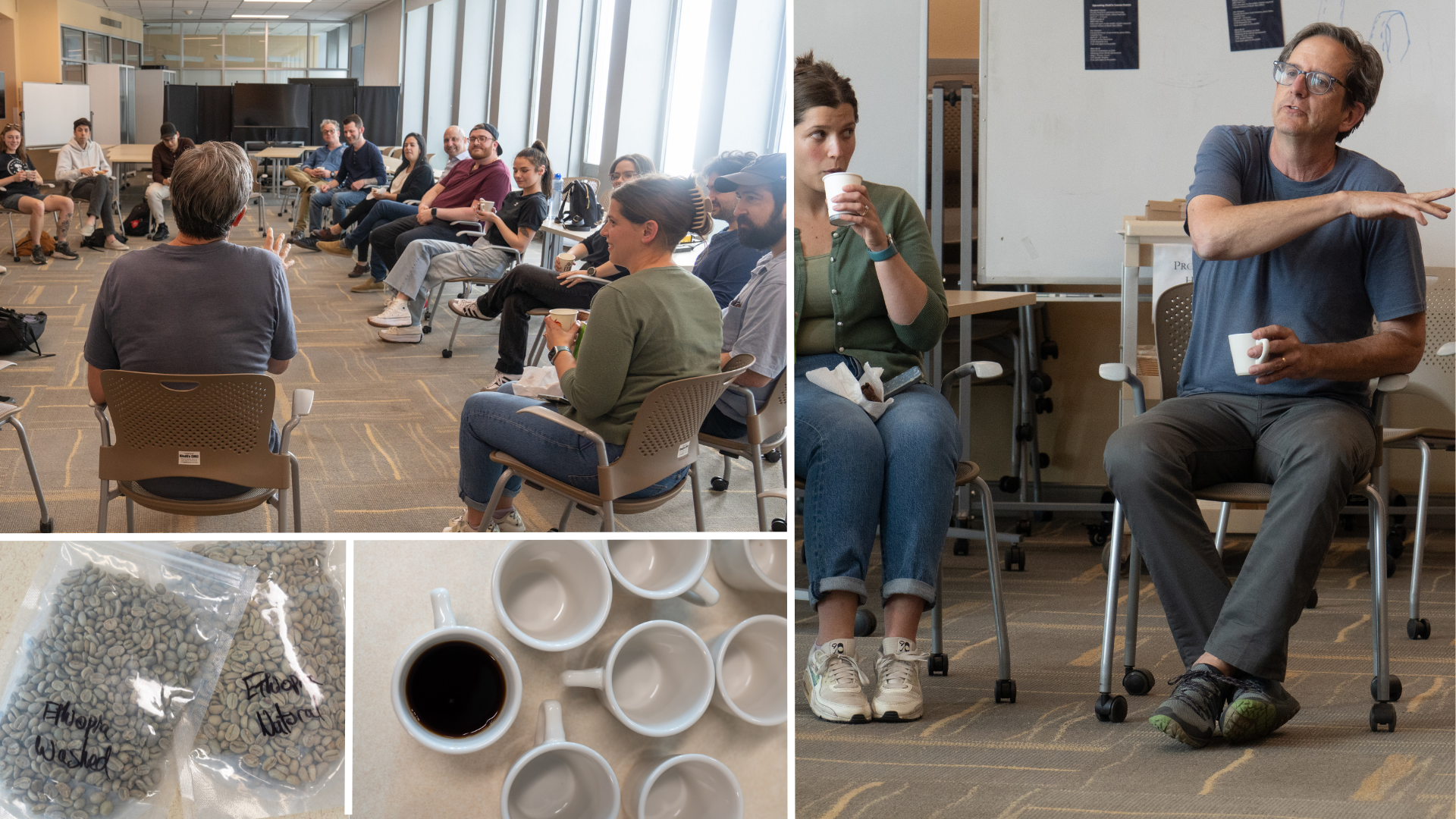
79280: Coffee and Capitalism
Taught by: Professor John Soluri
What role has coffee played in connecting people and places to capitalist markets and consumer cultures? What are the economic, social, and environmental consequences of these connections? How did espresso change from an "ethnic drink" to something served at McDonalds? This course answers these questions and more by using coffee to learn about the history of capitalism, and capitalism to understand the history of coffee.