Human-Computer Interaction (HCI)
Design technology that works for people.
Program Overview
Why do email spam filters make mistakes? Why are certain websites hard to use? Why does an AI agent go ahead and book a flight without checking with you first? We've all been frustrated by computational and intelligent systems that weren't designed with people in mind. The Pre-College Program in Human-Computer Interaction asks a bigger question: how can we design human-centered systems that people find both useful and usable?
Technology shapes how we learn, work, communicate, and make decisions, and AI is rapidly changing what our tools can do. Human-Computer Interaction (HCI) is the field that studies how computational and AI technologies affect people, and how to design them so that their impact is positive.
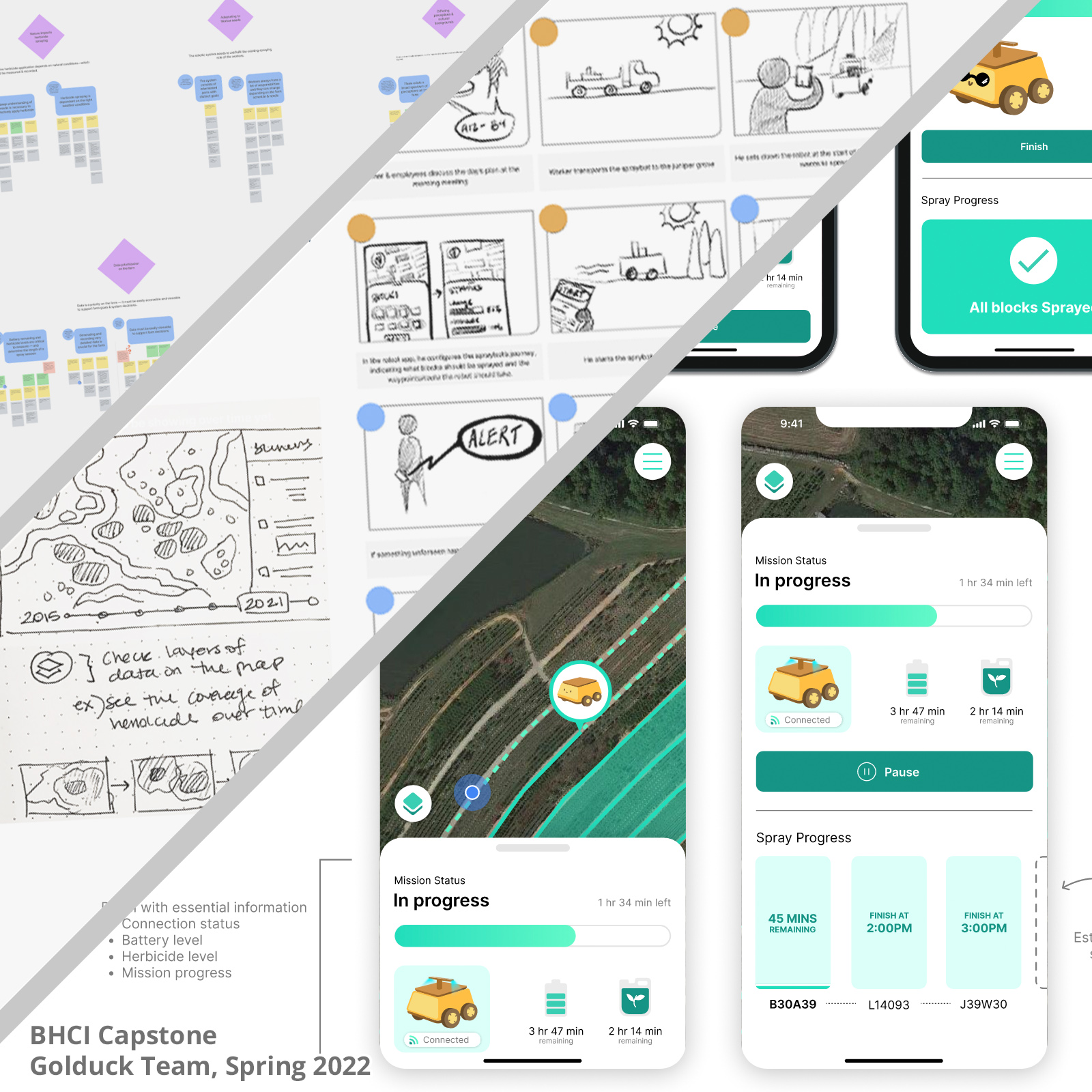
Our program is a four-week, full-time experience on Carnegie Mellon’s campus. It gives high school students a chance to explore the interdisciplinary field of HCI, where coders and programmers are also designers and artists who reimagine the future. Learning is hands-on, collaborative, and team-based. Students work together on design challenges inspired by real-world problems and move through the full HCI process: research, ideation, prototyping, and evaluation. Along the way, they build interactive prototypes and get feedback from Carnegie Mellon faculty and peers. The program ends with a showcase where students present their projects to classmates, faculty, and families.
Carnegie Mellon's Human-Computer Interaction Institute (HCII) is widely considered the founding place of the HCI field and remains one of the world's leading centers of HCI research. HCII created the world's first undergraduate additional major and the first primary major in HCI. Pre-College students learn from the same community that helped define the discipline, and they leave with a clear picture of what studying HCI in college looks like.
Students curious about computing, design, psychology, or the future of AI will find a place here.
Curriculum
Over four weeks, students move through the full human-centered design process. Mornings introduce core HCI concepts and methods, while afternoons are spent on hands-on activities and team projects. Students are expected to remain fully committed throughout the four-week program and attend in person every day.
Students form teams to design and build an original interactive system, such as a generative AI assistant, web application, or mobile app. They take their project from the initial idea to a working prototype, reaching key milestones along the way.
Module 1: Introduction to HCI
Students are introduced to the field of Human-Computer Interaction and learn how it grew out of psychology, design, and computer science. They trace how user interfaces have evolved across the history of computing. Then they analyze everyday interfaces to understand why some succeed and others frustrate their users.
Module 2: The Human-Centered Design Process
Students learn the fundamentals of the human-centered design process: needfinding, prototyping, and evaluation. They also learn a basic principle of design: to design for people whose needs differ from their own, summed up as "the user is not me." By the end of the module, students form project teams and choose the problems they will tackle.
Module 3: Observation and Needfinding
Students learn basic methods for understanding what people need, including interviews, observation, and contextual inquiry. They practice turning raw research findings into design insights using affinity diagrams.
Module 4: Prototyping
Students learn why designers prototype before they build and how to choose the right level of fidelity. They start with paper prototypes, move to mid-fidelity mockups in tools like Figma, and then build simple interactive prototypes in code. Quick rounds of feedback show them how iteration leads to better designs.
Module 5: Visual and Interaction Design
Students learn the basics of visual and interaction design, including how layout, visual hierarchy, design conventions, and interface metaphors guide users. They also learn how affordances and signifiers communicate what an interface can do.
Module 6: Usability Evaluation and Ethics
Students learn introductory methods that designers use to find usability problems before users encounter them. They apply Nielsen's usability heuristics to evaluate their own prototypes. They also learn the basics of research ethics when working with people.
Module 7: The Bake-Off
Teams put their new skills into practice in a rapid design challenge, competing to create the most effective solution to a shared interaction problem.
Module 8: Pathways in HCI
Students explore where HCI can take them, from university majors and research areas to careers in UX design, product design, and human-centered AI in both industry and academia.
Demo Expo
The program ends with a Demo Expo. Teams present their research insights, prototypes, and evaluation results to peers and instructors. Each student leaves with a portfolio of project work and video demos.
Faculty Bio: Haiyi Zhu
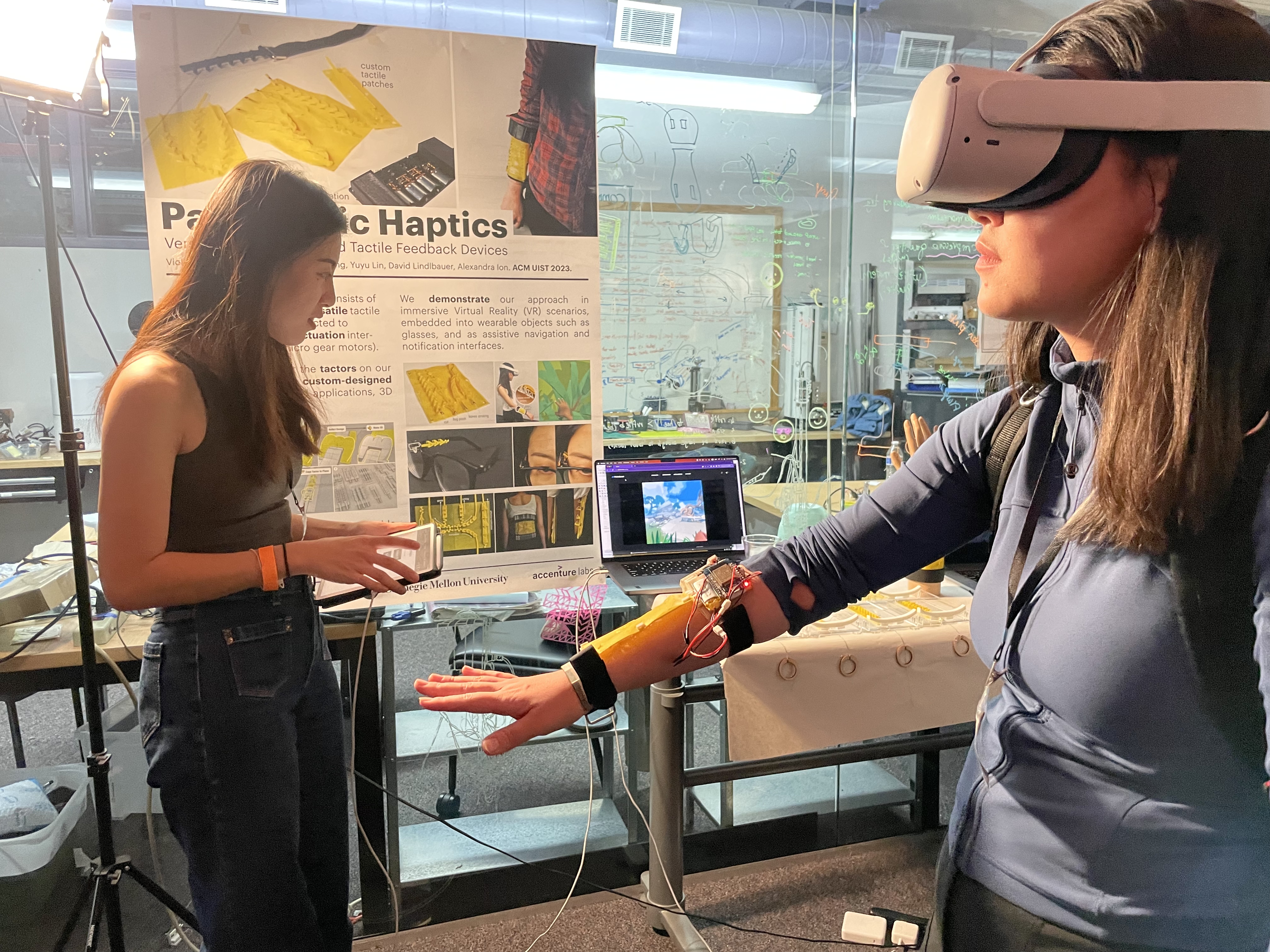
Haiyi Zhu is an Associate Professor of Human-Computer Interaction and Director of HCI Undergraduate Programs at Carnegie Mellon University, where she also leads the Social AI Group. Her research focuses on Human-AI Interaction, designing AI applications and studying how AI shapes human behavior and social practices. Her work has received funding from organizations including the NSF, NIMH, Amazon, Google, Meta, Teleperformance, ZS, and Toyota Research Institute. She has published over 90 peer-reviewed papers and received 15 best paper and honorable mention awards, as well as honors including Pittsburgh’s 40 Under 40 and the Allen Newell Award for Research Excellence. Learn more.
Faculty Bio: Patrick Carrington
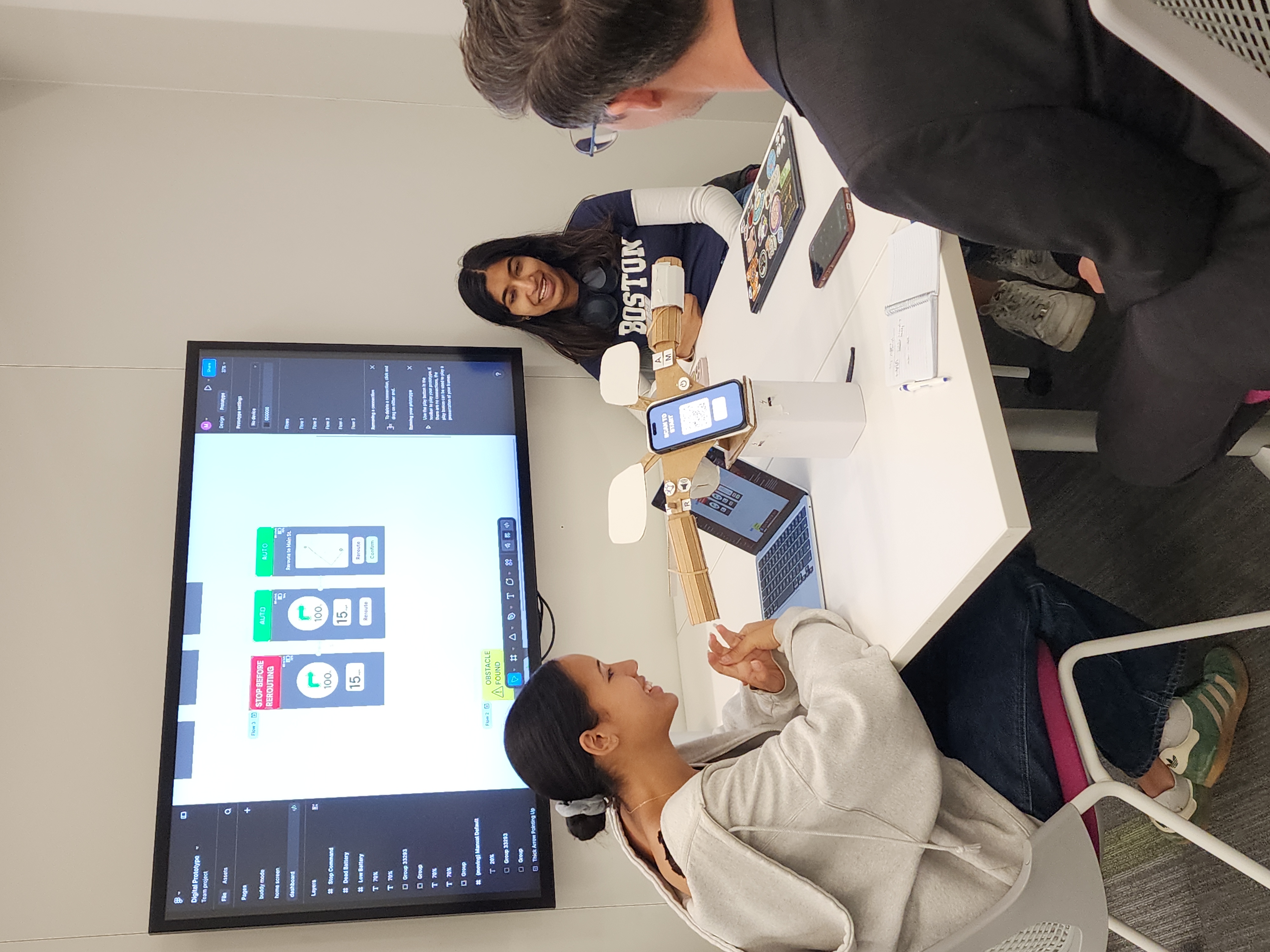
Patrick Carrington is an Associate Professor in the Human-Computer Interaction Institute at Carnegie Mellon University, where he leads the AXLE Lab. His research focuses on accessible computing, designing and developing technologies that expand how people with disabilities experience and interact with the world around them. His work draws on the everyday experiences of people with disabilities to design and build technologies that support autonomy and quality of life, with a particular emphasis on agency and joy. His research has been supported by the NSF, NIDILRR, Google, Microsoft Research, and the U.S. Department of Transportation, and has received Best Paper and Honorable Mention awards at CHI, ASSETS, DIS, and HRI. He received his Ph.D. in Human-Centered Computing from the University of Maryland, Baltimore County. Learn more.
Age and Grade
Age: You must be 16 years of age by June 26, 2027.
Grade: You must be in high school between 10th and 11th grade or between 11th and 12th grade during the summer of 2027.
Please read the Eligibility and Application Requirements for complete eligibility details.
Questions?
For questions related to the Pre-College HCI Program, contact Undergradute Program Manager Amelia Baisley.
Learn more through our recorded presentations and FAQ forums.
Application Details
Program Length
June 26 to
July 24, 2027
(4 weeks)
June 26, 2027: Opening Day
Basic Application Deadline
March 1, 2027
Decisions will be released on a rolling basis
Scholarship Application Deadline
February 1, 2027
Decisions will be released on April 1, 2027
Housing Options
Resident
or
Commuter
To be a commuter, the student and parent/guardian must have a permanent residence within approximately 30 miles of our Pittsburgh campus or within Allegheny County.
Eligibility and Application Requirements
Eligibility Requirements
To be eligible for Pre-College HCI, students must:
- Be at least 16 years old by the program start date.
- Be a current sophomore or junior in high school at the time of application submission.
- Have an academic average of B (3.0/4.0) or better.
- Students who have taken AP Computer Science A (Java) or AP Computer Science Principles are preferred (but not required).
- Previous experience in programming or design is NOT required
Application Requirements
The complete application for Pre-College HCI consists of the following:
- Completed online application
- Unofficial transcript
- Standardized test scores (optional)
- One letter of recommendation
- Responses to essay prompts
Application Essay Prompts
Applicants will submit responses to one essay prompt and two short answer prompts.
The following prompt is required of all applicants (300-500 words):
- What do you hope to gain from participating in Carnegie Mellon’s Pre-College Programs?
HCI applicants must then answer the following short answer prompts (150-300 words each):
- Describe a technology you use, such as an app, a website, a game, or an AI tool, that frustrated or delighted you. Why do you think it worked that way, and what would you change to make it better for the people who use it?
- HCI brings together computer science, AI, design, and psychology. Which of these fields interests you most, and why? If you are interested in more than one, describe how you see them connecting, using an example from your own experience if you can.
Frequently Asked Questions
Do I need to know how to code?
No. Previous experience in programming or design is not required. What’s essential is a strong interest in how humans and technology interact in our world.
Do I need to bring my own computer?
Students should bring their own laptop for coursework. We will provide any other materials needed. Please reach out to the program if you are unable to bring your own computer.
Will there be homework?
Students will be expected to engage in project work and collaborative assignments. We expect most of this work to be completed during scheduled class time, but students may also engage in project work and collaborative assignments outside of scheduled class hours as needed.
What is the daily schedule like?
Mornings introduce HCI concepts and topics through lectures, while afternoons are spent on hands-on activities, collaborative assignments, instructor feedback, and team projects.
Will I earn college credit for this program?
No, students will not earn college credit for the HCI Pre-College program.