Civil and Environmental Engineering
Explore the interconnected worlds of infrastructure, the environment, and intelligent systems through hands-on engineering.
Program Overview
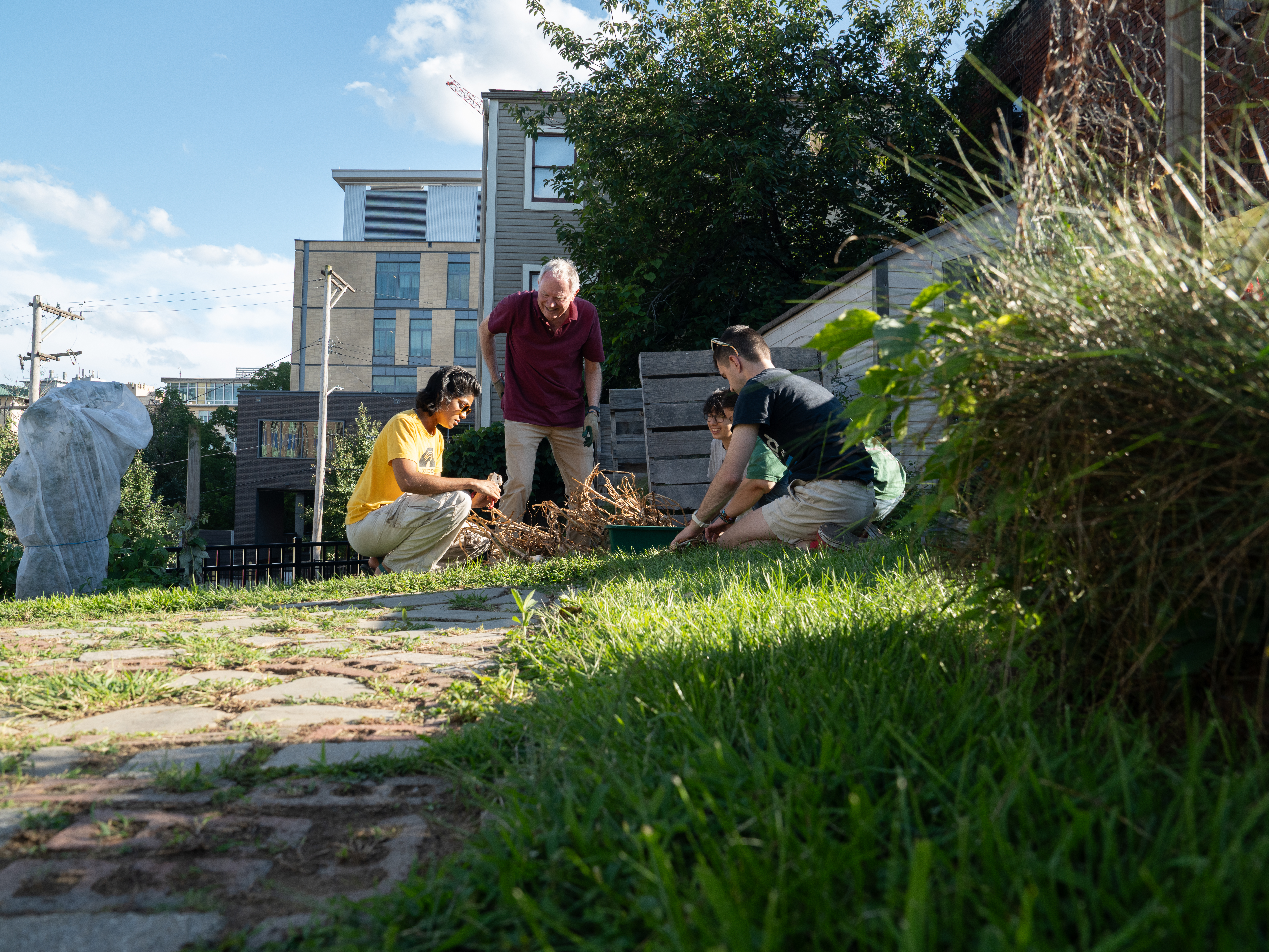
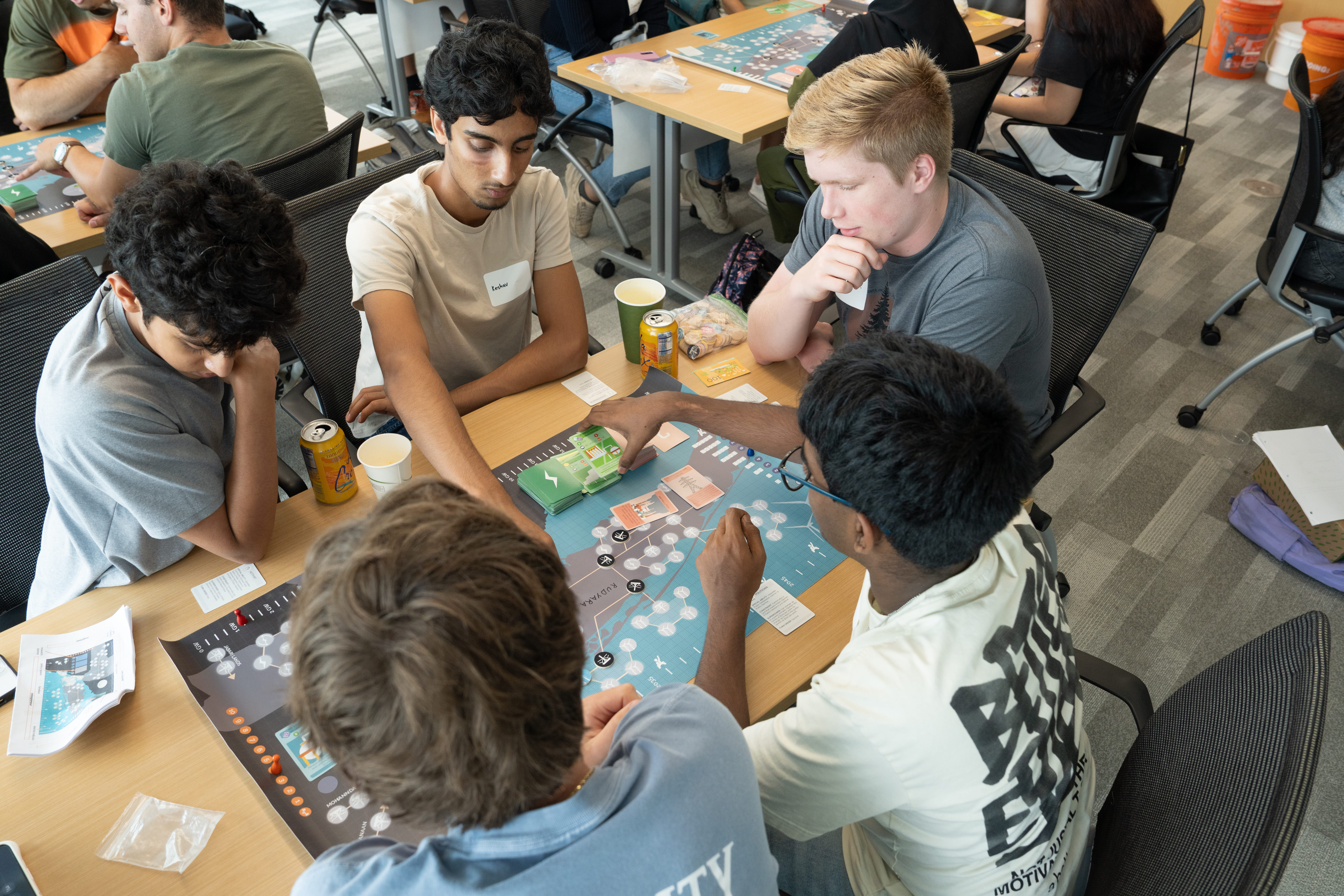
The Pre‑College Civil & Environmental Engineering program is a fast‑paced, four‑week, hands-on dive into how engineers shape the built, natural, and cyber worlds. Each week blends concept‑building lectures, infrastructure tours, and immersive laboratory, field, and design work, giving students constant opportunities to turn ideas into action. The curriculum moves through foundations of the built environment, environmental engineering and sustainability, intelligent systems and data, and a team design challenge that ends with a public showcase. Students will leave the program having built and tested a project model, a design brief, and an opportunity to present their project. Students participating in this program will also attend workshops on college applications and planning for their final years in high school, as well as cultivate life skills needed for college. No prior engineering experience is required.
Curriculum
By the end of this program, students will be able to:
- Articulate the central importance of civil and environmental engineering (including its major subdisciplines) for tackling the grand societal challenges of today
- Apply fundamental principles of high school and introductory college level mathematics and science to the solution of civil and environmental engineering problems
- Follow an engineering design process to define a socio-technical problem, develop candidate solutions (supported, where appropriate, with prototypes), compare options, and communicate a final design
- Recognize the importance of uncertainty, assumptions, estimation, scaling, and constraints when solving real-world engineering problems
Curriculum at a glance
- Week 1 — Foundations: The Built & Natural Environment
- Week 2 — Environmental Engineering & Sustainability
- Week 3 — AI, Data & Intelligent Systems
- Week 4 — Team Project Challenge

Faculty Bio: Gerald Wang
Jerry Wang joined CMU after a postdoctoral researcher position at the Massachusetts Institute of Technology’s Department of Chemical Engineering. He has past research in the areas of nanophotonics and metamaterials (Argonne National Lab), high-energy physics (Yale/CERN), fluid mechanics at non-infinitesimal Reynolds numbers (Yale), and cell biology (University of Illinois). His research interests involve using mechanics, statistical physics, and high-performance computing to understand nanoscale structural and transport phenomena, with the goal of developing very small solutions for very big problems in the water-energy nexus. Learn more.
Age and Grade
Age: You must be 16 years of age by June 26, 2027.
Grade: You must be in high school between 10th and 11th grade or between 11th and 12th grade during the summer of 2027.
Please read the Eligibility and Application Requirements for complete eligibility details.
Questions?
For questions related to the Pre-College CEE Program, contact Program Director Andrea Francioni Rooney.
Learn more through our recorded presentations and FAQ forums.
Application Details
Program Length
June 26 to
July 24, 2027
(4 weeks)
June 26, 2027: Opening Day
Basic Application Deadline
March 1, 2027
Decisions will be released on a rolling basis
Scholarship Application Deadline
February 1, 2027
Decisions will be released on April 1, 2027
Housing Options
Resident
or
Commuter
To be a commuter, the student and parent/guardian must have a permanent residence within approximately 30 miles of our Pittsburgh campus or within Allegheny County.
Eligibility and Application Requirements
Eligibility Requirements
To be eligible for Pre-College Civil and Environmental Engineering, students must:
- Be at least 16 years old by the program start date.
- Be a current sophomore or junior in high school at the time of application submission.
- Have at least a 3.0 GPA.
- Have completed a full year of either physics or chemistry at the high school level before the start of the program.
Application Requirements
The complete application for Pre-College Civil and Environmental Engineering consists of the following:
- Completed online application
- Unofficial transcript
- Standardized test scores (optional)
- One letter of recommendation
- Responses to essay prompts
Application Essay Prompts
Respond to the following essay prompts (300-500 words each):
- What do you hope to gain from participating in Carnegie Mellon's Pre-College Programs?
- Civil engineers and environmental engineers build societies by creating connected infrastructure that enable human and environmental success. This requires an interdisciplinary and systems thinking approach. Which interdisciplinary and connected system (e.g., water, transportation, structures, construction) do you hope to understand more fully and why?
Frequently Asked Questions
What materials or supplies should students bring?
Students are responsible for bringing a laptop or tablet; all other materials will be provided.
What are the out-of-classroom expectations for students?
Students will be expected to work outside of class on group-based work. Students will also go on guided tours of infrastructure on and near campus.
Who should apply for this program?
Students who are curious about how engineering shapes communities and the environment, and who want space to explore future academic pathways, are a great fit for this program. It’s designed for learners who care about stewardship, sustainability, computing and sensing technologies, and discovering where they belong in civil or environmental engineering.