Katherine Wang Codes New Tools for Biologists
Heidi Opdyke
- Associate Dean of Marketing and Communications, MCS
- Email opdyke@andrew.cmu.edu
- Phone 412-268-9982
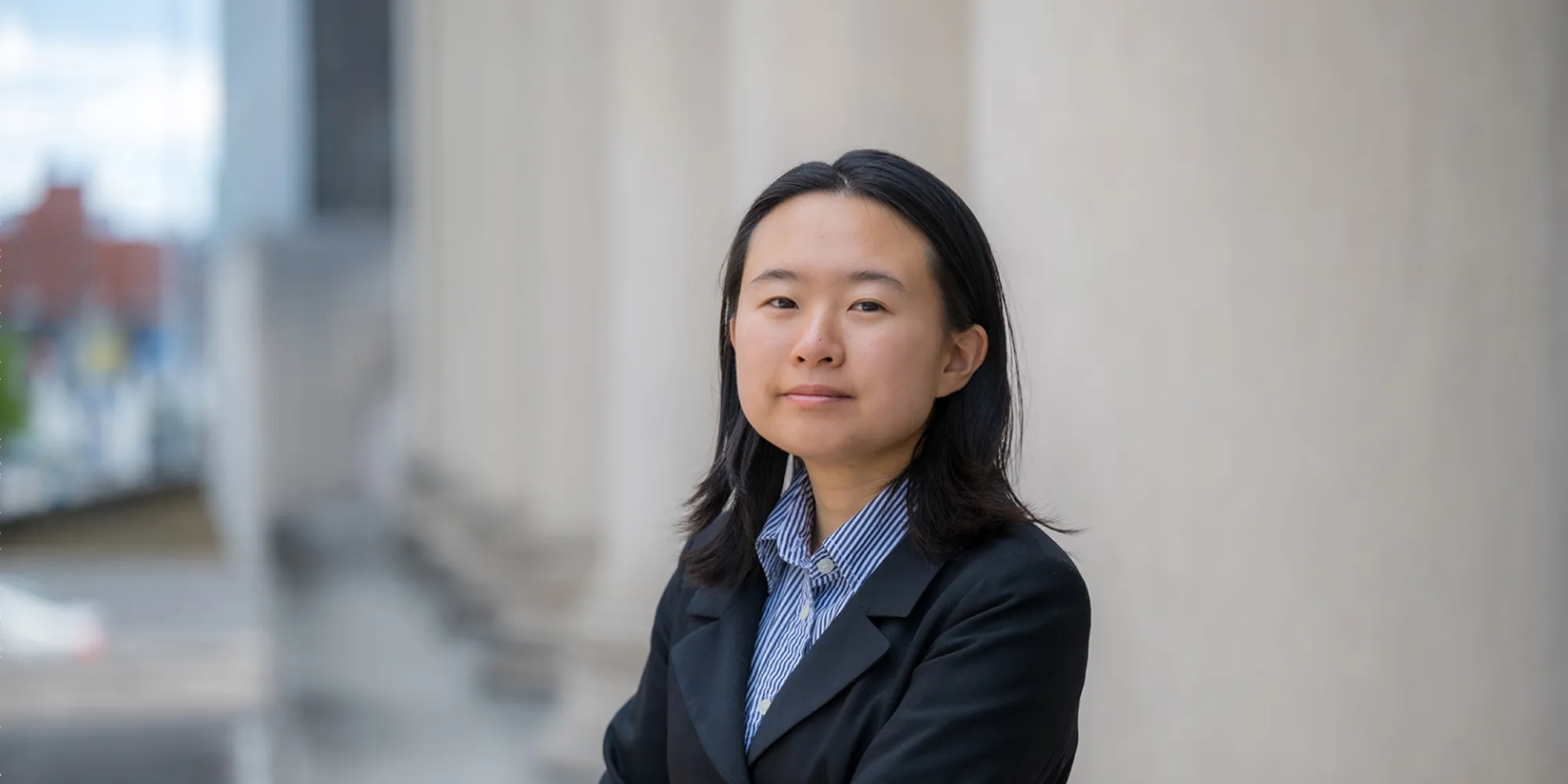
The National Institutes of Health’s National Center for Biotechnology Innovations (NCBI) databases hold millions of files of bacterial genome records. This data has the potential to power biological insights, but biologists cannot easily sift through thousands of datasets. Recognizing this challenge, Carnegie Mellon University graduate Katherine Wang is creating bioinformatics tools to make NCBI analysis more accessible and accelerate breakthroughs in the fight against bacterial diseases.
“There's demonstrable benefit in analyzing this wealth of biological data,” Wang said. “But there's a learning curve when it comes to handling data of this scale. Inevitably you'll need to work in the command line, but that's a skill that most undergraduate biology programs don't teach.”
Wang came to Carnegie Mellon to pursue the M.S. in Quantitative Biology and Bioinformatics (MS-QBB). This two- or three-semester program provides hands-on training in computational skills to students from life sciences backgrounds. Students in the three-semester track have the opportunity to complete a thesis in collaboration with a faculty advisor.
Wang worked with Catherine Armbruster, assistant professor of biological sciences, on a project using comparative genomics to investigate how an opportunistically pathogenic bacterium evolves to persist in different environments.
Armbruster investigates Pseudomonas aeruginosa, an environmental bacterium that is commonly found in buildings and can infect diverse sites in the human body. While typically harmless, it can cause infections in the lungs, eyes, bloodstream or other parts of the body in immunocompromised people. In people with preexisting conditions such as cystic fibrosis, these infections can become deadly. Outside of the human body, P. aeruginosa can grow in water pipes, posing risks to people who come into contact with contaminated water.
“P. aeruginosa in hospital plumbing poses a major healthcare concern,” Wang said. “Even if hospital staff attempt to disinfect points of contact like faucets and showers, they can’t completely get rid of it.”
Armbruster and Wang wanted to see whether differences in evolution might explain why the bacteria infect certain parts of the body or become infectious at all. Wang’s role was to build a computational tool that could compare genetic information between P. aeruginosa samples collected from clinical settings and environmental sources such as pipes. As she developed the tool, Wang realized its broader potential across the field of comparative genomics.
“She repeatedly encountered a problem familiar to many experimental biologists: the data needed to answer interesting biological questions often exists in abundance in public databases, but accessing and organizing those data can be technically challenging,” Armbruster said.
Wang started to create a series of tools to make this process easier for biologists, including a data processing pipeline called Metadata Magnet. Metadata Magnet curates large genomic datasets from the NCBI database, then built-in statistical tools allow researchers to test hypotheses on genes of interest. These pipelines are implemented in an open-source workflow manager called Nextflow, which makes it easier for researchers to reproduce their analyses. The tools keep track of the inputs used for each analysis, so researchers can double-check their work and produce the same results again at any time.
By making it easier to study how an organism’s prior ecological and evolutionary history has shaped bacterial genomes, these pipelines could help researchers develop more targeted treatments to diseases in the future. Additionally, standardized analyses address the reproducibility crisis, in which researchers are unable to replicate results previously published by themselves or others.
“I designed this pipeline with my biologist colleagues in mind,” Wang said. “I wanted it to be hassle-free to run, even if you don’t have much experience working in a Linux terminal.”
Wang, who graduated in December 2025, continues to work with Armbruster to refine the tools. She has already released one tool on GitHub and plans to publish the other as well, making them easily accessible to researchers worldwide. The team also is establishing a collaboration with an external lab to expand the tools’ capabilities.
“The broader vision behind this tool is to democratize access to comparative genomics analyses,” Armbruster said. “The tool has the potential to help experimental biologists more easily leverage public genomic resources to generate and test hypotheses about microbial ecology, evolution and disease.”