
Built for Discovery
How New Lab Spaces Will Elevate Undergraduate Biology
Heidi Opdyke
- Associate Dean of Marketing and Communications, MCS
- Email opdyke@andrew.cmu.edu
- Phone 412-268-9982
Teaching Professor Carrie Doonan has shepherded thousands of students through the biology laboratories at Carnegie Mellon University’s Mellon Institute.
“Our lab courses typify active learning, which is a hallmark of CMU education. We empower our students in these labs,” said Doonan, who serves as director of undergraduate laboratories in the Department of Biological Sciences. “Students practice skills, solve problems, struggle with complex questions, make decisions and explain their ideas and solutions in their own words through writing and discussion.”
Doonan follows the approach started by the late Bill Brown, former head of the Department of Biological Sciences. More than two decades ago, the curriculum was designed to immerse students in scientific inquiry through active, hands-on learning, rather than “cookbook” experiments with predictable outcomes.
“When students come to me their junior and/or senior year, they have taken the core courses. My job is to improve their analytical and critical thinking skills,” Doonan said. “We train our scientists to be able to work anywhere they want to: industry, graduate school, medical school, you name it.”
Miwa Shirai remembers Doonan’s lab courses. She graduated from Carnegie Mellon with a bachelor’s degree in biology and a minor in environmental science. She earned her Ph.D. in botany from the University of California, Riverside.
“CMU pushes you in the labs to be a critical and methodical thinker — biology can be confusing and seemingly messy at times, but that’s what makes it exciting,” said Shirai, now an assistant project manager at GeneGoCell in San Diego, where she oversees experimental design of next-generation sequencing projects, data analysis and project execution.
The labs in the Mellon Institute have shaped the education of decades of students, but their age is starting to show. On any given day, Doonan and lab instructors move 30 to 50 people through a series of three classrooms because none are large enough to hold all of the students at the same time. Wet lab work involves hands-on experimentation to test scientific theories using liquids, chemicals and biological matter. The work requires specialized equipment such as autoclaves, fume hoods and refrigeration units. Classes rotate among microscopes, centrifuges and gel imagers with limited space while the instructors repeat lessons throughout the class to groups of 5 or so students at time.
These constraints require a different approach to teaching, such as demonstrating techniques repeatedly to small groups of students instead of teaching the entire class at once. With student enrollment at maximum capacity, the currently configuration leaves no room to grow.
Some of the constraints include no projection capabilities in any of the rooms, which would allow instructors to do a demonstration once while allowing a large number of students to watch; limited storage for equipment and materials; and insufficient bench space for lab work or note taking. Students leave their personal belongings in plastic totes in the hallway during classes to make more room.
“It’s not ideal, but we make the best of what we have. We have an amazing team,” Doonan said.
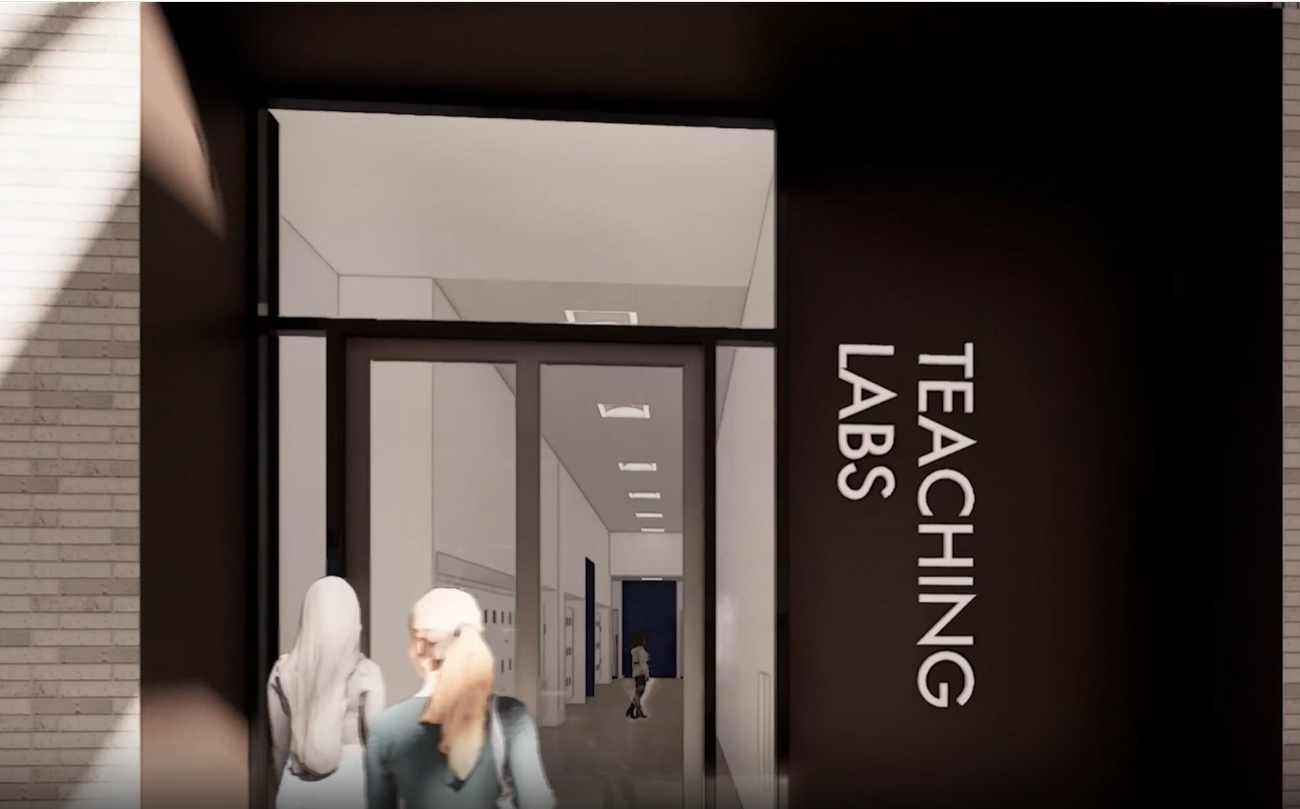
The opening of the Richard King Mellon Hall of Sciences represents a transformative opportunity to pair CMU’s world‑class instructors with laboratories worthy of their innovation. By investing in spaces that match the ambition of the curriculum and the curiosity of the students, the university is ensuring that the Department of Biological Sciences’ hands‑on, inquiry‑driven approach not only endures but also empowers the next generation of scientists and innovators.
Dedicated microscope rooms will house 16 phase-contrast microscope setups, while a separate fluorescence microscopy room will allow multiple students to work simultaneously on fluorescent imaging projects.
For the first time, courses like Quantitative Cell and Molecular Biology Laboratory will have three interconnected, dedicated spaces: one for wet lab bench work, one for phase-contrast microscopy, and one for fluorescence microscopy. The result is a seamless learning environment that eliminates bottlenecks and expands access.
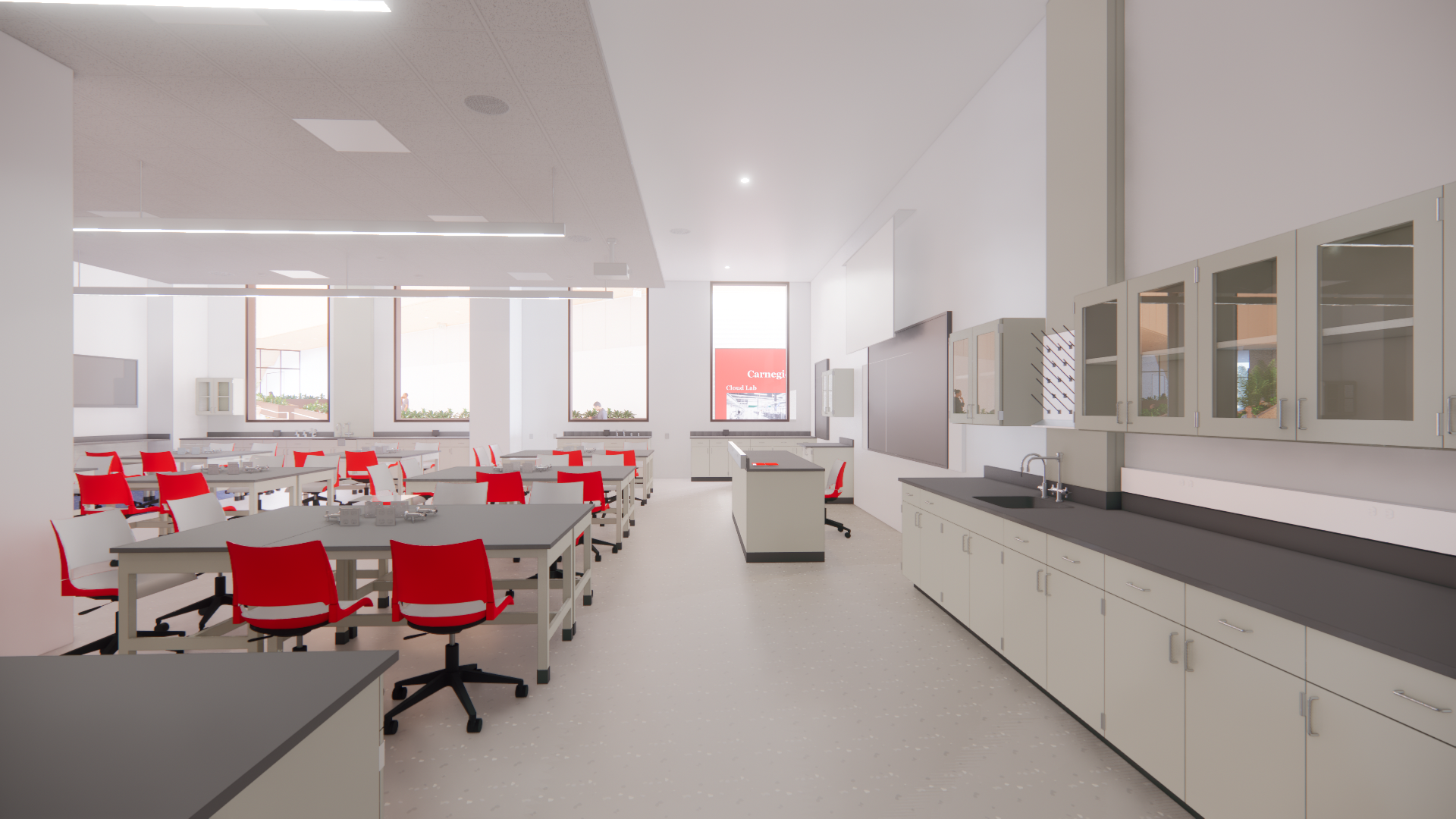
RKM Hall of Sciences also will include four large lab classrooms, each with a 24-student capacity. Two of these classrooms will combine dedicated wet lab benches with collaborative workspaces for computer-based analysis, data interpretation, and group discussion. Every lab classroom will feature full projection capabilities, allowing all students to clearly observe techniques and demonstrations in real time.
Equally transformative are the behind-the-scenes improvements:
- Expanded storage will accommodate modern equipment, supplies and materials.
- Students will have lockers for personal items.
- A large lab preparation room and a dedicated sterilization space will streamline workflows for instructional staff.
- A centralized equipment room will support multiple lab classes, while a dedicated cell culture room — with six permanent cell culture hoods — will replace the portable UV hoods that now consume valuable bench space.
For Doonan and her colleagues, the Richard King Mellon Hall of Sciences is an essential investment in the future of undergraduate biology education.
“When students have the space, the tools, and the visibility to truly understand what they’re doing, everything changes,” Doonan said. “That’s when curiosity turns into confidence — and confidence turns into discovery.”

