PittCell Brings Region’s Cell Biology Community Together
Heidi Opdyke
- Associate Dean of Marketing and Communications, MCS
- Email opdyke@andrew.cmu.edu
- Phone 412-268-9982
In labs throughout Pittsburgh, scientists work across disciplines and institutions to better understand how cells function and how cellular processes shape human health. That spirit of collaboration, especially between nearby institutions like Carnegie Mellon University, the University of Pittsburgh and Pitt School of Medicine, has helped turn the region into a hub for innovative, cross-cutting research.
“Western Pennsylvania is a fantastic place to study cell biology because there is such a strong and interconnected scientific community here, along with a long history of major discoveries and technological innovation across the region’s universities and medical centers,” said Liz Ransey, assistant professor in the Department of Biological Sciences and a co-chair of PittCell, an annual conference that brings researchers together for focused conversations surrounding cell biology. “The collaborative culture, particularly between many labs at Pitt and CMU, is incredibly strong and creates a really exciting environment for research.”
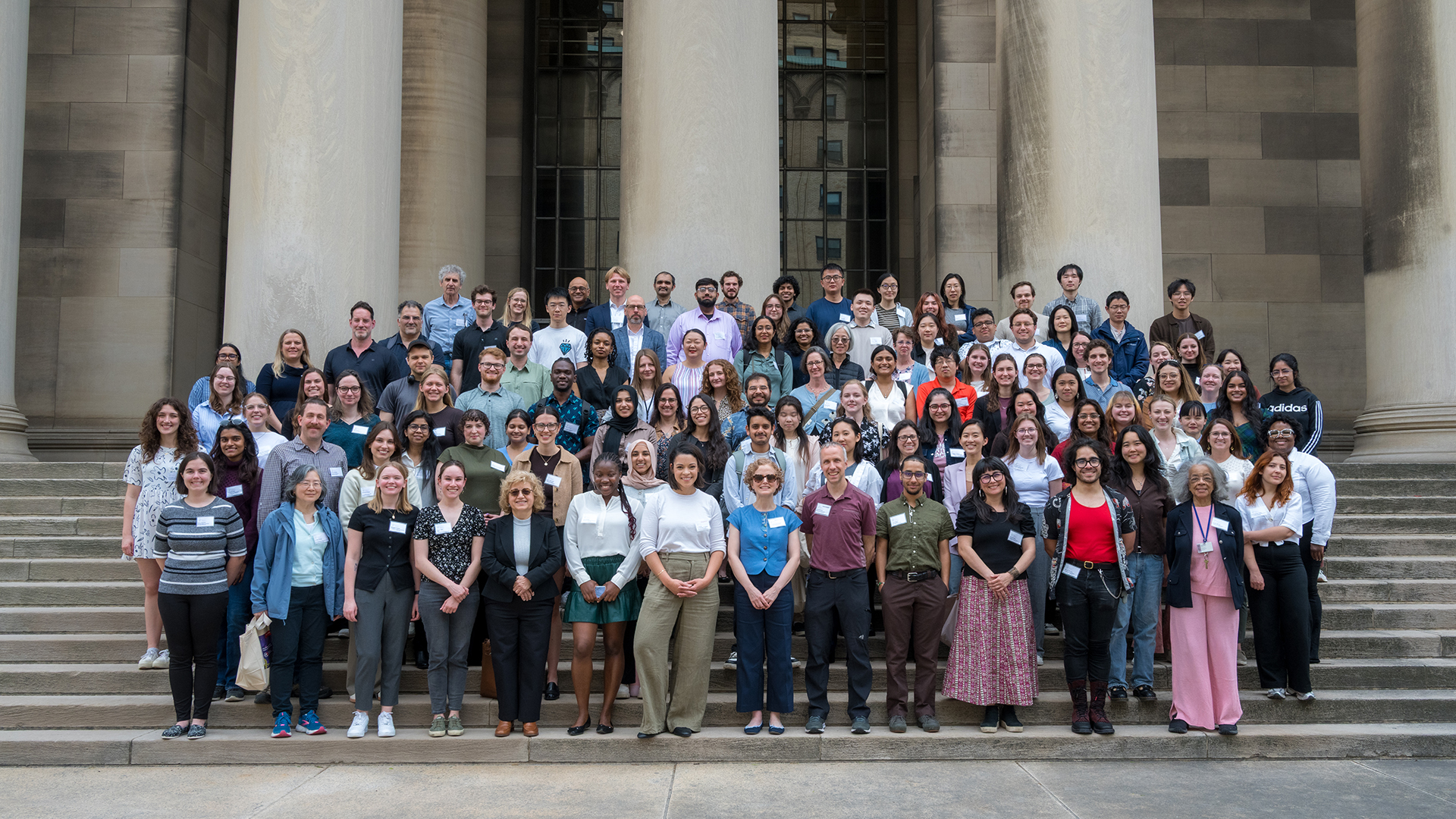
Formerly known as Local Traffic, the conference, which Carnegie Mellon hosted this year, fosters a strong training environment for early-career scientists, including students and postdoctoral researchers. Now in its 25th year, the event drew more than 200 participants from Pennsylvania, New York and beyond.
“We want to show people we have a critical mass of cell biologists and a diversity of science in western Pennsylvania,” said Matt Wohlever, assistant professor in the Department of Cell Biology at Pitt and co-chair of PittCell.
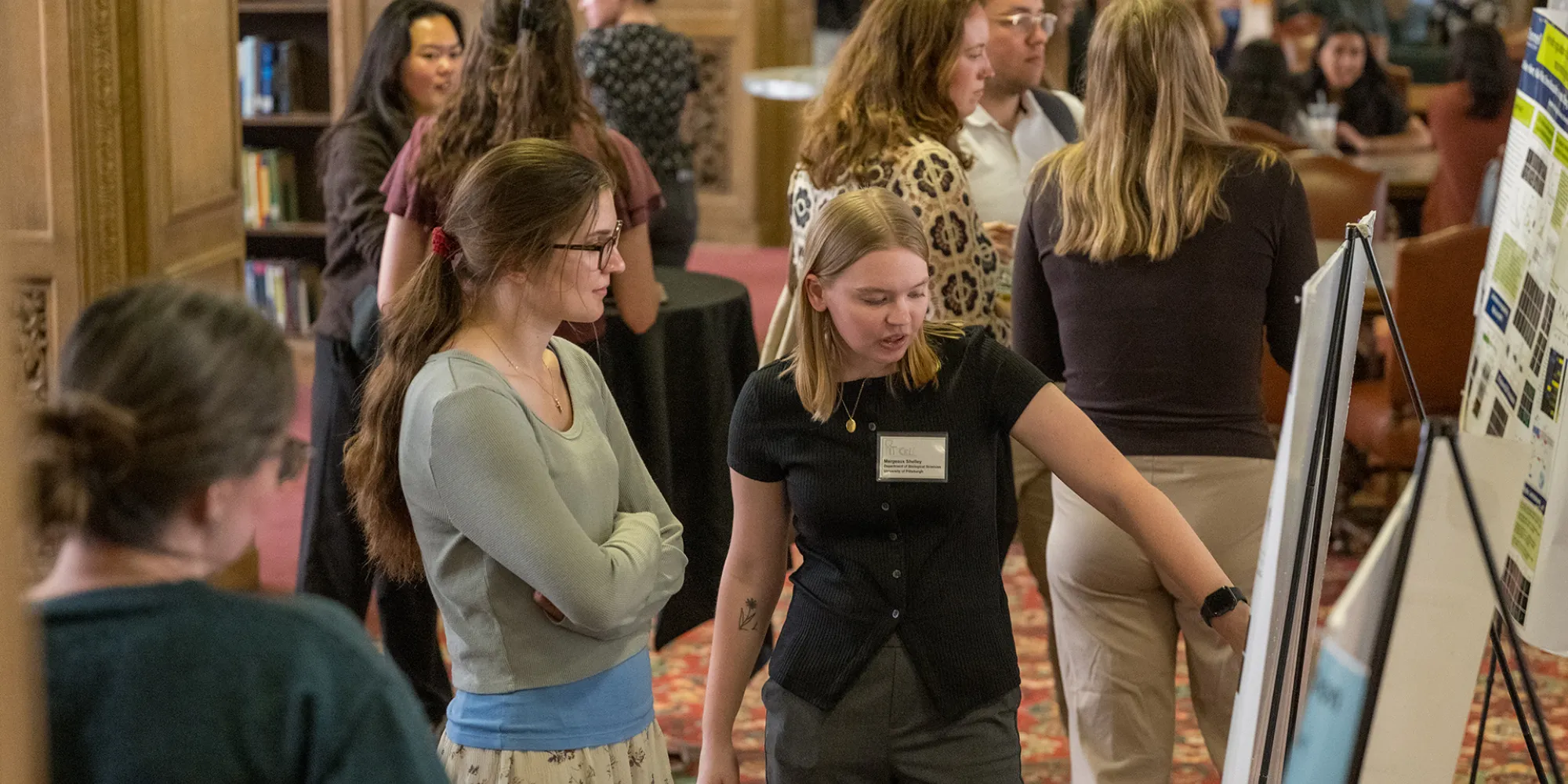
The conference is intentionally structured to give early-career scientists meaningful visibility, hands-on experience presenting work and opportunities to engage directly with peers and faculty across institutions.
This year’s keynote speaker, Jeanne Stachowiak of the University of Texas at Austin, is a distinguished cell biologist and biophysicist whose pioneering research on the physical mechanisms of membrane curvature and trafficking has reshaped our understanding of fundamental cellular processes such as endocytosis and membrane remodeling.
Additional talks covered innovation in cellular engineering and condensates from speakers such as Irene Kaplow, Department of Biological Sciences, Carnegie Mellon; and Afshin Beheshti, Center for Space Biomedicine, Pitt; Bokai Zhu, Aging institute, Pitt; and Marcus Noyes, Department of Computational and Systems Biology, Pitt.
Allison Meyer, a Ph.D. student in biological sciences at Carnegie Mellon, helped organize the event and presented her research on gap junctions, specialized protein channels that connect adjacent neurons and allow electrical signals to pass directly from one cell to another.
“I gained a lot from this experience, both in discussing my research with other scientists and getting their thoughts, comments and ideas,” Meyer said. “The range of research areas of the faculty that attended was a really good opportunity to expand my knowledge, learn about new techniques and research in the area, and find connections between other labs and my own.”
Alissa Rzepski, also a Ph.D. student in biological sciences, said the conference offered valuable interdisciplinary insight. Her research focuses on engineering gap junction inhibition strategies to better understand how specific connexin isoforms contribute to gap junction function in both normal and disease states.
“I made numerous connections both within and outside my field of study and received insightful feedback that will help guide my project and future research directions,” Rzepski said.
Organizers say the conference is continuing to grow. This year, strong interest in poster presentations led to expanded programming including a lunch for trainees with an editor from the Journal of Biology.
“We often overlook the amazing scientists next door when you’re reading people’s papers,” Allyson O'Donnell, an associate professor of biological sciences at Pitt and a former PittCell Conference chair. “Pittsburgh has such a rich scientific community, and I hope deeper collaborative ties will form from events like this.”
The conference is made possible through the generous support of a wide range of industry and academic partners. Corporate sponsors — including CMU spinoff Magnify Biosciences, Fisher Scientific, Keyence, VWR, Thermo Fisher, Hunt Optics, B&B Microscopy, USA Scientific, and Panera — help bring cutting-edge perspectives and resources to the event. Academic collaboration is equally strong, with support from the University of Pittsburgh School of Medicine’s Department of Cell Biology, Aging Institute, Trivedi Institute, Department of Computational and Systems Biology, and the Renal Division and O’Brien Kidney Resource Alliance, along with the University of Pittsburgh’s Department of Biological Sciences and Carnegie Mellon University’s Department of Biological Sciences. Together, these partners underscore the conference’s commitment to cross-sector innovation and scientific advancement.