The Value of Certification
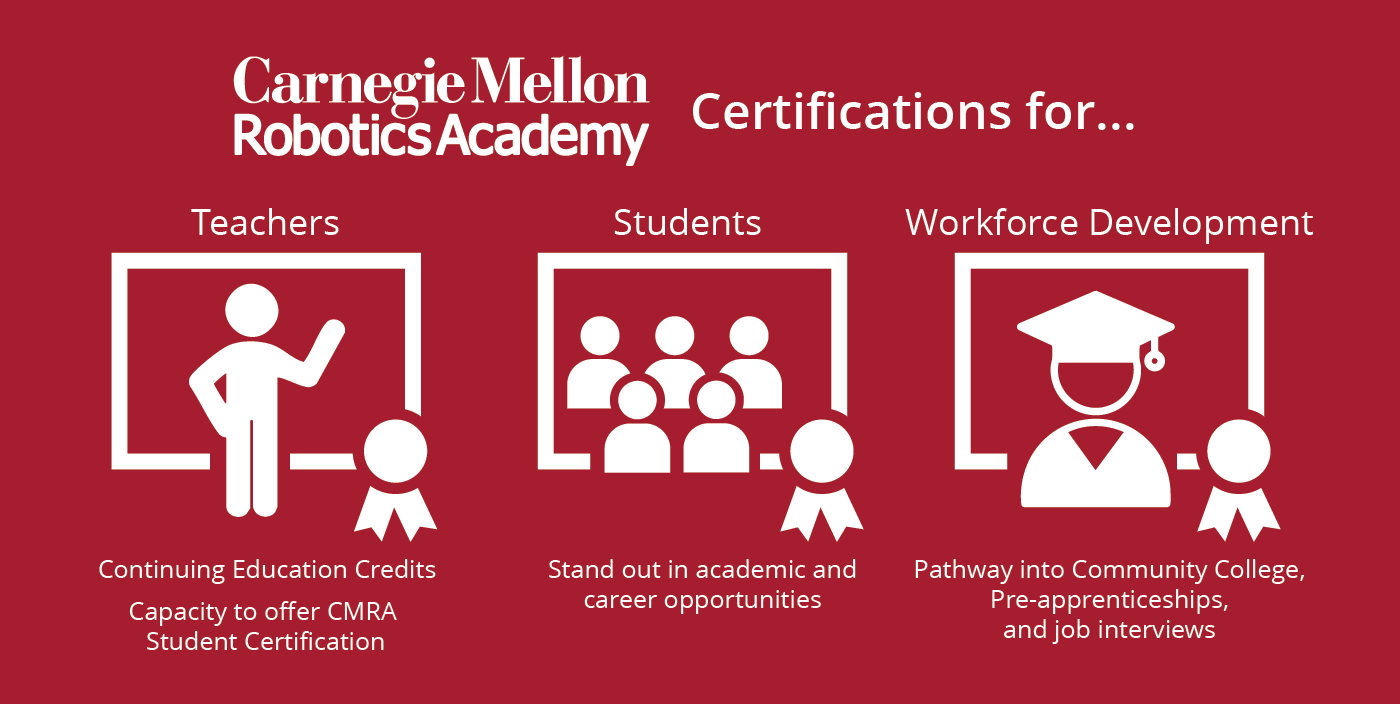
The Carnegie Mellon Robotics Academy (CMRA) offers research-based certifications and microcertifications that validate an individual's proficiency in integrating robotics into STEM education. These credentials are designed for both educators and students, emphasizing practical application and understanding of robotics concepts.
Key Benefits:
-
Comprehensive Skill Development: CMRA certifications require participants to engage in hands-on activities, such as coding solutions, building robots, and creating wiring diagrams, ensuring a deep understanding of robotics integration.
-
Train-the-Trainer Model: Certified educators are empowered to offer certification opportunities to their students, promoting widespread dissemination of robotics education.
-
Industry Recognition: The SMART Robotics Technician curriculum, developed in collaboration with the ARM Institute, focuses on essential knowledge and skills required for robotics technicians, enhancing career readiness.
-
Flexible Learning Platforms: Certifications are delivered through the CS-STEM Network (CS2N), providing accessible and structured learning experiences for both educators and students.
-
Continuing Education Credits: Educator-level certifications are widely accepted as continuing education credits, supporting professional development and career advancement.

 |
The CS-STEM Network (CS2N.org) is a Learning Management System created by the Carnegie Mellon Robotics Academy to provide access to our courses and certifications. |
| Educators who have been trained and certified can offer certifications to their students. Student certifications may be purchased via Purchase Order or through our Digital Store. | |
Professional Development
Carnegie Mellon Robotics Academy certifications provide K-12 students with recognized evidence of their skills and competencies in robotics, helping them stand out in academic and career opportunities by demonstrating their ability to understand big ideas in robotics.
Micro-certifications and Certifications at CMRA
Micro-Certifications:
- The micro-certifications, especially those under the SMART Robotics Technician Program, were designed to align with industry-defined competencies. For example, completing all the foundational micro-certifications (mechanical, electrical, software, fabrication, integration, etc.) can make a learner eligible for a more advanced certification under that technician curriculum.
- In some cases, micro-certifications serve as stepping stones: they allow learners to “stack” credentials, progressively working toward a full certification. This modular approach helps learners build foundational skills first (via micro-certs) and then combine them toward broader competencies (via full certifications).
Certifications:
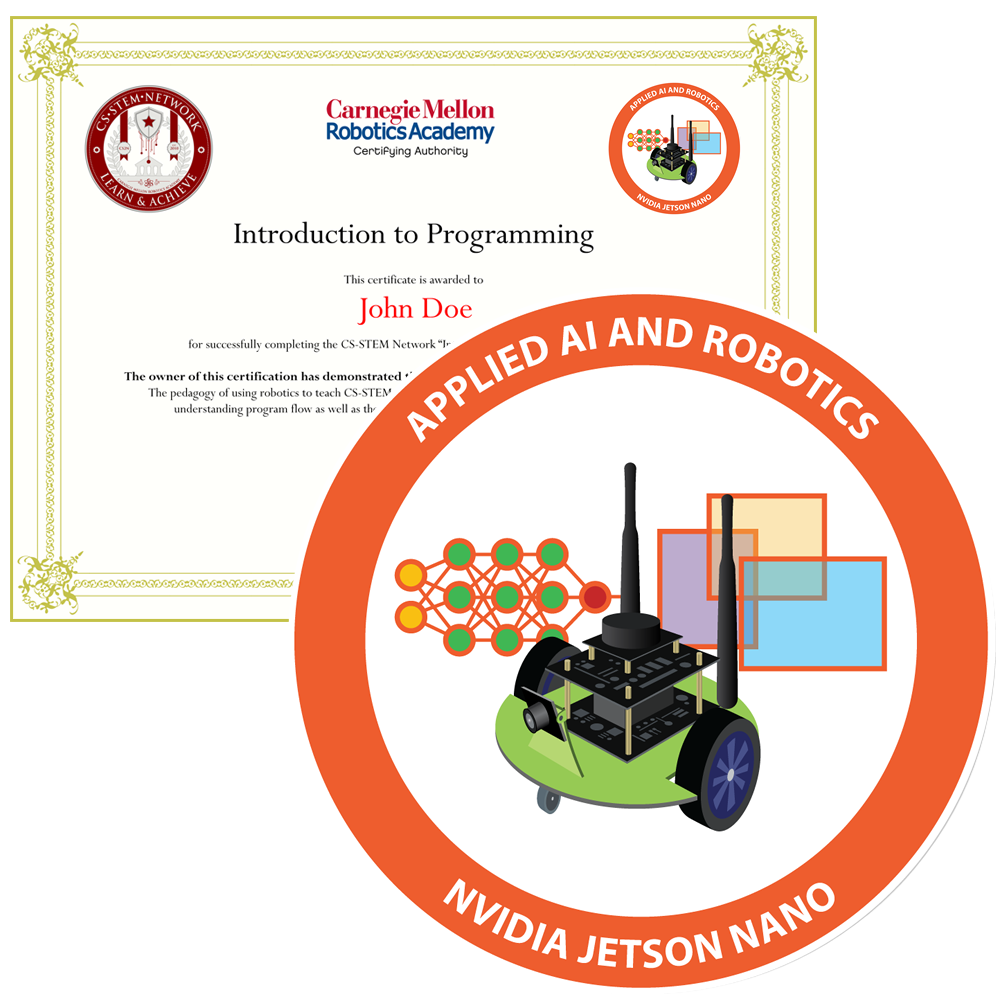
- Full “certifications” at CMRA represent a higher-level, more comprehensive credential, reflecting a broader mastery of robotics and computational thinking, often across multiple skill areas (e.g. coding, robotics platforms, computational thinking, AI/robotics with Jetson, etc.).
- Certifications also rely on the same model of evidence + artifacts + assessments (not just a written exam).
- Certifications are available at both educator and student levels. For educators, earning CMRA certification allows them to offer certification opportunities to their students.
- They are more “formal” in the sense that they cover a full curriculum, for example for coding & computational thinking with a particular robotics platform (like LEGO SPIKE Prime, VEX V5, etc.), or for more advanced robotics/AI courses.
- They are intended to provide recognized evidence of a learner’s broad competencies, giving stakeholders (like schools or potential employers) confidence in the person’s skills across robotics and computational areas.
Featured Mobile Robotics Certifications
The Carnegie Mellon Robotics Academy leverages best-in-class robotics platforms to help educators and students reach meaningful learning gains in computational thinking, mathematics, coding, and the engineering process. Certifications are available for educators and students who leverage these robotics platforms in their learning environments.
Featured Robotics Technician Microcertifications
The SMART Robotics Technician curriculum originated as a set of five courses developed through a research project funded by the ARM Institute, known as the Smart Manufacturing and Advanced Robotics Training ( SMART) Project. This comprehensive program focuses on the essential Knowledge, Skills, and Attitudes (KSA) required for Robotics Technicians—skilled professionals who build, maintain, and troubleshoot robotic systems across various industries. We have continuously expanded and refined these courses with additional support from the National Science Foundation and the Office of Naval Research.
SMART Robotics Technician courses are endorsed by the ARM Institute, demonstrating their alignment with industry standards and workforce needs.
The credentials formally qualify as a Pennsylvania Pre-apprenticeship and are approved by the Virginia Department of Education.
Carnegie Mellon Robotics Academy maintains articulation agreements for SMART graduates to continue their education through community colleges including the Community College of Allegheny County and Westmoreland County Community College, as well as a full apprenticeship available through New Century Careers.
Earn SMART Microcertifications through Robotics Competitions
Participants of the FIRST Robotics Competition and VEX Robotics Competition learn an incredible amount from these experiences, but many potential schools and employers are unaware of the specific Knowledge, Skills, and Attitudes that are fostered. Participants who have gone through at least one competition season can now provide evidence of their experience to earn SMART Robotics Technician Micro-Certifications from the Carnegie Mellon Robotics Academy, and more clearly showcase their abilities.
Earn Credentials through Partner Programs
Carnegie Mellon Robotics Academy partners with organizations to identify research-based big ideas in CS-STEM, allowing the partner organizations to help their participants reach critical learning outcomes. Participants of the partner programs can earn a Carnegie Mellon Robotics Academy microcertification or certification that reflects their knowledge and experience.
Legacy Robotics Certifications
The Carnegie Mellon Robotics Academy leverages best-in-class robotics platforms to help educators and students reach meaningful learning gains in computational thinking, mathematics, coding, and the engineering process. Certifications are available for educators and students who leverage these robotics platforms in their learning environments.