Current Statistics & Data Science Students
We are excited that you are a part of, or are hoping to become a part of, our trailblazing and innovative group of Stat & DS students.
In this department you will learn to collaborate across disciplines to solve important, real-world problems. Explore this page for resources and policies that are important for your success as a Stat & DS student.
Declaring a Stat & DS Major or Minor
All incoming students in Dietrich College start undeclared. Your Academic Advisory Center (AAC) Advisor is the first step in declaring your primary major. If you are interested in Statistics & Data Science, your AAC Advisor can help you think about your interests and values and help you decide which of our five statistics and data science majors best fits those interests. Your AAC Advisor will also help you select courses that enable you to explore and identify which Statistics major is best for you.
The earliest a major can be declared is during the second semester of Year 1. Primary majors should be declared no later than mid-semester of the last semester of Year 2.
When you decide on a major, you will meet with your AAC Advisor who will work through a Declaration of Major form with you and explain the next steps in the process.
Please refer to the Undergraduate Catalog for the specific degree requirements for your year of entry. Catalogs for previous entry years are available.
Declaring an Additional Major/Minor in Stat & DS
Declaring an Additional Major in Stat & DS
All of our five majors can also be taken as an additional major. An additional major allows you to pursue an additional area of study, while maintaining your primary major. Students who complete an additional major will earn a single degree in two areas.
In order to declare an additional major, students need to fill out this form to apply. If you are interested in learning more about the additional major prior to declaring, please schedule a meeting with the appropriate advisor. Learn who advises which major. We encourage you to meet with the advisor prior to declaring to discuss course planning, double counting, and policies.
We do recommend that if a student is interested in an additional major in Stat & DS that they take the following coursework prior to declaring. This will give students a better understanding of what to expect in the major.
- 36-200: Reasoning with Data or 36-202: Methods for Statistics & Data Science
- 21-256: Multivariate Analysis or 21-240/241: Matrix Algebra with Applications/Matrices and Linear Transformations
- (For StatML) 21-127: Concepts of Mathematics
- 15-110: Principles of Computing or 15-112: Fundamentals of Programming and CS
Please refer to the Undergraduate Catalog for the specific additional major requirements for your year of entry. Catalogs for previous entry years are available.
Declaring a Minor in Stat & DS
In order to declare the minor, students need to fill out this form to apply.
If you are interested in learning more about the minor prior to declaring, please schedule a meeting with the Statistics & Data Science minor advisor, Amanda Mitchell. We encourage you to meet with the advisor prior to declaring to discuss course planning, double counting, and policies.
Before you declare a minor in Statistics & Data Science, we recommend taking the following courses:
- 36-200: Reasoning with Data
- 36-202: Methods for Statistics & Data Science
- 21-120: Differential and Integral Calculus
- 21-256: Multivariate Analysis
- 36-235: Probability and Statistical Inference I
Please refer to the Undergraduate Catalog for the specific minor requirements for your year of entry. Catalogs for previous entry years are available.
Undergraduate Advising
Once declared, your Statistics & Data Science advisor becomes your primary point of contact for managing your academic journey and mapping out your long-term goals. Advising here goes far beyond picking classes. It’s about giving you the targeted support, strategic direction, and mentorship you need to thrive at CMU and prepare for what comes next.
Your AAC advisor is still there to support you as well. You can visit the AAC website for more detailed information on how they can help you as you move along in your undergraduate career.
Meet the Advisors
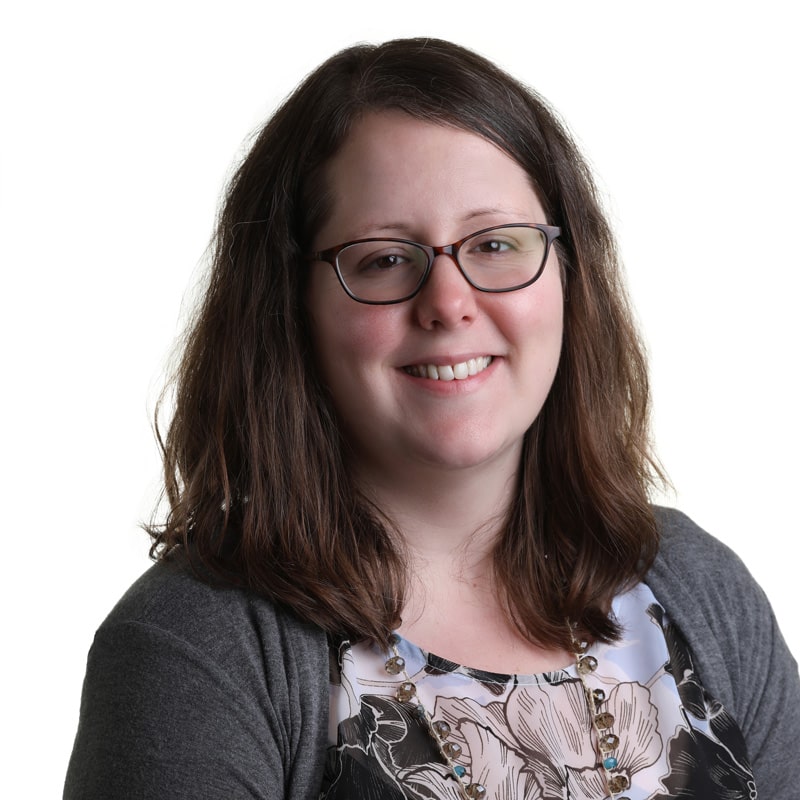
Amanda Mitchell
Lead Undergraduate Academic Program Manager
Advises:
- All Primary and Additional Majors in Economics & Statistics
- All Minors in Statistics & Data Science
Email: ajmitche@andrew.cmu.edu
I look forward to meeting you and supporting you as you navigate CMU and your chosen major. I’m here to help with schedule planning, graduation progress, internship and career discussions, research opportunities, finding your place on campus, and whatever else you’d like to chat about!
Don’t hesitate to reach out via email or schedule a meeting if you want to chat!
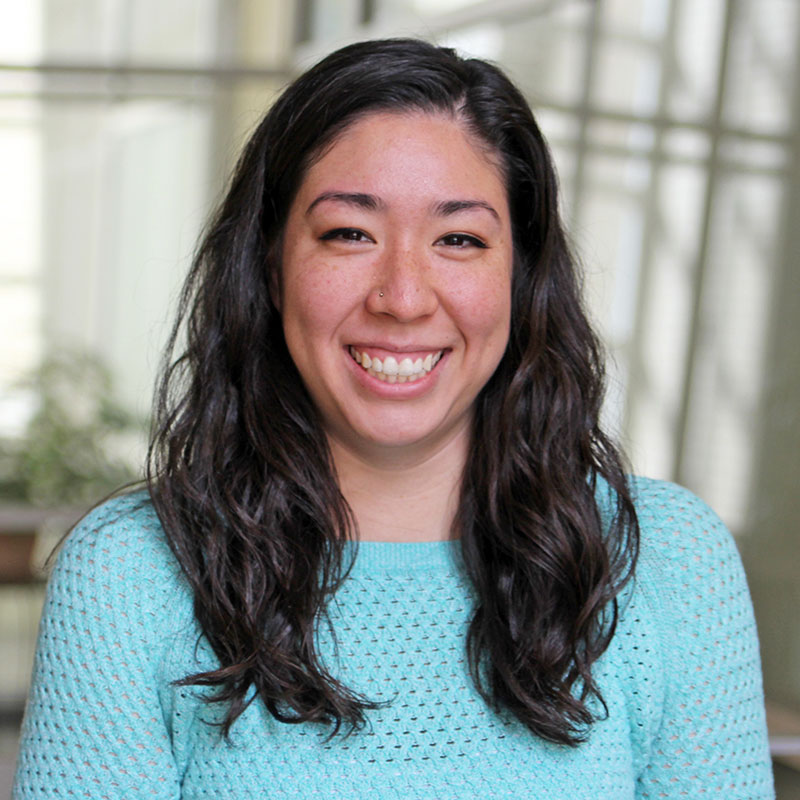
Sylvie Aubin
Undergraduate Academic Advisor
Advises:
- Last names: A-I
- Primary and Additional Majors in Statistics & Data Science, Statistics & Machine Learning, BS in Statistics & Data Science (Mathematical Sciences Track), and BS in Statistics & Data Science (Neuroscience Track)
- Stat & DS Tartan Scholars
Email: saubin@andrew.cmu.edu
I am honored and excited to be part of your academic journey with the Department of Statistics & Data Science. Together we will navigate your major, find your CMU community, and discuss your personal interest and academic goals.
I’m always happy to chat with you about anything and everything. Please feel free to reach out if you have any questions or want to chat.

Peter Long
Undergraduate Academic Advisor
Advises:
- Last names: J-S
- Primary and Additional Majors in Statistics & Data Science, Statistics & Machine Learning, BS in Statistics & Data Science (Mathematical Sciences Track), and BS in Statistics & Data Science (Neuroscience Track)
Email: peterlon@andrew.cmu.edu
I am excited to work with you as you embark on your academic journey in the Stats & Data Science Department at CMU. Whether it be schedule planning, monitoring graduation progress, or something else you need assistance with, I am here to help.
Feel free to email me or schedule a meeting if there is something you wish to discuss!

Glenn Clune
Undergraduate Academic Program Manager
Advises:
- Last Names T-Z
- Primary and Additional Majors in Statistics & Data Science, Statistics & Machine Learning, BS in Statistics & Data Science (Mathematical Sciences Track), and BS in Statistics & Data Science (Neuroscience Track)
Email: gclune@andrew.cmu.edu
I am looking forward to meeting all of you and supporting you while you work your way through our program!
I am excited to create an individualized plan for your success, and to cheer you on to graduation! If you have any questions, please feel free to email me for any clarification or assistance.
 Experiential Learning
Put your statistical and data science skills into practice through collaborative, real-world projects. From corporate and sports analytics capstones, and honors theses to summer research experiences and global study abroad opportunities, discover how you can turn classroom learning into real-world impact.
Explore experiential learning opportunities
 Statistics Ambassadors
The Statistics Ambassador (StatAM) program connects Statistics & Data Science students with peer mentorship, drop-in support, and community-building events. This program was built to strengthen the undergraduate experience by creating a welcoming environment where students can get advice on StatDS academics and career paths, navigate department resources, and build lasting relationships within the major.
Connect with us!
Fall Connection Hours
Tuesday: 9:30am–10:30am & 1:00pm–2:00pm
Wednesday: 1:00pm–4:00pm
Thursday: 1:00pm – 2:00pm
Email us at statam@andrew.cmu.edu
Visit the StatAM website to learn more and see upcoming events
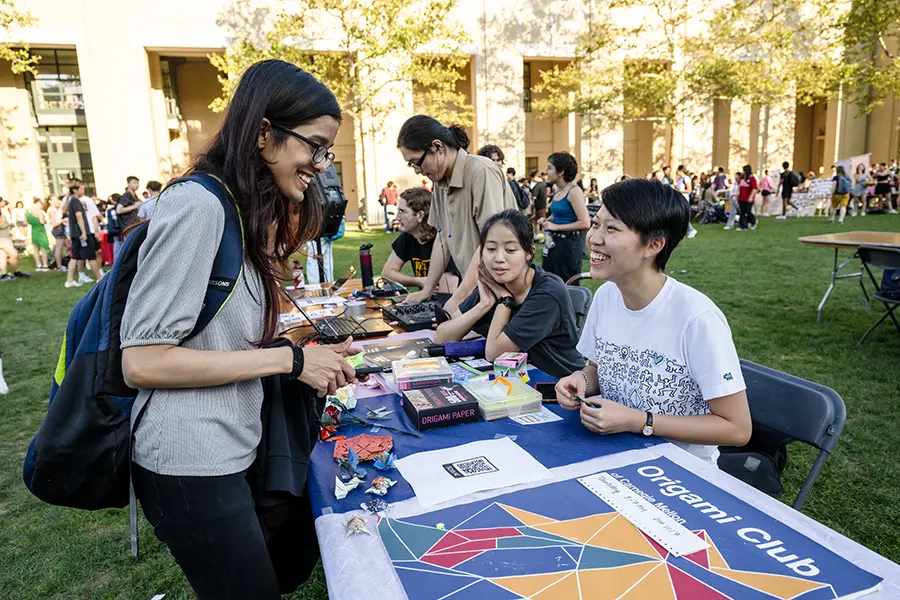 Student Groups
Discover opportunities to collaborate, innovate, and connect with fellow students who share your academic or personal interests. While the list below highlights key organizations closely tied to our degrees, you can explore the full university list to see every available student group.
StatDS-related Student Groups
Carnegie Mellon Data Science Club
Carnegie Mellon's premier Artificial Intelligence club, empowering CMU students to explore cutting-edge AI, machine learning, and data science through hands-on projects, research workshops, and competitions. Check out their website and join their mailing list to stay updated about their events and club activities!
Carnegie Mellon Sports Analytics Club
The Carnegie Mellon Sports Analytics Club is a student-run sports statistics club which uses in-depth quantitative data to develop our members’ understanding of sports analytics, strategies, and management. The club actively seeks new members year round to research and write articles on a variety of sports, develop leadership skills, and participate in analytics competitions. If you’re interested in sports analytics, learning more about it – and potentially making a career out of it – contact the club president.
Women in Statistics
The Women in Statistics group at Carnegie Mellon University was created in January 2015 by and to support Ph.D. students in the Statistics & Data Science department.
This group supports Ph.D. students throughout their graduate school experience while providing opportunities for professors to connect and openly communicate with Ph.D. students outside classes or the academic environment. They also focus on providing opportunities for alumni (recent graduates as well as others) to share their experiences after graduation with current Ph.D. students, and for senior students to share their experiences, advice, and knowledge with junior students.
Moneythink CMU
Moneythink expands economic opportunity in the United States by equipping urban youth to believe in themselves, navigate the financial decisions of adulthood, and achieve financial prosperity. Moneythink CMU does so by sending college mentors into high school classrooms once a week to give a lesson on essential financial literacy concepts. Their innovative model gets young people excited about making smart financial decisions and starts them down the path toward economic success – in turn, generating a financial ripple effect through families and entire communities. They focus on peer mentorship, pop culture examples as a teaching vehicle, and taking personal responsibility for one's finances.
Students Using Data for Social-Good (SUDS)
Students Using Data for Social Good (SUDS) was founded in 2017 at Carnegie Mellon University with a simple but powerful vision: to connect students passionate about data science with organizations working to make a positive social impact.
What began as a small group of students has grown into a vibrant community of data scientists, analysts, and machine learning enthusiasts committed to using their skills for good.
Over the years, we've partnered with dozens of organizations across various sectors, helping them leverage data to enhance their operations, reach more people, and maximize their impact.
Frequently Asked Questions
When can I declare my Statistics & Data Science major?
The earliest you can declare your major is after mid-semester break during your second semester of your first year at CMU; you are required to declare your major by mid-semester break of the second semester in your Sophomore year.
How do I declare?
In order to declare, you first need to speak with your advisor in the Academic Advising Center (AAC) to discuss your interests and academic aspirations and how they relate to Statistics. Once you have had that discussion, your AAC advisor will provide you with a declaration form that you will need to fill out prior to scheduling a meeting with the Statistics & Data Science Advisor. Once you have completed this form you will make an appointment with the advisor in Statistics to go over your interests, degree requirements, course selection, and career aspirations. It is in this meeting that you will officially become a member of the StatDS community!
How many courses do I need to take?
You must be in at least 36 units (full time) each semester. Anything below 36 units is considered part-time. Dropping below full-time may affect financial aid eligibility, housing, loan repayment status, and Visa status. A normal course load consists of 5 courses(45 units), but this will vary depending on how many units each course is. 45 units each semester will keep you on pace for graduation in 4 years. Keep in mind that this is just an average, and fluctuation of units (below 45, and above 45) is common and expected.
Undergraduate students who wish to drop below full-time during the semester must fill out the Petition to drop below full-time. This form should be turned into your academic advisor. From there, the Associate Dean will have to approve the request. It is best to meet with your academic advisor when you first begin thinking about dropping below full-time.
How do I choose courses to make sure I stay on track?
Keep in mind that there are many different paths that students can take, so there is no one "right way" to take all of your courses. To get an idea of what types of major classes you should be taking and when, please look at our Sample Programs available under each Statistics major in our undergraduate catalog.
For further guidance, or if you have any additional questions, please feel free to email or make an appointment with your academic advisor.
What’s the difference between a “W” and a “Drop"?
If you decide to drop a course before the add/drop period is over, you can do so yourself in SIO and the drop will not be shown on your transcript. If you wait until later on in the semester (i.e. after the drop deadline), and you need to drop a course, that is considered a withdrawal. Withdrawing from a course will require you to consult with your advisor, fill out a withdrawal form, and will result in a “W” on your transcript.
How do I drop a course?
There are three types of drops you can take advantage of throughout the semester. The earliest deadline is the drop deadline and if you are still above 36 units after the drop, you're able to do that yourself in SIO. The second deadline is the course withdrawal deadline. If you choose that option, you will need to work with your Academic Advisor on how to withdraw from a course. Keep in mind that this option results in a "W" on your transcripts. The latest deadline, and third option, is using a drop voucher. You have three drop vouchers to use throughout your entire time at CMU. You can only use one drop voucher in a semester, and you will need to work with your Academic Advisor in order to use a voucher. Dropping a course with a voucher removes the course from your transcript entirely. The deadline for drop vouchers is the last day of classes (prior to final exams).
If it is after the drop deadline, that would be considered a withdraw (see above), and you will need to complete and submit a Course Withdrawal Form. At any time, if you are dropping below full time (i.e. 36 units), this must be due to extenuating circumstances, and approved by not only the academic advisor, but the Assistant Dean of the AAC as well.
How do I add a course after the add/drop period?
If you want to add a course after the established add period at the beginning of each semester, you must first consult your academic advisor. After you have spoken with your advisor, you will need to fill out a Late Add form. Keep in mind you will need need approval from you academic advisor and the Assistant Dean as well.
I’ve been waitlisted! What do I do?!
Be patient. Being waitlisted does not mean you are in the class, and it does not mean you are guaranteed a spot eventually. Each department has a different procedure for handling waitlists. Click here to see who handles each department's waitlist. Keep in mind that whatever department the course is housed in, is who has control over the waitlist. For example, 79-104 (Global Histories) is housed in the History department, so only that department can answer questions about getting off that waitlist.
I have a hold on my account, how do I remove it?
There are a number of reasons that you could have a hold on your account. The most common reasons being either your academic advisor placed a hold on your account for scheduling reasons, or you have an overdue balance on you account and the HUB placed a hold on your account until it is paid. There are many other reasons, so contacting your academic advisor would be a good idea to get a better understanding of the reason.
How do I overload/raise my max units?
Overloading is defined as taking more than the equivalent of five full-semester courses (9-12 units each); which usually results in registering for more than 50 units. In order to overload in any given semester, you must meet the following requirements: Have a QPA of 3.25 (or higher) in the last completed semester and a current cumulative QPA of 3.00 (or higher) in at least 45 units taken for a grade. Eligibility does not automatically allow the student to register for more than 50 units. If you meet the above eligibility requirements you will need to do the following in order to overload:
- Complete the "Petition to Carry an Overload" form, and
- meet with your primary academic advisor to discuss overloading, and (3) if permission is granted, your unit increased will be processed by you primary academic advisor.
Can I transfer in a course?
Yes, you can transfer in courses, but there are several things you need to know first. First, once a student enrolls at Carnegie Mellon University, s/he may take a maximum of five courses (approximately 45 CMU units) at another institution and transfer these back for credit towards their CMU degree.
Second, you must take that course for a grade and earn at least a C. Keep in mind that departments might have stricter grade requirements.
If you are trying to transfer in a course to count for a specific course here at CMU, before you take that course you need to get approval from the department where that course is housed here at CMU. For example, if you were trying to take a math course at a different institution and wanted it to count for a specific math course here, you would need to contact an advisor in the Math Department to see if it was equivalent or not.
If you are just trying to transfer in a course as units towards graduation, and not a specific course, before you take the class you would need to contact your advisor in the Academic Advisory Center (AAC) to see if it would transfer to CMU as units.