From Classrooms to Careers: iii Students Reflect on Summer Internships
Explore internship stories from students in the MIIPS and MSSM programs from a variety of industries.
By Chloe Spotts
Summer may mean a break from the classroom, but for students at Carnegie Mellon University’s Integrated Innovation Institute, the learning didn’t stop.
Students from the Master of Integrated Innovation for Products and Services (MIIPS), Master of Science in Software Management (MSSM), and Engineering Design, Innovation and Entrepreneurship (EDIE) programs spent the summer putting their interdisciplinary skills to the test through internships across a range of industries and organizations.
From aerospace and nuclear engineering to artificial intelligence and healthcare, students took on real-world challenges alongside working professionals, exploring what it means to bring an interdisciplinary perspective outside of class assignments. And, as many discovered, the real world has a way of introducing challenges you didn’t anticipate.
Learning to Navigate Ambiguity
Real-world problems rarely come with clear instructions. For many iii students, their internships challenged them to work through uncertainty, adapt to constantly changing priorities, and rethink the assumptions they had brought with them.
At Canon USA in Melville, New York, Gabriel Benbunan (MIIPS ‘26) found himself putting one of the most important parts of the innovation process into practice: the willingness to question his own assumptions.
For his capstone with Canon during the spring semester, Gabriel helped shape the strategy and go-to-market plan for a new hardware-software product aimed at improving creator workflows. He continued that work over the summer as a Product Planning Intern with Canon’s Business Innovation Group.
Coming out of his capstone, Gabriel initially assumed the team should focus primarily on a desktop experience for streamers. After facilitating workshops and continuing conversations with his team, he realized the research was pointing in a different direction.
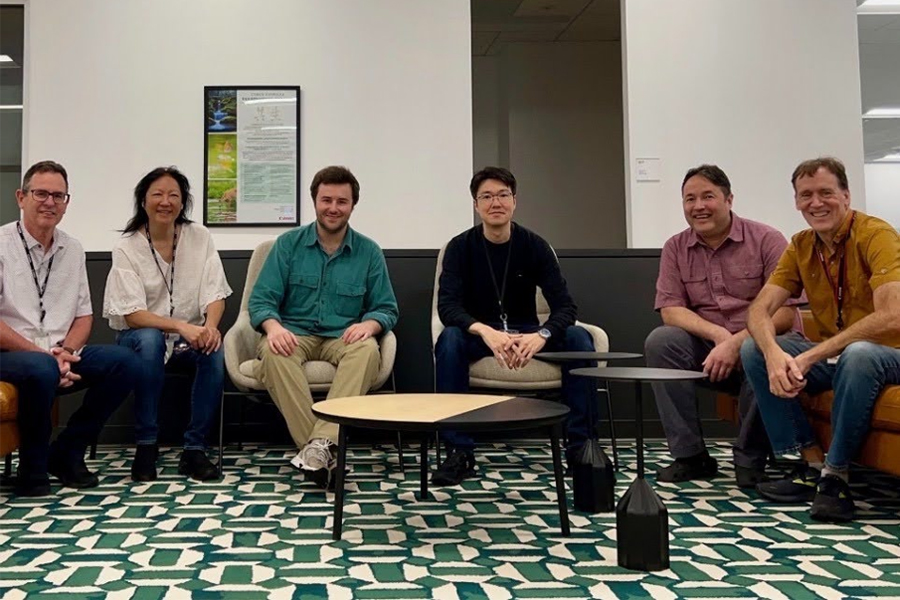
“I made a lot of assumptions, saying, ‘Okay, let’s focus on the desktop app, not anything else.’ And I was wrong,” he admitted. Rather than simply validating the work he completed during his capstone, Gabriel’s internship pushed him to revisit those assumptions, approach the research with fresh eyes, and remain open to new product pathways.
At San Francisco’s Cloudflare, Purav Desai (MSSM ‘26) discovered product management rarely follows a straight line. As a Product Management Intern within the company’s security organization, Purav worked across the entire arc of product discovery and early delivery, conducting competitive analysis, interviewing stakeholders, and helping to identify and validate a problem before developing a solution. This experience pushed him to look beyond simply building a product and toward understanding the people, systems, and evidence behind it.
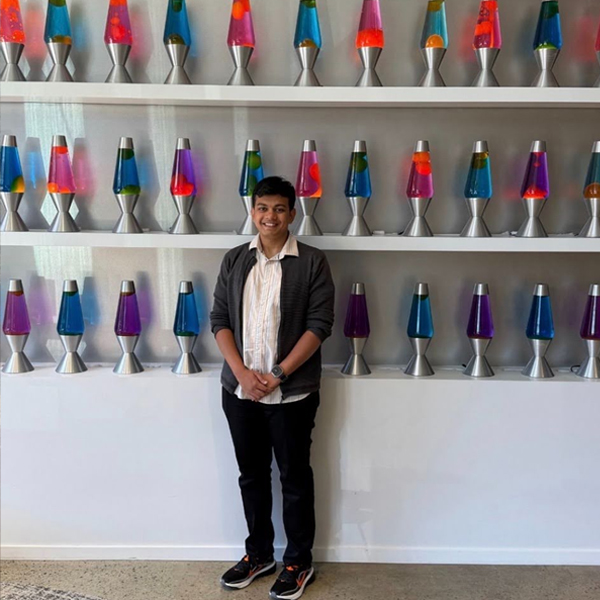
Through daily conversations about sales, customer success, and company growth, Purav discovered how different perspectives could reshape his understanding of a problem.
“Successful product management isn't about having the right idea—it’s about deeply understanding users before deciding what to build."
For Purav, his internship reinforced the importance of staying flexible and realizing good product decisions often begin with asking better questions.
Also in San Francisco, Saloni Parekh (MSSM ‘26) spent her summer at Google as a Technical Program Manager (TPM) Intern, designing and developing an AI- powered agent to automate workflows. She was often assigned an open-ended problem rather than a narrowly defined task, making it necessary to balance technical implementation with architecture, documentation, and stakeholder communication on a daily basis.

As her projects evolved, changing requirements and priorities meant revisiting architectural decisions and continuously adapting to updated information. The experience proved to Saloni that working in AI requires constant experimentation, as well as the ability to make decisions when the path forward isn’t necessarily clear.
Taking Ownership
While balancing priorities and shifting expectations challenged students to adapt, their internships also gave them opportunities to move beyond contributing to projects and begin taking ownership of their work. Students were trusted to make decisions, solve problems, and see projects through from idea to implementation.
Nicolas Wang (MSSM ‘26) was surprised by how much responsibility he was given as a Product Engineering Intern at TandemAI. He initially thought some of his work would be better suited to senior engineers, but that wasn’t always the case. Instead, Nicolas was entrusted with the architecture of AI agents designed to support drug discovery workflows.
Taking ownership of that work meant more than building the technology behind it. Nicolas had to learn enough computational chemistry to understand the scientists who would use it, integrating and testing the agents with tools used in the drug discovery process. This experience at New York’s TandemAI pushed him to expand his knowledge of AI, engineering, and biomedical research.
For other iii students, taking ownership meant creating something the rest of their team could build from. At Dottie, an early-stage healthcare company in Pittsburgh, PA, Janhavi Shah (MIIPS ‘26) worked on a product designed to help translate children’s health data into personalized insights for their families. With many of the product details still taking shape, Janhavi created a digital prototype that mapped how a parent would log a child’s activity and how that data could flow into personalized insights.
“The artifact that I'm most proud of is the digital prototype that I created for Dottie. This prototype maps out how a parent logs a child's activity and how that data flows into personalized insights. For Dottie, this became the shared reference that the whole team used to align on what we were actually building before engineering even touched it.”
After completing her prototype, Janhavi developed a tone-of-voice system and wrote grant documentation, expanding her work beyond the product itself. This experience showed her how she could turn an ambiguous product idea into something concrete and accessible to the community.
Vatsalika Aggarwal (MIIPS ‘26) joined Behavioral Tech Institute (BTECH) hoping to gain end-to-end product management experience, but soon found herself taking on a much broader role. Soon after Vatsalika joined their team as a Product Development Intern, the company’s marketing lead left, which pushed her to work on go-to-market and launch strategies much sooner than she had anticipated. Vatsalika quickly moved from strategy to execution, building a marketing plan and analyzing enrollment data to identify opportunities for user engagement.
“I pulled enrollment data across 10,000 users from Thinkific and found out that only about 3.5% of people ever came back for a second training. So I built out mailing lists of people we could actually re-engage with."
Interdisciplinary Mindset Applications
Students quickly found that their work was rarely limited to a single area of expertise during their internships. They worked across teams, discovering how different perspectives could shape their approach to a problem.
At Bombardier in Montreal, EDIE student Esha Mital (EDIE ‘27), worked as an Electrical Wiring Interconnection System (EWIS) Change Management Intern. Her work provided insight into how a technical change moves through a large organization and how many people are involved along the way.
Esha found that understanding the technical side was only a fraction of the job. “I learned how much change management comes down to communication, not just what you know technically,” she said. Working across teams taught her to adjust her communication depending on whom she was speaking with, challenging her to think beyond her immediate responsibilities. By the end of the summer, she had a better understanding of “how many people a single change actually touches before it gets approved.”
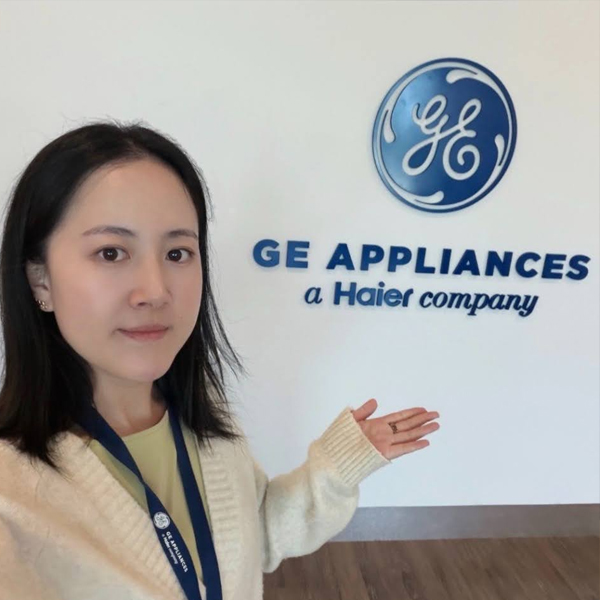
At GE Appliances, Shulan Kuang (MIIPS ‘27) saw the same interconnectedness from the perspective of a designer. As an Interaction Design Intern, Shulan contributed to digital experiences for smart-home appliances, constantly collaborating with product managers, engineers, developers, and fellow designers.
“Before this experience, I focused mainly on designing individual interfaces. Now, I understand that successful products come from collaboration, communication, and balancing user needs with technical and business constraints.”
The experience gave her a better understanding of how the different pieces of a product come together and how design fits within that larger process.
For EDIE student Anna Galvani (EDIE ‘28), that same systems-level thinking emerged through hands-on work at Alert Venture Foundry. During her internship, Anna designed a compact, high-current printed circuit board (PCB) for a drone’s motors and also took on firmware development, learning how decisions in one part of a product can affect the system as a whole.
“I learned how different simply coding in a specific language is from writing code to run on hardware,” Anna reflected. Working across hardware and software pushed her to consider tradeoffs in memory and modularity while also thinking ahead to the product’s lifecycle. She found that her EDIE coursework had prepared her well to evaluate those connections earlier in the process.
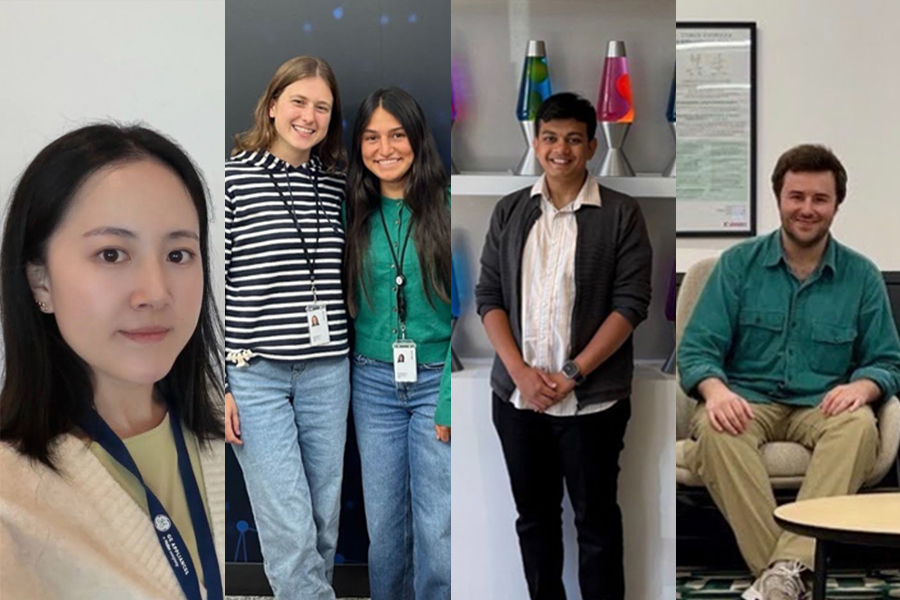
The ability to think across systems also proved valuable for Jona Naqo (MSSM ‘26), who entered his summer at the Advanced Robotics for Manufacturing (ARM) Institute with four years of product experience in healthcare. As a Product and Business Development Intern, Jona expected to apply that experience to a new industry. Not long after starting, however, he realized the need to rethink the audience he was applying those skills to.
Working across ARM’s manufacturing and robotics ecosystem taught Jona to consider who each deliverable was for and what decision it needed to support. The experience showed him how transferable his product skills could be when applied in a completely different context.
For Aditya Pratama (MIIPS ‘26), interdisciplinary work meant wearing almost every hat at once. As co-founder and COO of Hermes Vision, a startup developing autonomous drone systems for precision vegetation management, Aditya moved between customer discovery, product development, fundraising, and operations. He met with nearly 80 potential customers, helped secure letters of intent, and contributed to the company’s product roadmap. “We do everything, everywhere, at once.”
This summer’s work showed Aditya that solving problems across disciplines often means being willing to step outside your defined role and adapt to whatever the work requires next.
Growth Through Connections
Beyond the work itself, students found some of the most meaningful lessons from their internships in the people around them. They learned best this summer by asking questions, building relationships, and seeing how experienced colleagues approached their work.
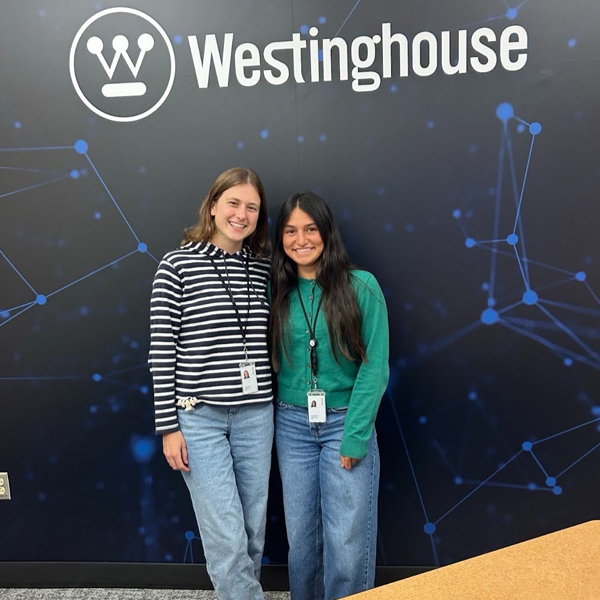
“The people truly make the place,” said Katie Lucas (EDIE ‘27), reflecting on her summer at Westinghouse Electric Company in Cranberry Township, Pennsylvania. As a Nuclear Component Engineering Intern, Katie worked across structural, design, and thermal-hydraulics assignments, but her biggest takeaway was less about the work itself and more about who she was doing it alongside. Surrounded by knowledgeable colleagues that she could look up to, Katie learned to ask questions without feeling like a burden and appreciated that they were always willing to invest their time in helping her learn.
Alyssa Qi (MSSM ‘26) found that same sense of mentorship from the people around her at the San Francisco Museum of Modern Art. As an IT Intern, Alyssa expected to spend much of her summer handling routine IT support, but she instead learned new platforms through guidance from her team and gained a broader view of how technology supports the museum.
“Some of the most valuable things I learned came from watching how the IT team worked with other departments, how they communicated, and how they solved problems.”
The experience changed how she thought about IT: not just as technical support, but as work that is deeply connected to the people and environment it serves.
Looking Ahead
By the end of the summer, iii students left with more than new skills and experience. They left with a better understanding of how they want to approach their work and a clearer sense of how they want to use that experience moving forward. Summer internships may have ended, but the ways they learned to think and work will continue to shape what comes next, whether that be back in the classroom or beyond.