Carnegie Mellon University
Integrated Innovation Institute

Engineering + Design + Business

Carnegie Mellon University Integrated Innovation Institute Logo

Master of Integrated Innovation for Products & Services

Decide What Gets Built. Shape the Products & Services of Tomorrow.

You may feel stuck in your current role, executing decisions others have already made, with little influence over what happens next. If your ambitions and aspirations exceed your impact, it may be time to consider a different path. The Master of Integrated Innovation for Products and Services (MIIPS) prepares you for roles where you help decide what gets built, rather than building what someone else decided. As AI takes on more of the downstream work, deciding what is worth doing becomes increasingly more important.

MIIPS, offered through Carnegie Mellon University's Integrated Innovation Institute, was designed for people who want to create products and services that don't exist yet. Throughout the program, you will leverage your existing expertise and add new capabilities to move upstream: evaluating opportunities, understanding customer needs, and using that knowledge to make product design decisions. Then, in your next role, you will put what you learn to work and earn the credibility that lands you a seat at the decision-making table.

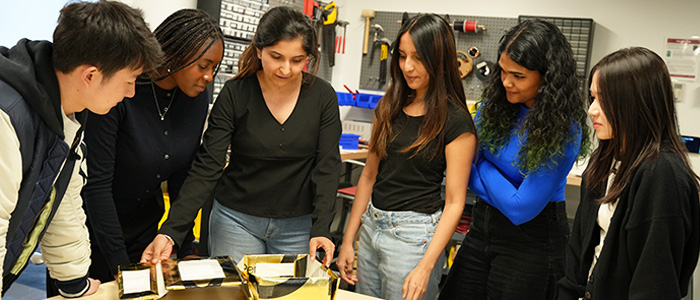
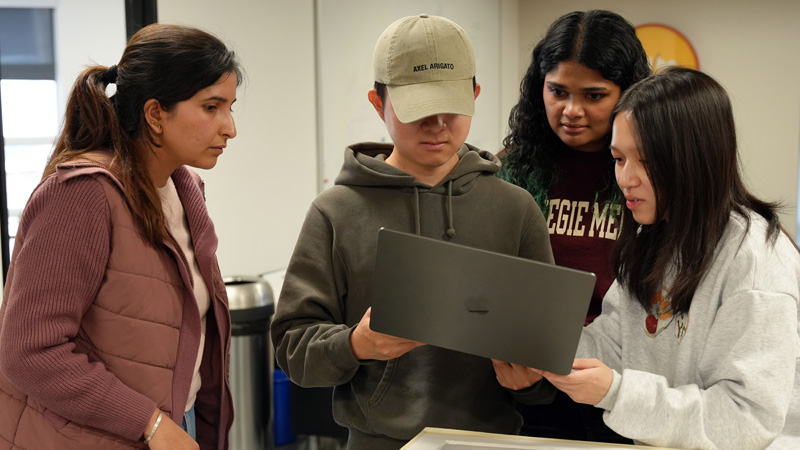
Your assignments and projects center on real, unresolved problems, tackled in teams that bring together engineering, design, and business students. You'll learn how to chart a path through ambiguity and propose solutions that hold up under scrutiny.

What you'll practice:

Seeing the whole picture: Move beyond your own specialty to understand how engineering, design, business, and customer insights shape what gets built.

Finding the right problems to solve: Look beyond surface-level fixes to uncover unmet needs and tackle problems that don't have obvious answers. AI can produce answers quickly, but knowing which problem deserves one and which solutions are the right ones, is up to you.

Making the case for a direction: Use research, evidence, and strategic thinking to argue where a product should go, and defend that argument when others push back.

Carrying it through to a working solution: Take your ideas from initial framing all the way to something that works. AI can help you speed up the build, but the gaps between a good idea and a good product still show up only once you start building.

CMU Logo Background

Inside the Program

Curriculum

What You Will Learn

  • How people actually use products and services: User research techniques and journey mapping to find out what customers need and what frustrates them, so your product decisions start from real needs.
  • How designs get made: The manufacturing processes, materials, and real-world requirements that determine whether a concept is technically feasible to build, so you can judge what's possible before a team commits to a direction.
  • How hardware and software connect: Combining physical devices, screens, apps, and connected technology into one product, to understand the whole picture rather than just a single specialty.
  • How to price and position a product: Unit costs, margins, and the commercial viability that separates a product that works from a product that sells.

Hands-on work

What You Will Do

  • Get out into the field: Observe and talk directly with people to discover unmet needs and problems worth solving, which is work AI can't do for you.
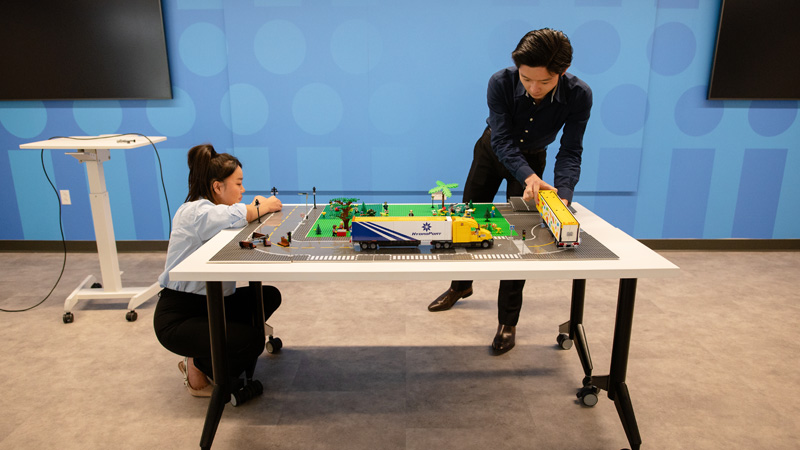
  • Build hands-on prototypes: Wireframe app screens, 3D print physical parts, and wire up basic electronics, leveraging AI tools where they can help you move faster from testing ideas to building working solutions.
  • Map out the business side: Calculate production costs, set pricing, and build a step-by-step plan for a product that's viable to launch.
  • Solve a real-world challenge: Work in a team of 4 to 7 students on a 14-week Integrated Product Development Capstone, taking on a real, unresolved problem. You'll navigate the ambiguity to present and defend a product proposal, functional design, and marketing plan to the sponsor.

Choose Your Path

We offer two full-time, on-campus Master of Integrated Innovation for Products & Services degree formats so you can choose the pace and professional depth that best align with your background. Think of your years of work experience as suggested guidelines rather than strict rules. Choose the program and timeline that will provide the most value for your personal story and career goals. If you're uncertain which format is right for you, reach out to have a conversation with the iii admissions team so that they can help guide you towards the right fit.

Early-Career
Product & Services Professional

1–3 years work experience

You know what it's like to produce the screens, write to the spec, or run the numbers exactly as directed, without ever weighing in on what should get built in the first place. The 16-month track changes that. You'll graduate ready to earn the credibility that lets you influence what gets done, not just carry out what someone else already planned. You'll leave with the judgment to define opportunities, make the case for a different direction, and carry it through to a working solution.

Recommended program

MIIPS Advanced Study (MIIAS)

Pittsburgh, PA

Three semesters + a summer internship

  • Ideal for candidates with 3 years of experience or less.
  • Strong fit for those pivoting careers or industries.
  • Includes a required, hands-on summer internship, which you secure with 1-on-1 coaching from the Institute's Career Advisor.
  • Limited scholarships available - visit our Admissions MIIPS page to learn more.
Explore the 16-month degree (MIIAS)

Mid-Career
Product & Services Professional

3–8 years work experience

You have the years of experience, and it's evident in your work. But somewhere along the way, you outgrew pure execution and became ready for more influence over what gets built. This 9-month track prepares you to claim the autonomy and ownership to chart a path through ambiguous problems on your own terms. You'll learn to connect technical, customer, and business considerations, ground your thinking in evidence, and recommend directions that hold up under scrutiny.

Recommended program

MIIPS

Pittsburgh, PA

Two semesters

  • Ideal for candidates with established professional experience (greater than 3 years).
  • Compact format designed to help you re-enter or advance in the workforce sooner.
  • No internship required.
  • Limited scholarships available - visit our Admissions MIIPS page to learn more.
Explore the 9-month degree (MIIPS)

Recent Salary & Career Outcomes

MIIPS graduates earn an average starting salary of $108,458, and 93% accept job offers within six months of graduation.

Reported Roles
of Recent Graduates

  • Product Manager
  • Product Designer
  • UI/UX Designer
  • Associate Product Manager
  • Senior Product Designer
  • AI/ML Researcher
  • Software Engineer
  • AI Product Manager
  • Technical Product Manager
  • Engineering Manager
  • Innovation Consultant
  • Digital Transformation Lead
  • Product Strategist

Hiring Network

Recent graduates work at technology, design, and organizations including:

Industries

  • Internet & Software
  • Information Technology
  • Electronic & Computer Hardware
  • Healthcare
  • Manufacturing
  • Medical Devices
  • Telecommunications
  • Aerospace

Top Locations

  • San Jose
  • New York
  • Boston
  • Austin
  • Chicago
  • Pittsburgh
  • Los Angeles
  • Philadelphia

Applications for Fall 2027

Application Icon

Application Info

Start Term: Fall 2027
Applications Open:
Now
Application Deadline:
January 20, 2027

The IPD Capstone

The Integrated Product Development (IPD) Capstone is a featured component of the Master of Integrated Innovation for Products & Services (MIIPS) program. Throughout the degree, students build a comprehensive foundation across engineering, design, and business strategy. The Capstone puts those skills and perspectives into practice, bringing students together to tackle real-world, industry-sponsored challenges.

Founded in 1986 and inspired by the late Nobel Laureate and CMU faculty member Herbert A. Simon, the course reflects the core philosophy of the MIIPS ecosystem: true innovation requires integrated thinking. By drawing directly on their broader coursework, students experience firsthand how technical, design, and business perspectives must seamlessly merge to shape product decisions, build alignment, and bring concepts to reality.

Previous IPD Project Sponsors

Corporate Outreach Logos Canon Volvo P&G Parker PPG Emirates Philips Johnson & Johnson New Balance Ford Duracell Highmark Honda MSA Giant Eagle Huntington DLC Nissan Builder's Patch Trex Vapotherm ThermoKing Airport Koppers

iii Student Experience

Trishala Pillai (MIIPS '22) reflects on collaborating with Canon and how the MIIPS program shaped her career. For her capstone project, her team worked directly with Canon to tackle real corporate challenges. By combining design, engineering, and business perspectives, they created useful products centered on real human needs. Getting direct feedback from industry pros gave her hands-on experience that prepared her to launch a career in product development.

Alumni Paths

Krutin Kanumuri MIIPS '24

Krutin reflects on how shifting from mechanical engineering to a customer-centric lens helped him tackle complex problems with clarity. In the MIIPS program he learned to translate technical concepts for cross-functional teams and collaborate across disciplines.

Kasandra Price MIIPS '19

Kasandra describes how blending engineering with business and design broadened her perspective as an Aerospace Design Engineer at Boeing. In the MIIPS program she learned to bring human-centered design into technical work and apply creativity in a structured way.

Chanson Kuo MIIPS '21

Chanson shares how the MIIPS program helped him transform his research and data background into a focused path in UX design. Hands-on capstone work and experiential learning gave him the tools to hone his strengths toward meaningful product design.

International Student Resources Icon

International Student Resources

View Resources

Imagine Yourself in the MIIPS Program

Your journey begins at orientation, where you'll meet a diverse cohort of engineers, designers, business strategists, and more who will become your teammates and friends. In two days, you'll learn the inner workings of CMU and explore core tenets of the program as you think, engage, and collaborate. 

First-semester coursework immerses you in hands-on, project-based learning. You'll experience how the different disciplines combine their thinking and skill sets on multidisciplinary teams. Starting from how real people live and work, you'll identify problems worth solving and shape products and services that meet customer needs and deliver real value. Advisor-approved electives let you branch out and expand your skill set. Friday Seminars broaden your perspective through conversations with industry, academic, and alumni speakers.

In the spring, expect to be challenged in the Integrated Product Development capstone, where your team is paired with an industry sponsor to take on a real, unresolved problem. From the first meeting onward, you'll balance team dynamics, faculty guidance, intensive feedback, and sponsor requirements and communications as you apply what you have learned in the program. This is where innovation meets reality. The best teams chart a path through the ambiguity at the beginning, move from problem and opportunity to product concept and solution, and finish by presenting and defending their work to the sponsor.

If you are one of the students who continues with a third semester, you'll take additional electives and join the Mindset Intensive, an advanced seminar where you choose a specialized track: Experience-Driven Innovation, Systems Thinking, or Technology-Driven Innovation. Within your track, you'll explore complex challenges through applied research and creative problem-solving, going deeper in the area that fits your ambitions.

Throughout the journey, you'll build relationships with classmates, faculty, and industry partners who share your ambition, and those relationships continue far beyond graduation.


Academic background for MIIPS candidates

The MIIPS program is intentionally interdisciplinary. Successful students bring curiosity, collaboration, and a willingness to work beyond a single discipline.

Students typically come from backgrounds in:

  • Engineering (all disciplines)
  • Design (including fine arts, architecture, UX/UI and HCI)
  • Business and economics

Applicants should hold a minimum cumulative GPA of 3.0 (or equivalent) from an accredited institution recognized by ABET, the Higher Learning Commission or the U.S. Department of Education.

Move from execution to influence

The Integrated Innovation Institute's Master of Integrated Innovation for Products & Services degree program prepares you to identify opportunities, shape product direction, and bring valuable products and services to market. You'll build the thinking skills, innovation methods, and practical experience needed to lead product and service innovation in a rapidly changing world.

faq iconMIIPS Program Frequently Asked Questions

The Master of Integrated Innovation for Products & Services (MIIPS) is a full-time, STEM-designated professional master's program offered by Carnegie Mellon University's Integrated Innovation Institute (iii) in Pittsburgh, PA.

Designed for individuals with backgrounds in engineering, design, product, or business, the program admits one cohort each fall. Students can complete the degree through either a 9-month accelerated track or a 16-month Advanced Study (MIIAS) track.

MIIPS combines customer needs, business goals, and technology in a single cross-disciplinary curriculum. The curriculum is designed to prepare graduates for roles that help define what gets built.

Program at a Glance

Feature
Detail
Degree
Master of Integrated Innovation for Products & Services (MIIPS)
Offered by
Integrated Innovation Institute (iii), Carnegie Mellon University
Location
Pittsburgh, PA
Format
Full-time, in-person
Duration
9-month accelerated (MIIPS) or 16-month Advanced Study (MIIAS)
Entry Term
Fall only
STEM-Designated
Yes (both formats)

Program Highlights

Feature
Description
The 1:1:1 Model
Starting in the first semester, students work across engineering, design, and business in equal measure, evaluating technical feasibility, user desirability, and commercial viability together.
Cross-Disciplinary Teams
Students complete project-based assignments with peers from engineering, design, and business backgrounds throughout the program.
Real-World Product Development
In the 14-week Integrated Product Development (IPD) Capstone, cross-disciplinary teams of engineering, design, and business students partner with corporate sponsors to identify and shape product opportunities. Teams analyze social, economic, environmental, and technological shifts, then move projects from opportunity framing to functional prototypes, commercial viability models, and go-to-market strategies.
Coursework Across CMU
Students complement core coursework with approved electives from the Tepper School of Business, Kenneth C. Griffin School of Computer Science, and College of Fine Arts.

Students in the Master of Integrated Innovation for Products & Services (MIIPS) program at Carnegie Mellon University's Integrated Innovation Institute (iii) learn to work upstream in product development: framing opportunities, evaluating trade-offs across customer needs, business goals, and technology, and shaping what gets built next. MIIPS coursework is project-based and cross-disciplinary, and in the 14-week Integrated Product Development (IPD) Capstone, student teams work with corporate sponsors on unresolved product challenges, carrying ideas from initial framing to working solutions.

What will MIIPS students learn?

  • Opportunity framing and problem definition: MIIPS students learn to uncover unmet customer needs and define problems worth solving before technical specifications or product roadmaps are set.
  • Integrated 1:1:1 decision-making: MIIPS students learn to evaluate user desirability, technical feasibility, and commercial viability together, rather than within a single function.
  • Navigating ambiguity and scrutiny: MIIPS students learn to form a defensible point of view without having all the facts, using evidence, prototypes, and business logic to argue for a direction under scrutiny.
  • Manufacturing and production constraints: MIIPS students learn to work with production processes, cost modeling, component selection, and design-for-manufacturing (DFM) trade-offs.
  • Connected systems and modern product scope: MIIPS students learn to integrate physical hardware, software interfaces, AI, IoT, and service ecosystems into a single offering.
  • Cross-disciplinary communication: MIIPS students learn the strategic language and frameworks needed to communicate and collaborate across engineering, design, and business teams.

What will MIIPS students do?

  • Tackle unresolved challenges: Students take on open-ended problems that do not come with predefined requirements, working through ambiguity to define and test product directions.
  • Uncover unmet needs: Students conduct field research and contextual inquiry to discover user pain points and evaluate emerging market opportunities.
  • Build and test solutions: Students construct physical prototypes, software concepts, and service experiences to test functional trade-offs and the user experience.
  • Model business viability: Students develop commercialization strategy, pricing structures, and go-to-market models for new offerings.
  • Complete a corporate capstone: In the 14-week IPD Capstone, students work in cross-disciplinary teams and present product recommendations to corporate sponsors.

How does MIIPS address AI?

At MIIPS, AI is part of the products students create and part of the context in which they work. The curriculum covers integrating AI with physical hardware, software interfaces, IoT, and service ecosystems. Students use AI tools in research, prototyping, and analysis, and learn where human judgment adds the most. As AI takes on more of the execution work in product development, the decisions MIIPS focuses on become more important: Which problems are worth solving? Which direction to pursue? Which direction promises to be viable?

How are MIIPS IPD Capstone teams structured?

IPD Capstone teams in the MIIPS program typically include four to seven students. Teams combine engineering, design, and business backgrounds, in line with the 1:1:1 model used across MIIPS projects.

How demanding is the MIIPS workload?

MIIPS is an intensive, full-time program driven by hands-on project work. Students should plan to invest dedicated time outside of class every day, with exact hours naturally fluctuating depending on project milestones and team deadlines.

What facilities and maker spaces are available to MIIPS students?

MIIPS students have access to the MIIPS Studio, TechSpark, and IDeATe Labs, which together provide 3D printing, laser cutting, CNC machining, wood shop, physical computing, and media production facilities.

MIIPS Studio
What it offers: Desktop 3D printers, hand tools, IoT and electronics kits, team workspaces
Access: Dedicated to MIIPS students, open 24/7
TechSpark (ANSYS Hall)
What it offers: Industrial 3D printers, laser cutters, CNC metal machining, wood shop
Access: Tiered safety training required
IDeATe Labs (Hunt Library)
What it offers: Physical computing, soft fabrication and textiles, media production

Carnegie Mellon University's Integrated Innovation Institute (iii) offers two full-time, in-person master's tracks in Pittsburgh: the 9-month accelerated MIIPS degree and the 16-month Advanced Study (MIIAS) degree.

The 9-month degree typically suits professionals with three or more years of experience.

The 16-month MIIAS degree typically suits professionals with fewer than three years of experience or those changing fields, and it includes a required summer internship. After the summer internship, students return for a third semester of additional electives and the Mindset Intensive advanced seminar.

Students choose the track that fits their goals, and the iii admissions team can talk through the choice with each prospective student.

Duration
9-month accelerated (MIIPS)
2 semesters (August to May)
16-month Advanced Study (MIIAS)
3 semesters plus a summer internship
Typically suits
9-month accelerated (MIIPS)
Professionals with 3 or more years of experience in engineering, design, product, or business
16-month Advanced Study (MIIAS)
Professionals with fewer than 3 years of experience, or those pivoting to a new field.
Required summer internship
9-month accelerated (MIIPS)
No
16-month Advanced Study (MIIAS)
Yes
STEM-designated
9-month accelerated (MIIPS)
Yes
16-month Advanced Study (MIIAS)
Yes
Tuition, 2026-27
9-month accelerated (MIIPS)
$61,510
16-month Advanced Study (MIIAS)
$94,828 (estimated)

The 2026-27 MIIAS tuition figure includes estimated tuition for the Fall 2027 semester. For current rates, see the MIIPS tuition information on the Integrated Innovation Institute admissions page.

Who chooses which MIIPS track a student enters?

The student does. The experience ranges above are typical profiles, not requirements, and each student decides which track fits their background, goals, and timeline.

Who should choose the 9-month MIIPS track?

  • Experience: Professionals with three or more years of experience in engineering, design, product, or business.
  • Current role: Professionals whose work is mainly execution, such as building screens, writing code to spec, or running financial reports, and who want a role in decisions about product direction.
  • Timeline: Professionals who want to return to the workforce after two semesters (August to May).

Who should choose the 16-month MIIAS track?

  • Experience: Professionals with fewer than three years of experience, or those changing industries or functions, including moves toward product organizations in fast-moving industries.
  • Internship: Students who want a required summer internship to apply the 1:1:1 model in an industry setting and build industry connections.
  • Additional time: Students who want more time in the program to build a portfolio that covers user needs, technical feasibility, and commercial viability, and to present their prior experience to product organizations.

Can I talk with someone about which MIIPS track fits my situation?

Yes. The iii admissions team can help prospective students determine which track best fits their needs. You can connect with the admissions team by email or schedule a meeting via Calendly.

What do both MIIPS tracks have in common?

Both tracks are full-time, in-person, and STEM-designated, and both use the 1:1:1 model, in which students work across engineering, design, and business. Both build on the discipline a student already has, adding the strategic vocabulary and frameworks used to decide what gets built next.

Yes, if your academic work or professional experience is in engineering, design, product, business, or another discipline related to product strategy, design, or development. The Master of Integrated Innovation for Products & Services (MIIPS) at Carnegie Mellon University's Integrated Innovation Institute (iii) is designed for professionals with depth in one field, such as engineering, design, product, or business. Applicants do not need experience across all three disciplines, because MIIPS project teams combine these backgrounds, in line with a 1:1:1 model.

Which professional backgrounds fit MIIPS?

The MIIPS program at Carnegie Mellon admits professionals from a range of roles, including:

Product managers and product owners
What MIIPS adds: The earlier stages of product development: framing problems, evaluating directions, and building working solutions.
Designers (UX, UI, product, service)
What MIIPS adds: A connection between user research, technical constraints, and business models.
Engineers (software, hardware, systems)
What MIIPS adds: Opportunity framing, trade-off evaluation, and business analysis alongside technical work.
Business professionals (strategy, marketing, market analysis)
What MIIPS adds: Hands-on product development work and technical context.
Operators and analysts
What MIIPS adds: A way to apply insight into unmet customer needs to define product opportunities.

Do I need experience in all three disciplines to apply?

No. MIIPS builds on the discipline an applicant brings to the program. Teammates from the other disciplines supply complementary expertise, and the curriculum adds the cross-disciplinary frameworks and strategic vocabulary used to decide what gets built next.

What kind of student does well in MIIPS?

Students who do well in MIIPS are comfortable with open-ended problems that do not come with predefined requirements. They typically share four traits:

  • Comfort with charting a path through ambiguity: They reason through unresolved problems rather than waiting for predefined requirements.
  • Evidence-based advocacy: They argue for product decisions using customer insights, technical feasibility, and business logic.
  • Ownership of improvement: They notice what could be better in their work and follow through on it.
  • Interest in product direction: They want a role in deciding what gets built, in addition to carrying out the work.

What is the MIIPS cohort like?

The MIIPS cohort typically consists of around 40 to 50 students each year. It brings together a balanced mix of engineers (software, hardware, systems), designers (UX, UI, product, service), product owners, and business strategists. No single discipline dominates team decision-making, and students work with their cohort on cross-disciplinary projects throughout the program.

The Master of Integrated Innovation for Products & Services (MIIPS) at Carnegie Mellon University's Integrated Innovation Institute (iii) combines customer needs, business goals, and technology in one curriculum, with students working in teams drawn from engineering, design, and business backgrounds. MBA, HCI and UX, engineering, and product management master's programs are each organized around a primary discipline or function.

The table below compares four types of master's programs by their primary focus. The right-hand column describes how MIIPS differs from each.

Program type
Primary focus
How MIIPS differs
MBA
Business management, finance, organizational leadership, and strategy
MIIPS applies commercial viability to product decisions, alongside design and engineering work.
HCI / UX / Design master's
Interface design, user research, and interaction design
MIIPS connects user research to business models, technical constraints, and manufacturing considerations.
Engineering master's
Technical depth within an engineering discipline
MIIPS adds opportunity framing, trade-off evaluation, and business analysis alongside technical work.
MS in Product Management
Product roadmaps, agile processes, and feature management
MIIPS includes the earlier stages of product development: framing problems, evaluating directions, and building working solutions.

What are the core differences between MIIPS and other master's programs?

  • Integrated decision-making: From the first semester, MIIPS students apply the 1:1:1 model, evaluating user desirability, technical feasibility, and commercial viability together and in equal measure.
  • Cross-disciplinary teams: Throughout the program, MIIPS students work in project teams that combine engineering, design, and business backgrounds.
  • Upstream opportunity framing: MIIPS coursework and the Integrated Product Development (IPD) Capstone include the earlier stages of product development, such as deciding which problems are worth solving, as well as developing solutions.
  • Open-ended, hands-on projects: MIIPS students work on real, unresolved problems, including those from corporate sponsors in the IPD Capstone. Students form a point of view supported by evidence, build physical prototypes, software concepts, and service experiences, and carry ideas from concept to a working solution.

The Integrated Product Development (IPD) Capstone is the 14-week capstone course in the Master of Integrated Innovation for Products & Services (MIIPS) program at Carnegie Mellon University's Integrated Innovation Institute (iii). Teams of four to seven students from engineering, design, and business backgrounds partner with corporate sponsors on real, unresolved industry challenges, taking a project from opportunity framing to a working solution.

How does the IPD Capstone work?

  • Cross-disciplinary teams: Students from engineering, design, and business work together, combining customer needs, technical feasibility, and commercial viability.
  • Corporate sponsors: IPD Capstone teams work on open-ended problems provided by industry partners.
  • Upstream opportunity framing: Teams define which problems are worth solving, using user research and market analysis, before designing solutions.
  • Evidence-based direction: Teams support a recommended direction with user research, prototypes, and business logic.

What are the four phases of the IPD Capstone?

The IPD Capstone has four phases: Identify, Understand, Conceptualize, and Realize.

1. Identify
Focus: Opportunity framing
What teams do: Analyze social, economic, environmental, and technological shifts to locate market gaps and define problems worth addressing before solution specifications are set.
2. Understand
Focus: Context and value mapping
What teams do: Conduct contextual research, analyze user needs, and evaluate technical constraints to map where value exists for stakeholders.
3. Conceptualize
Focus: Forming and testing directions
What teams do: Develop multiple product or service concepts, form a point of view before all facts are available, and test trade-offs to argue for a preferred direction.
4. Realize
Focus: Working solutions and go-to-market
What teams do: Build physical or digital prototypes, develop functional designs, and create commercial viability models and go-to-market strategies presented to the corporate sponsor.

How are IPD Capstone teams structured?

IPD Capstone teams include four to seven students. Teams combine engineering, design, and business backgrounds, in line with the 1:1:1 model used across MIIPS projects.

What do teams deliver at the end of the IPD Capstone?

IPD Capstone teams present product recommendations to the corporate sponsor, supported by physical or digital prototypes, commercial viability models, and go-to-market strategies.

Yes. The Master of Integrated Innovation for Products & Services (MIIPS) at Carnegie Mellon University's Integrated Innovation Institute (iii) is STEM-designated for both the 9-month accelerated track and the 16-month Advanced Study (MIIAS) track. Eligible international graduates on an F-1 visa may apply for a 24-month STEM Optional Practical Training (OPT) extension after the standard 12-month OPT, for up to 36 months of U.S. work authorization after graduation.

STEM designation and work authorization at a glance

Item
Detail
STEM-designated
Yes, for both the 9-month MIIPS and 16-month MIIAS tracks
Standard F-1 OPT
12 months of post-graduation U.S. work authorization
STEM OPT extension
An additional 24 months for eligible F-1 graduates
Total possible duration
Up to 36 months

What does it mean for a program to be STEM-designated?

A degree program is STEM-designated when its Classification of Instructional Programs (CIP) code appears on the U.S. Department of Homeland Security STEM Designated Degree Program List. For international students on F-1 visas, a STEM-designated degree is one requirement for the 24-month STEM OPT extension. Other requirements also apply, including employment with an employer enrolled in the federal E-Verify program.

How long can international MIIPS graduates work in the U.S. after graduation?

Eligible F-1 graduates of MIIPS may apply for 12 months of standard OPT and then a 24-month STEM OPT extension, for up to 36 months of total work authorization. Students should confirm current requirements and filing windows with Carnegie Mellon's Office of International Education (OIE).

For more details about the requirements and process for applying for Optional Practical Training (OPT), contact OIE or visit the OIE OPT and STEM OPT Extension page.

What is the CIP code for MIIPS?

MIIPS and MIIAS are classified under CIP code 15.1502 (Engineering Design).

What technical content does the MIIPS curriculum include?

MIIPS students evaluate technical feasibility alongside user desirability and commercial viability. They build physical prototypes, software concepts, and service experiences, and the curriculum covers manufacturing and production constraints and connected systems that combine hardware, software, AI, and IoT.

Yes. F-1 international students in the 16-month Advanced Study (MIIAS) track of the Master of Integrated Innovation for Products & Services (MIIPS) at Carnegie Mellon University's Integrated Innovation Institute (iii) must obtain off-campus work authorization, called Curricular Practical Training (CPT), before beginning the required summer internship in the U.S. Eligible students apply for CPT through Carnegie Mellon's Office of International Education (OIE). The 9-month accelerated MIIPS track does not include a summer internship.

Internship and work authorization by track

16-month Advanced Study (MIIAS)
Summer internship: Required summer internship
Work authorization: CPT through OIE
9-month accelerated (MIIPS)
Summer internship: None (graduates complete the program in May)
Work authorization: Not applicable

Do 9-month MIIPS students need work authorization for a summer internship?

No. The 9-month accelerated MIIPS track does not include a summer internship, so the CPT requirement for the internship does not apply. Students with questions about other work authorization options can contact OIE.

How does the required summer internship fit into the MIIAS curriculum?

The summer internship is a required part of the 16-month MIIAS track. MIIAS students apply the 1:1:1 model in an industry setting, evaluating technical feasibility, user desirability, and commercial viability within a team.

How do MIIAS students find their summer internship?

MIIAS students lead their own internship search, with dedicated career support that includes 1-on-1 strategic coaching from the iii Career Advisor.

Where can MIIAS students get help with CPT?

Students apply for CPT through Carnegie Mellon's Office of International Education (OIE). Application details and timelines can change, so students should confirm current requirements with OIE before the internship begins.

Yes. International applicants and U.S. permanent resident applicants to the Master of Integrated Innovation for Products & Services (MIIPS) program at Carnegie Mellon University's Integrated Innovation Institute (iii) must demonstrate English proficiency with a TOEFL, IELTS, or Duolingo English Test score, unless they qualify for an exemption. The minimum scores are 95 on the TOEFL for tests taken before January 21, 2026, or 4.5 on the revised TOEFL scale for tests taken on or after that date, 6.5 on the IELTS, and 105 on the Duolingo English Test.

What are the minimum English proficiency scores for MIIPS?

TOEFL, taken before January 21, 2026
Minimum overall score: 95
Sub-score requirement: No sub-score below 23
TOEFL, taken on or after January 21, 2026 (revised 1 to 6 scale)
Minimum overall score: 4.5
Sub-score requirement: No sub-score below 4.5
IELTS
Minimum overall score: 6.5
Sub-score requirement: None listed
Duolingo English Test
Minimum overall score: 105
Sub-score requirement: None listed

Who is exempt from the MIIPS English proficiency requirement?

  • U.S. university graduates: Applicants who will have graduated from a U.S. university by the time of enrollment.
  • CMU students and alumni: Current students and alumni of Carnegie Mellon University.
  • Citizens of certain countries: Applicants with United Kingdom, Canadian, or Australian citizenship.

Do U.S. permanent residents need to submit an English proficiency test?

Yes. U.S. permanent resident applicants to MIIPS must submit an English proficiency test score unless they meet one of the exemptions above.

Which TOEFL requirement applies to my test date?

TOEFL requirements depend on when the test was taken. Tests taken before January 21, 2026 use a minimum score of 95 with no sub-score below 23. Tests taken on or after that date use a minimum of 4.5 overall and in each sub-score on the revised scale. Applicants should follow the requirement that matches their test date.

What are the TOEFL institution and department codes for MIIPS?

The TOEFL institution code is 2074, and the department code is 99 (Other).

Who can answer questions about English proficiency requirements?

The iii admissions team can answer questions about the requirements at admissions-iii@andrew.cmu.edu.

Graduates of the Master of Integrated Innovation for Products & Services (MIIPS) at Carnegie Mellon University's Integrated Innovation Institute (iii) work in product management, product strategy, design strategy, and engineering roles. Based on 2021 to 2025 career outcomes data, MIIPS graduates earn an average starting salary of $108,458, and 93% accept job offers within six months of graduation.

MIIPS career outcomes

Metric
Detail
Average starting salary (2021 to 2025 data)
$108,458
Job offer accepted within 6 months of graduation (2021 to 2025 data)
93%
Primary career pathways
Product management, product strategy, design strategy, engineering
Top industries
Internet and software, information technology, healthcare, electronic and computer hardware, manufacturing, financial services
Top alumni employers (2025 data)
Apple, Google, Microsoft, Amazon, Meta, McKinsey & Company, IDEO, frog

What is the average starting salary for MIIPS graduates?

Based on 2021 to 2025 career outcomes data, MIIPS graduates earn an average starting salary of $108,458.

What is the job placement rate for MIIPS graduates?

Based on 2021 to 2025 career outcomes data, 93% of MIIPS graduates accept job offers within six months of graduation.

Which industries do MIIPS graduates work in?

Internet and software is the most common industry for MIIPS graduates, followed by information technology, healthcare, electronic and computer hardware, manufacturing, and financial services. Graduates also work in automotive, management consulting, telecommunications, and consumer packaged goods.

Which employers hire MIIPS graduates?

Based on 2025 career outcomes data, MIIPS alumni work at technology companies, strategy consultancies, and design firms, including Apple, Google, Microsoft, Amazon, Meta, McKinsey & Company, IDEO, and frog.

What job titles do MIIPS graduates hold?

  • Product management and strategy: MIIPS graduates in these roles hold titles such as Product Manager, Technical Product Manager, AI Product Manager, and Product Strategist. The roles involve defining product roadmaps and framing market opportunities.
  • Design and innovation: Titles include Product Designer, UI/UX Strategist, and Innovation Consultant. The roles connect user research to business constraints.
  • Technical and digital leadership: Titles include Engineering Manager and Digital Transformation Lead. The roles align hardware, software, and digital solutions with business goals.

How does the MIIPS curriculum connect to these careers?

  • Cross-disciplinary teamwork: MIIPS students work in teams that combine engineering, design, and business backgrounds throughout the program.
  • Evidence-based decisions: Coursework and the Integrated Product Development (IPD) Capstone require students to support product choices with prototypes, user research, and financial modeling.
  • Shared vocabulary: The MIIPS curriculum teaches the strategic language used to communicate across engineering, design, and business functions.

The Master of Integrated Innovation for Products & Services (MIIPS) at Carnegie Mellon University's Integrated Innovation Institute (iii) admits students for the fall semester, and applications for fall 2027 are due January 20, 2027. Required materials are an online application with a $75 fee, a resume or CV, two letters of recommendation, short essay responses, a video essay, and unofficial transcripts. International and U.S. permanent resident applicants also submit an English proficiency test score unless they are exempt. A portfolio and GRE or GMAT scores are optional.

MIIPS admissions at a glance

Item
Detail
Start term
Fall
Application deadline
January 20, 2027 (fall 2027 entry)
Application fee
$75, non-refundable
Decisions
Typically 4 to 6 weeks after the application deadline
GRE or GMAT
Optional
Portfolio
Optional

What materials are required for the MIIPS application?

  • Online application: Applicants create an account in the online application system and pay the $75 non-refundable fee by credit or debit card.
  • Resume or CV: Applicants upload their most recent professional resume or curriculum vitae.
  • Letters of recommendation: Applicants provide two references, who can be professional, academic, or a combination. Each reference receives a link to submit a letter directly to the application system.
  • Short essay responses: Applicants answer short essay prompts within the application, in place of a statement of purpose.
  • Video essay: Applicants answer one randomized question by video. Because the question is randomized, applicants answer without advance preparation.
  • Unofficial transcripts: Unofficial transcripts are sufficient for an admission decision.
  • English proficiency score: International and U.S. permanent resident applicants submit a TOEFL, IELTS, or Duolingo English Test score by the application deadline, unless they qualify for an exemption.

What materials are optional?

  • Portfolio or work sample: Applicants are encouraged to submit one if it adds meaningful context to the application.
  • GRE or GMAT scores: Applicants who have taken either test may submit scores to support the application.

Are GRE or GMAT scores required for MIIPS?

No. GRE and GMAT scores are optional. For applicants who do not submit them, the weight of the other application components is redistributed across the materials they do submit. Accepted applicants who submitted the GRE averaged 159 on Quantitative, 155 on Verbal, and 3.5 on Analytical Writing.

Is a portfolio required for MIIPS?

No. The portfolio is an optional part of the MIIPS application. Applicants are encouraged to submit one if they have visual, design, or project-based strengths that other materials do not capture.

What GPA and background does MIIPS look for?

The ideal MIIPS applicant holds a minimum cumulative GPA of 3.0 or equivalent from an accredited institution. The average GPA of accepted applicants is 3.5 on a 4.0 scale. MIIPS looks for academic coursework or professional experience in engineering (all types), design (including fine arts, architecture, UX/UI, and HCI), business (including economics), or another discipline related to product strategy, design, or development.

Do I need official transcripts to apply to MIIPS?

No. Unofficial transcripts are sufficient to receive an admission decision. Admitted students submit official transcripts upon enrollment.

When are MIIPS admission decisions released?

Decisions are typically posted 4 to 6 weeks after the application deadline. Applicants are notified by email, and they can check their application status by logging in to the online application system.

How do I apply to MIIPS?

Applicants create an account in the online application system run by Carnegie Mellon's College of Engineering. The system emails a PIN, which lets applicants save the application over several sessions, check its status, and view their decision.

The portfolio, also called a work sample, is an optional part of the application to the Master of Integrated Innovation for Products & Services (MIIPS) at Carnegie Mellon University’s Integrated Innovation Institute (iii). Applicants are encouraged to submit a portfolio if it adds meaningful context, particularly visual, design, or project-based strengths, such as problem-solving abilities and craftsmanship, that are not captured elsewhere in the application. The portfolio is a single PDF of up to 20 pages that presents three to six projects.

MIIPS Portfolio Specifications

Category Specification
Status Optional
Format Single PDF file
Length Maximum of 20 pages
Number of projects 3 to 6
Accepted content Photographs, drawings, or interactive presentations
Submission Upload directly to the online application system

Is a portfolio required to apply to MIIPS?

No. The portfolio is an optional component of the MIIPS application.

What should be included in a portfolio for the MIIPS application?

A portfolio for the MIIPS application presents three to six projects that best illustrate the applicant’s skills, talents, and interests. The projects should highlight problem-solving abilities, visualization skills, and overall craftsmanship. For each project, applicants briefly describe and summarize their specific contributions.

What format and length should my portfolio be for the MIIPS application?

The portfolio is a single PDF file of up to 20 pages. Accepted content includes photographs, drawings, and interactive presentations.

Who should submit a MIIPS portfolio?

Applicants who have visual, design, or project-based strengths that are not captured elsewhere in the application are encouraged to submit one. A portfolio gives applicants an opportunity to tell their story through their work.

How do I submit my portfolio for the MIIPS application?

Applicants upload the portfolio directly to the online application system.

Admissions at the Integrated Innovation Institute (iii) at Carnegie Mellon University reviews every Master of Integrated Innovation for Products & Services (MIIPS) application holistically, and fit with the program is the most important factor. Strong applicants illustrate dynamic traits across their application: experience building working solutions, collaboration across disciplines, and adaptability in uncertain situations.

What traits does MIIPS admissions look for?

  • Interest in shaping product direction: Strong applicants want a role in deciding what gets built, not only in carrying out the work. Their application shows times they argued for a direction using evidence.
  • Building working solutions: Strong applicants are passionate about product and service development, innovation, or entrepreneurship, and they learn best in hands-on environments. Their application shows how they have turned concepts into tangible results, such as prototypes, software, designs, or analyses.
  • Collaboration across disciplines: Strong applicants want to collaborate with people outside their own discipline. Their application shows experience working in teams and learning from peers with different backgrounds.
  • Adaptability in uncertain situations: Strong applicants are comfortable working through ambiguity to reach product solutions. Their application shows how they have approached open-ended problems, asked questions, and taken calculated risks when the answer was not clear.

Where do applicants show these traits?

Applicants can show these traits across the application, including the essays, recommendations, and the optional portfolio.

How can I strengthen my MIIPS application?

Concrete examples carry more weight than general statements. Applicants can show each trait in action, for instance by explaining how they approached a complex problem and arrived at a recommendation, or by describing their individual role in a team project.

What academic and professional experience do strong MIIPS applicants have?

MIIPS looks for academic experience in engineering (all types), design (including fine arts, architecture, UX/UI, and HCI), or business (including economics), or another discipline related to product strategy, design, or development. The ideal applicant holds a minimum cumulative GPA of 3.0 or equivalent. Applicants with less than three years of experience, or those seeking to pivot careers, are encouraged to consider the 16-month Advanced Study (MIIAS) track, and applicants with more experience are encouraged to apply to the 9-month MIIPS track.

How can I learn more about MIIPS before applying?

Prospective students can attend a MIIPS webinar or information session, request a campus visit, or connect with an Admissions Ambassador.

Who can answer questions about my background or the application process?

The iii admissions team can answer questions about an applicant's background or the application process at admissions-iii@andrew.cmu.edu.

For the 2026-27 academic year, tuition for the Master of Integrated Innovation for Products & Services (MIIPS) at Carnegie Mellon University's Integrated Innovation Institute (iii) is $61,510 for the 9-month accelerated track and an estimated $94,828 for the 16-month Advanced Study (MIIAS) track. MIIPS is self-funded, so enrolled students or their employers are responsible for tuition and expenses, and the iii does not offer teaching or research assistantships.

MIIPS tuition by track

9-month accelerated (MIIPS)
2025-26 tuition: $60,300
2026-27 tuition: $61,510
16-month Advanced Study (MIIAS)
2025-26 tuition: $92,963
2026-27 tuition: $94,828 (estimated)

The 2026-27 MIIAS figure includes estimated tuition for the Fall 2027 semester. For current rates, see the MIIPS tuition information on the Integrated Innovation Institute admissions page. For more on graduate tuition, see CMU's Student Financial Services website.

How is MIIAS tuition calculated?

MIIAS tuition has two parts: three academic terms and the summer term. For 2026-27, that is $92,265 for the three academic terms plus $2,563 for the summer term, for a total of $94,828. For 2025-26, it was $90,450 plus $2,513, for a total of $92,963. The 2026-27 MIIAS figure includes estimated tuition for the Fall 2027 semester, which falls in the 2027-28 academic year. Official 2027-28 rates will be released in Spring 2027.

Is there an application fee for MIIPS?

Yes. The application fee is $75 and is non-refundable.

How do I request funding assistance for MIIPS?

Applicants who are U.S. citizens or eligible noncitizens can submit an optional Request for Funding Assistance Form on their application status page after submitting the MIIPS application. The request is a response of 250 words or fewer explaining why the applicant would like to be considered for funding. The iii Admissions Committee makes funding decisions, and they are separate from admissions decisions, so a request does not affect whether an applicant is admitted. Awards depend on good academic standing.

What is the iii Belonging Fellowship?

Once admitted and committed as a MIIPS student, students can apply for the iii Belonging Fellowship. It provides a small award each semester, along with hourly-paid, on-campus work opportunities across Carnegie Mellon.

Does MIIPS offer teaching or research assistantships?

No. Because of the professional and practical nature of its programs, the iii does not offer teaching or research assistantships.

Can an employer pay for MIIPS tuition?

Yes. Enrolled students or their employers are responsible for paying full tuition and expenses. Students should confirm any employer tuition-assistance eligibility directly with their organization.

Where can international students find estimated expenses for visa purposes?

The Office of International Education publishes estimated expenses, a detailed cost estimate that international students can use to demonstrate financial readiness for U.S. visa requirements.