The Next Generation of AI Won’t Replace Humans – It Will Work With Them
Cleotilde Gonzalez believes human and AI teams can make better decisions together.
Stories about artificial intelligence are everywhere these days. But there’s a growing divide between those excited by AI’s promise and those worried about how it could replace human jobs, creativity and decision-making.
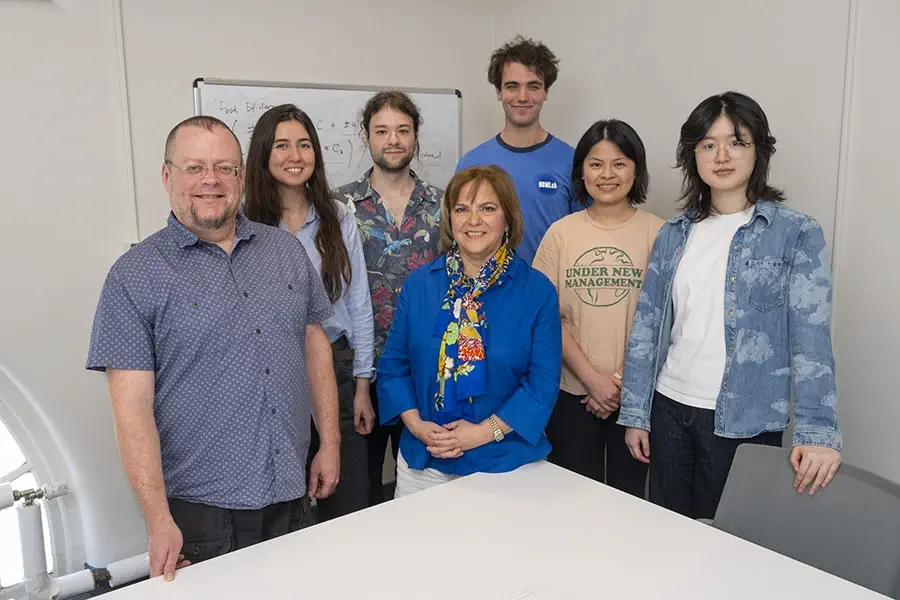
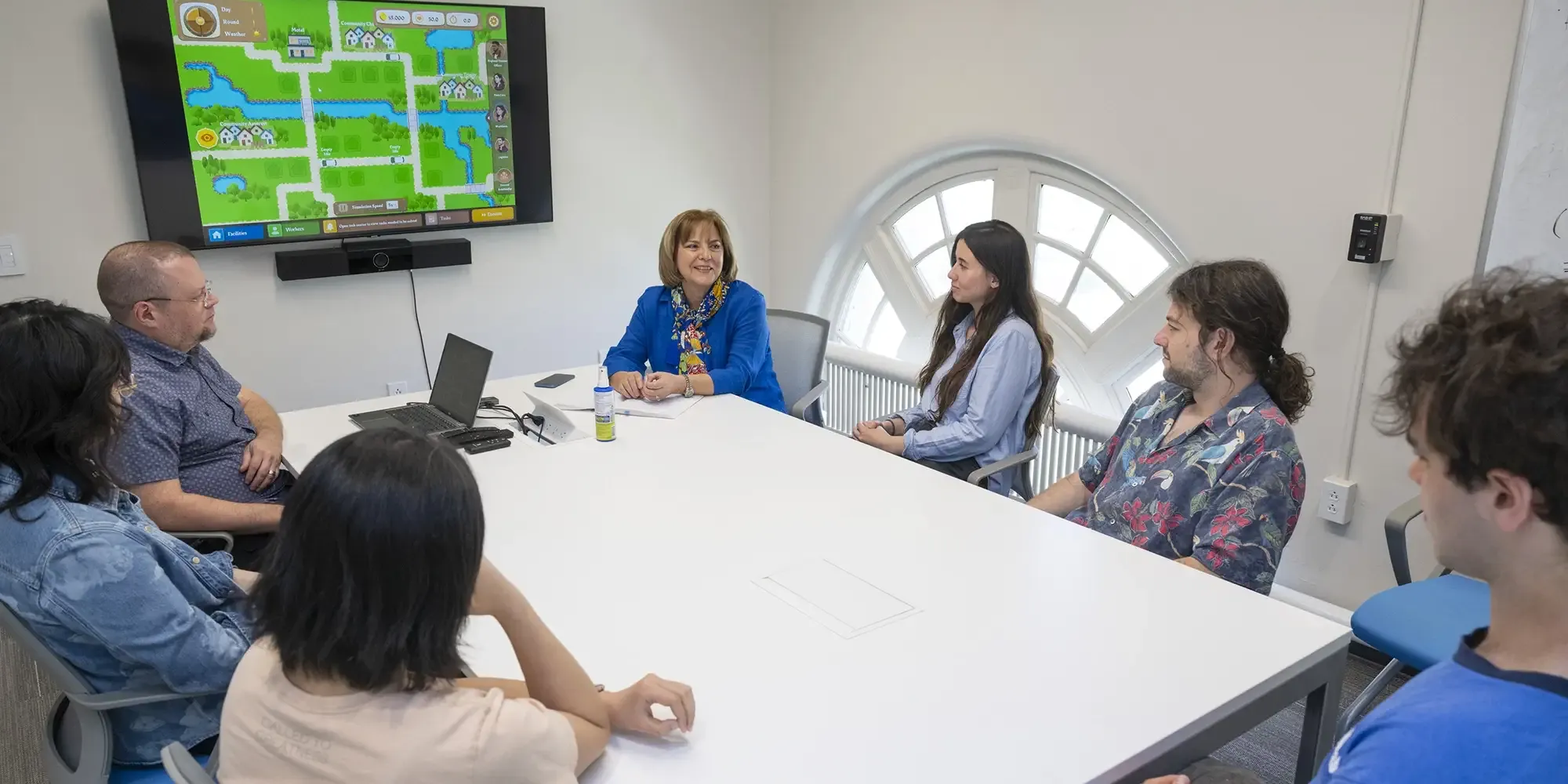
Cleotilde “Coty” Gonzalez has a different vision for the future – one in which humans and AI work together as teammates. In fact, she and a cohort of collaborators have recently published three scientific papers (see sidebar) investigating the facets of “cognitive AI” and how it could partner with humans on teams.
“The idea of what intelligence is has changed through the years, and now it is changing to be a collaborative human-AI intelligence,” said Gonzalez, who is a professor in CMU’s Department of Social and Decision Sciences. “It’s what we can do together with AI that makes us smarter, more capable and more able to do things that we were not able to do before.”
Of course, there are also risks involved. And that is precisely why she sees cognitive AI as a joint effort between humans and AI.
“The world of today’s AI is polluted by pure technology and the idea that we can do everything faster and more accurately,” she said. “But that’s not what cognitive AI is about. It’s about bringing the human into the loop and keeping the human in the loop.”
What is Cognitive AI?
To better understand what cognitive AI is, it might be helpful to understand what it is not.
For instance, cognitive AI is not the same as generative AI models such as ChatGPT or Grok. These large language models (LLM) generate text by learning statistical patterns from massive amounts of text data, typically human-generated.
Cognitive AI is also different from Artificial General Intelligence or Artificial Super Intelligence – AIs that can match and then exceed humanity’s intellect across a wide variety of tasks, like has been popularized in fictional media like “The Matrix.” These systems remain hypothetical, even if they are common in science fiction.
Rather, Gonzalez works on AI that draws on scientific understanding of the human mind as an information-processing system, using models of how people learn and make decisions to design systems that can work effectively alongside people – not simply imitate or replace them.
“Everything I do is related to decision-making – how humans make decisions,” said Gonzalez, who is also the founding director of the Dynamic Decision-Making Laboratory and the research co-director of the National Science Foundation AI Institute for Societal Decision Making (NSF AI-SDM). “I want to understand how we use experience to learn and make better choices over time, and the role technology can play in that.”
Interestingly, when a cognitive AI first looks at human decision-making, Gonzalez said it may be able to simulate how humans make decisions with only coin-flip accuracy – no better than a guess.
“At first, a cognitive model may predict a person’s choices with little more than chance-level accuracy,” Gonzalez said. “But as it observes more decisions, it learns from that individual, step-by-step. In some controlled decision-making tasks, after only a few dozen decisions, our models have reached up to 95 percent alignment in predicting what a person will do.”
Importantly, Gonzalez said the goal of this technology is not to take away human decision-making, but to augment it.
“A lot of conversations around AI have become twisted into the idea that we want to replace humans. But that is not what we want to do. We want to empower humans,” said Gonzalez.
How Humans and Cognitive AI Can Work Together
Imagine a radiology setting, where we are deciding how to leverage the expertise of a human radiologist and an AI system reviewing scans for cancer.
Obviously, receiving a false positive is not an ideal result, because it could trigger more scans and anxiety for the patient. However, missing signs of cancer early would arguably be worse, since it could affect health and survival rate later on.
“Both types of mistakes are not equal,” said Aarti Singh, a professor in CMU’s Machine Learning Department and director of NSF AI-SDM. “If the AI fails to detect cancer, that’s a bigger deal than if it raises a false-positive.”
How should AI be used in this case, especially given that lives are at stake? And how should accountability be maintained? Rather than combining human and AI judgements in a one-size-fits-all workflow, Singh said, the system should be designed around the consequences of different errors. In a cancer-screening context, that might mean using AI specifically to flag cases the radiologist may have missed, rather than treating the AI as a simple replacement for the first human reader.
For instance, a study published in The Lancet Digital Health in 2022 found that when a human radiologist was paired with a machine learning AI, the team found a 2.6 percentage-point improvement in sensitivity over a radiologist alone. That may seem like a small improvement, but the study was conducted on nearly 1.2 million mammograms, showing how even small percentage-point gains can matter at population scale..
In another example, Singh imagined an AI-human team tasked with providing health information to pregnant mothers with limited resources. One option might be for the AI agents to call the mothers directly. But if those agents make mistakes, especially in a sensitive health context, they could erode public trust.
“But you could change the way AI is used. Rather than talking with people directly, it could identify who’s most at risk and then match the limited healthcare workers with them,” said Singh. “In both examples, it’s really about thinking how to combine human and AI expertise in complementary ways to get the best of both.”
Of course, the myriad ways human-AI teams could be applied are about as diverse as the kinds of AI that currently exist. But Anita Williams Woolley, professor of organizational behavior at CMU’s Tepper School of Business, sees human-AI teams being especially useful in three areas where humans often struggle: identifying the right expertise, coordinating work and aligning goals.
“So in terms of people, AI can help us figure out who has the particular kind of expertise we need to draw on in a given moment,” said Woolley.
Not only is this a matter of storing and utilizing institutional knowledge, but it can also help correct mismatches within human teams where introverted but more qualified experts are overshadowed by those with more confidence or ability to speak up. Furthermore, coordinating how disparate members of a team work together, as well as when to work together and when to work apart, could alleviate some of the stresses inherent to collaborations.
Finally, there’s goal alignment, which might seem obvious, but which Woolley said is an underappreciated weak spot.
“I think people don’t realize how often they get together in teams and the goals are not really clear or aligned, or maybe people have competing goals or incentives or different understandings of about the problem they’re trying to solve,” she said. “And nothing else really matters until you have that handled.”
Building Better From the Beginning
Gonzalez and her coauthors are not naïve about the potential pitfalls that may come with human-AI teams – in fact, they think about them all the time.
“There’s a chance AI could actually weaken teams if we use it poorly,” said Woolley. “People may all decide they don’t need to work with others anymore because they can just do everything with ChatGPT.”
However, Woolley also said the research to date suggests that sort of attitude will probably not result in better products for individuals or organizations.
Trust is another potential weakness, said Singh, because humans tend to be less forgiving of AI’s mistakes than they are of other humans.
“Consider the robotaxis in San Francisco. Some analyses suggest that AI-driven cars perform well on certain safety metrics,” she said. “But if there’s an accident, a single incident can completely break that trust.”
At the same time, the researchers argue that the answer is not to reject AI, but to design systems where humans and AI complement one another intentionally. That means carefully deciding which roles are best handled by people, which are best handled by AI, and how the two should coordinate in dynamic situations.
“Some decisions may be fully automated because they’re routine and well-defined, while others require human judgment, ethical reasoning or contextual understanding,” said Gonzalez. “The important question is not whether humans or AI should decide alone, but how we design systems where they work together effectively and responsibly.”
That also means building AI systems with transparency, accountability and trust from the beginning. Rather than treating AI as a replacement for people, Gonzalez sees the future as one of collaborative intelligence — where humans and AI together can solve problems neither could solve as well independently.
“We should not deny the power of technology or avoid integrating with it,” Gonzalez said. “What matters is creating systems that enhance human capability, reflect human values and help people and AI make better decisions together.”