Carnegie Mellon University
Integrated Innovation Institute

Engineering + Design + Business

Carnegie Mellon University Integrated Innovation Institute Logo

Master of Science in Software Management

Go Beyond Execution & Lead What Gets Built in the AI Era

You may already know how to build software or manage products. But as AI makes technical execution faster and easier, the harder questions remain: What should we build? Why does it matter? How do we know it will work? Answering these questions takes hands-on fluency with AI, the judgment to choose which problems to solve, the vision to shape competitive solutions, and the leadership to bring people together around a shared goal.

The Master of Science in Software Management (MSSM) at Carnegie Mellon University’s Integrated Innovation Institute prepares engineers, product managers, and founders for the strategic and creative challenges of digital product leadership. The curriculum is built around two concentrations, Product Strategy and Product Innovation, where you’ll explore customer needs, identify problems worth solving, and evaluate prototype solutions. Courses in software development and operations round out your understanding of the full product lifecycle.

Located in Silicon Valley, MSSM grounds your education in the real-time evolution of AI. You’ll learn current methods from experienced practitioners and apply them in team projects that take an idea from concept to prototype, business case, and path to market. AI is integrated throughout the curriculum, so you’ll learn when and how to use it to solve problems and create meaningful value.

MSSM develops three core capabilities:

  • Strategy: Identify opportunities, frame complex problems, and validate whether a product is worth building by weighing customer needs, technical feasibility, market demand, and the business case.
  • Innovation: Turn opportunities into products and services that connect customer needs, technology, data, and business realities. Learn to look past what AI makes possible to build solutions that deliver value and can compete in the marketplace.
  • Leadership: Learn to influence decisions at any level, regardless of your formal title. Bring different disciplines together, drive progress amid uncertainty, and take ownership of outcomes, not just deliverables, whether you’re guiding a project or managing a team.

Inside the Program

Curriculum

What You Will Learn

  • How software companies make decisions: Marketing, finance, strategy, and operations, studied from the perspective of a product leader.
  • How to move from identifying a problem to creating a product: Start with customer research and competitive analysis, develop a business plan, then move through concepts, prototypes, roadmaps, and a strategy for reaching the market.
  • How software and AI products are designed, built, released, and operated: From architecture and implementation to testing, evaluation, and ongoing operations, using metrics throughout the product lifecycle.
  • How to use data to inform business decisions: Forecast the value a product should deliver, define how to measure outcomes, and use real-world data after launch to assess performance and adjust course.
  • How to lead through influence and strengthen team performance: Build psychological safety, draw on collective intelligence, and help people work together toward better outcomes. Give and receive feedback, communicate clearly, and consider how product decisions affect people beyond the buyer.

Hands-on work

What You Will Do

  • Build a business plan and product roadmap for a software product, including revenue, cost, and market-entry models.
  • Define measures of success, track them, and adjust your plan as you receive results.
  • Analyze customer workflows to uncover meaningful problems, assess their potential, and determine which are worth solving with software and AI.
  • Build and debug working prototypes, including agentic AI solutions, individually or in teams, using code you write yourself.
  • Use AI coding tools to build software, then test and debug the code. Build AI-native applications and use AI evaluations (evals) to measure performance and verify results.
  • Work in teams with classmates who hold different roles and leverage collective intelligence to innovate and arrive at better solutions.
  • Deliver professional-quality work, present for critique, then revise based on feedback.

Five Domains, One Program

Business
Business

Understand the business behind the product. MSSM builds fluency in strategy, finance, and market analysis, so technical choices align with business outcomes.

Product
Product

Build things people actually need and adopt. MSSM teaches you to test ideas early, validate demand, and shape product strategy that succeeds in market.

Leadership icon
Leadership

Lead initiatives, influence teams, guide people. MSSM builds the essential skills to drive strategic initiatives, lead stakeholders through influence, and empower your team members to achieve their full potential.

Software Engineering icon
Software

Lead the software lifecycle. Study how software is designed, built, and managed. Gain the depth to lead initiatives, direct systems, scale delivery, and guide product and engineering teams.

AI
AI

Build real-world solutions with AI. MSSM puts AI to work on real problems, from AI-assisted coding to agentic AI solutions for business.

Choose Your Path

We offer three formats of the Master of Science in Software Management (MSSM) so you can choose the pace and structure that best align with your background and career goals.

Early Career
Emerging Software Professional

0–3 years work experience

Build Your Career in Software and AI Product Leadership

You have a technical foundation and are ready to expand your career opportunities. Our 16-month full-time program develops your capabilities in software, AI, product strategy, business, and leadership through hands-on projects and a required summer internship. Gain professional experience, explore different career paths, and prepare to shape and lead the next generation of software and AI products.

Recommended program

MSSM

16-month format

Mountain View, CA

Three semesters + a summer internship

  • No full-time work experience required, but you must have completed at least one tech-related internship
  • Full-time at the CMU Silicon Valley campus, August to December
  • Required summer practicum and internship
Explore the 16-month format

Mid-Career
Experienced Software Professional

4+ years work experience

Accelerate Your Next Career Move

You have several years of experience in software or technology and are ready for greater responsibilities or a new career direction. Our intensive 12-month full-time program builds on your experience, expanding your capabilities in AI, product strategy, innovation, and leadership. Immerse yourself in Silicon Valley’s technology ecosystem and prepare to shape product direction, lead teams, and drive meaningful business outcomes.

Recommended program

MSSM

12-month format

Mountain View, CA

Three semesters

  • Full-time at the CMU Silicon Valley campus, August to August
  • Complete the degree in one year and return to industry
Explore the 12-month format

Established Career
Experienced Software Professional

5+ years work experience

Advance Your Career Without Pausing It

You have an established career in software or technology and want to take on greater leadership responsibilities without stepping away from your job. Our part-time program expands your capabilities in AI, product strategy, innovation, and leadership. Attend live classes on campus or remotely, apply what you learn directly to your work, and earn your Carnegie Mellon master’s degree.

Recommended program

MSSM

Part-time format

Remote (Anywhere)

As little as two years (up to seven)

  • Complete the degree in as little as 2 years, with up to 7 years to finish
  • Attend live, synchronous evening classes taught from Silicon Valley, either in person in the Bay Area or remotely via Zoom from anywhere
Explore the part-time format
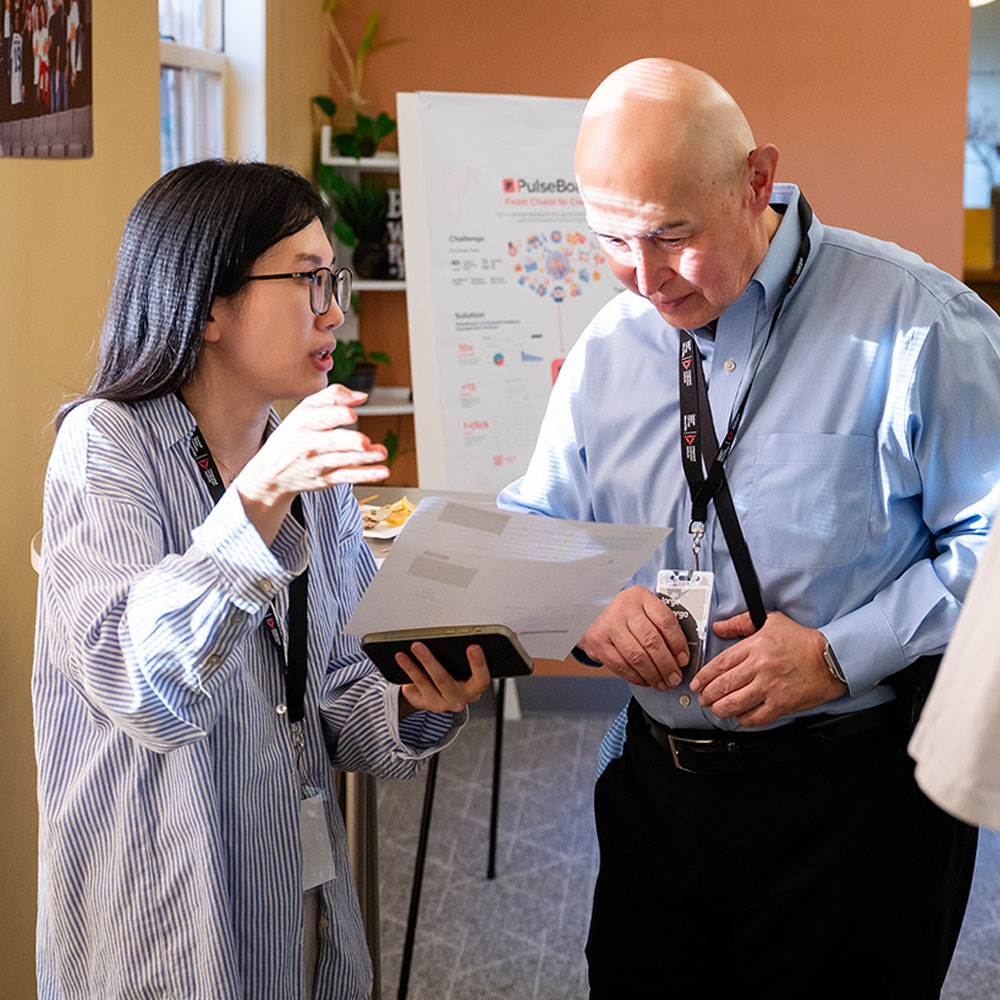
Professor Jorge Taborga speaks with a student

Have a venture in mind? Add a concentration to your degree.

Designed for MSSM students with an idea for a new software-intensive product or service, the Technology Ventures concentration gives you the space to develop that idea and test its potential as a business. You’ll work with faculty mentors and tap into Silicon Valley’s startup community, learning from founders, investors, and industry leaders as you develop your product.

The concentration covers the practical side of launching a software venture, from shaping your idea to setting up the company and working with investors. Courses include:

  • Start-Up Creation in Practice: Bring your own startup idea and work with a team to define the customer problem, user needs, and technical obstacles, plan a minimum viable product (MVP), and pitch your product in the final week.
  • Innovation & Entrepreneurship: Learn common startup challenges and meet Silicon Valley entrepreneurs, angel investors, and venture capitalists.
  • Legal Issues in New Venture Creation: Study incorporation, equity distribution, stock option vesting, and intellectual property protection.
  • Venture Governance: Understand boardroom dynamics and relationships among directors, executives, investors, and shareholders.
schwartz center fellows

Swartz Center & VentureBridge

The Swartz Center for Entrepreneurship empowers the CMU community to bring ideas to market. Its VentureBridge initiative supports alumni founders through seed funding, workspace, and a global network of mentors.

Learn More about the Swartz Center
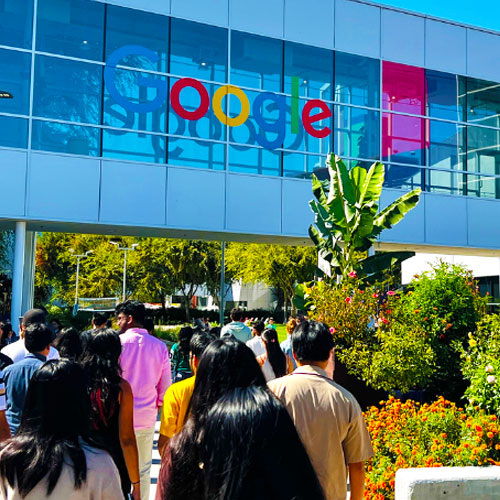
tech trek to Google

Networking & Tech Treks

Connect directly with the tech ecosystem through campus networking events, hack-a-thons, regional tech treks, and interactive sessions with industry leaders.

Students work on a class project near the SV fence

Stories From the MSSM Community

Get a closer look at life in the program, from the classroom to internships to where graduates go next. Read student and alumni spotlights, summer internship recaps, and featured stories from specific classes.

Read More MSSM News Articles

You should have an undergraduate degree in:

  • Computer science
  • Electrical and computer engineering
  • Information science
  • Information systems
  • Information technology
  • A related field

The ideal candidate will hold a minimum cumulative GPA of 3.0 or equivalent from an accredited institution (Accreditation Board for Engineering and Technology, Inc., Higher Learning Commission or U.S. Dept. of Education).

Although most of our students have a computer science-related undergraduate degree, there is no one path to the MSSM. You are well on your way if you excelled in your engineering or science undergraduate degree or an equivalent program that developed your logical reasoning.

Those with undergraduate degrees outside of computer science, software engineering or information technology, or simply questioning if their technical skills meet the prerequisites of the MSSM, should review the following LinkedIn Learning resources:


If these skills are familiar to you, then consider applying for the MSSM program. If these are new concepts, it is highly recommended that you review and complete the LinkedIn Learning resources to enhance your application.

Jorge Taborga headshot

“AI is raising the expectations for software and AI product leaders. Technical proficiency is essential, but it is no longer sufficient. Leaders must know which problems are worth solving, what products to create, how to lead the people who build them, and how to take responsibility for the results. The MSSM program prepares students to become those leaders.”

Jorge Taborga

Interim MSSM Program Director & Professor

2025 Salary & Career Outcomes

MSSM graduates earn a median base salary of $167,000, and 100% accept job offers within six months of graduation.

Reported Roles
of Recent Graduates

  • Product Manager
  • Senior Product Manager
  • Software Engineer
  • Machine Learning Engineer
  • Inbound Product Manager
  • AI Software Engineer
  • Full-Stack Software Engineer
  • Engineering Manager
  • Co-Founder
  • Technical Lead
  • Solution Architect
  • Cyber Security Systems Architect
  • Growth Analytics Manager

Hiring Network

Recent graduates work at technology, design, and organizations including:

Industries

  • Internet & Software
  • Information Technology
  • Biotech & Life Sciences
  • Construction
  • Electronic & Computer Hardware
  • Financial Services
  • Government
  • Insurance

Top Locations

  • San Francisco
  • San Jose
  • Mountain View
  • Palo Alto
  • New York City
  • Seattle
  • Denver
  • San Diego

Immerse Yourself in the Silicon Valley Experience

Silicon Valley is a part of the MSSM experience.

The MSSM program sits inside the ecosystem where AI, software, and technology business models are being shaped. The region is home to major AI labs and AI-native startups. Bay Area experiences, including company visits and tech treks, major industry events and networking, are intentionally part of the program.

Silicon Valley expertise enters the classroom regularly.

All MSSM faculty currently work at Silicon Valley companies, bringing real-world experiences to shape the curriculum. Guest speakers also regularly come to campus to share what they’re seeing and building.

The relationships you build extend beyond the program.

The relationships you build last well beyond graduation. You’ll join a dedicated alumni network whose members return to share their experience, mentor students, help with interview preparation, and participate in program events. Working across companies like Google, Meta, Apple, Amazon, and Salesforce, as well as AI-native startups and their own ventures, MSSM alumni are invested in helping the next generation succeed.

Explore the MSSM Experience in Silicon Valley

Neha Goyal MSSM ’16

Neha shares how the MSSM program helped her transition from a revenue-strategy background to the “builder side” of technology. She credits CMU’s Silicon Valley campus with offering direct access to industry leaders.

Alumni Paths

Neal Kunkle MSSM '23

Neal discusses how the MSSM program blended design, engineering, and business strategy to help him grow as a tech leader. He points to real-world faculty insight, proactive support as a part-time student, and relentless product iteration as keys to building great software.

Radha Tangirala MSSM '20

Radha traces how the MSSM program helped her shift from execution-focused engineer into a strategic, customer-centric thinker, building tools for farmers at Bayer. She credits CMU with frameworks for complex data, comfort with ambiguity, and skills to align stakeholders and deliver real value.

Ronith Regatti MSSM '24

Ronith credits the MSSM program with accelerating his shift from software developer to a broader, strategic view of business models and cross-functional teams. Now shaping voice-driven e-commerce at Amazon's Alexa Shopping, he points to his cohort, faculty, and curriculum as lasting drivers of his growth.

Build the Skills to Lead and Innovate With a Software Management Graduate Program

Whether you're looking to accelerate, pivot or launch something new, CMU’s Master of Science in Software Management gives you the tools to lead across product, people and technology. Choose the format that fits your goals, and start turning vision into impact.

Apply Now

faq iconMSSM Program Frequently Asked Questions

The Master of Science in Software Management (MSSM) is a 144-unit, STEM-designated master’s degree from Carnegie Mellon University’s Integrated Innovation Institute, offered at CMU’s Silicon Valley campus. It prepares technically experienced professionals to move into roles where they shape product decisions, guide technical work, and lead teams.

Program at a Glance

Degree: Master of Science in Software Management (MSSM)

Offered by: Integrated Innovation Institute, Carnegie Mellon University

Location: CMU Silicon Valley & Remote for Part-Time students

Formats: 12-month full-time, 16-month full-time, part-time

Total units: 144 (all three formats)

Entry term: August

STEM-designated: Yes (CIP code 14.0903)

Key Highlights
  • AI is integrated throughout the curriculum, where each course includes AI in a way that fits its subject, from product strategy to leading initiatives and teams.
  • Put product leadership into practice. Team projects challenge you to turn strategic thinking into product decisions, actionable plans, and tangible deliverables.
  • Three formats, one degree. 12-month full-time, 16-month full-time with a summer internship, or a part-time option where you pick the pace all lead to the same MSSM degree.
  • Silicon Valley campus. Faculty, guest speakers, and course projects come from Silicon Valley companies.

MSSM is designed for technical professionals and high-potential graduates who want to shape products, lead strategy, and drive business impact. Students range from recent graduates with technical degrees and internship experience to seasoned software engineers, product managers, technical program managers, and founders.

They typically join MSSM to take one of three paths:

  • Moving Up: Grow from building products to leading the teams and organizations that build them, on the path from engineering or product manager to director, VP, CTO, or CPO.
  • Moving Across: Pivot into high-impact hybrid roles—transitioning from engineering into software and AI product leadership, technical program management, or multidisciplinary positions at the intersection of AI, software, product, and business strategy.
  • Starting Something: Turn a product idea into a company, or a new venture inside one, with dedicated entrepreneurship coursework, hands-on incubation, and direct faculty mentorship.

Key Applicant Traits

  • Curious: Driven to learn and explore beyond your core discipline.
  • Adaptive Learner: Willing to act on what you know and update your thinking as you learn more. MSSM builds the judgment to make informed decisions with incomplete information.
  • Collaborative: Eager to partner with diverse thinkers who approach problem-solving differently.

Applicants should be able to demonstrate relevant technical experience, such as software development, technical work, or experience applying technology in their field. The Admissions team reviews everything in your application rather than focusing on one specific qualification.

MSSM combines software, data, AI, product, business, and leadership in one degree. Most related programs concentrate on a single one of these areas.

Computer Science Master’s

Focus: Technical depth: theory, algorithms, architecture, software systems

How MSSM Differs: Adds product, business, AI, and leadership skills to technical experience, with an emphasis on deciding what to build and leading its development

Product or Program Management Master’s

Focus: One management function: strategy, roadmaps, delivery, or execution

How MSSM Differs: Builds product and program management skills alongside software, AI, technical, and business foundations

MBA

Focus: General management across any industry

How MSSM Differs: Focuses specifically on product leadership in organizations where software, data, and AI are central to the product and business

MSSM teaches students to decide what software and AI products are worth building, validate ideas with working prototypes they build themselves, and lead the teams that ship them.

What You Will Learn
  • How software companies make decisions: Marketing, finance, strategy, and operations, studied from the perspective of a product leader.
  • How to move from identifying a problem to creating a product: Start with customer research and competitive analysis, develop a business plan, then move through concepts, prototypes, roadmaps, and a strategy for reaching the market.
  • How software and AI products are designed, built, released, and operated: From architecture and implementation to testing, evaluation, and ongoing operations, using metrics throughout the product lifecycle.
  • How to use data to inform business decisions: Forecast the value a product should deliver, define how to measure outcomes, and use real-world data after launch to assess performance and adjust course.
  • How to lead through influence and strengthen team performance: Build psychological safety, draw on collective intelligence, and help people work together toward better outcomes. Give and receive feedback, communicate clearly, and consider how product decisions affect people beyond the buyer.
What You Will Do
  • Build a business plan and product roadmap for a software product, including revenue, cost, and market-entry models.
  • Define measures of success, track them, and adjust your plan as you receive results.
  • Analyze customer workflows to uncover meaningful problems, assess their potential, and determine which are worth solving with software and AI.
  • Build and debug working prototypes, including agentic AI solutions, individually or in teams, using code you write yourself.
  • Use AI coding tools to build software, then test and debug the code. Build AI-native applications and use AI evaluations (evals) to measure performance and verify results.
  • Work in teams with classmates who hold different roles and leverage collective intelligence to innovate and arrive at better solutions.
  • Deliver professional-quality work, present for critique, then revise based on feedback.

An elective portfolio lets students go deeper in areas such as AI, software systems, product management, user experience, security, organizational leadership, and entrepreneurship.

MSSM courses include AI in a way that fits each course’s subject, from product strategy to software architecture to team leadership. Students:

  • Learn the fundamentals of machine learning and AI systems.
  • Build with large language models and agents.
  • Apply AI across product management, software development, testing, and strategy.
  • Learn to judge when an AI system is reliable enough to use.

MSSM courses are built around applied team projects, so students learn by putting ideas to work. Students:

  • Apply learnings to customer and business problems.
  • Turn product decisions into prototypes and viable products.
  • Work in teams with people from different disciplines and roles.
  • Revise their work based on feedback.

The coursework is demanding. Just like on a professional product team, students are expected to communicate proactively, meet commitments, and take ownership of their learning.

Yes. Every MSSM student:

  • Writes code.
  • Builds working prototypes that incorporate AI agents.
  • Uses AI-assisted development tools to build and test what they create.

Students do not simply hand off requirements to engineers.

Because students enter with different levels of technical experience, courses such as Architecture & Programming Principles and Software Engineering Management provide the necessary foundation. Leveraging modern AI tools to accelerate the learning curve, these courses prepare you to directly build, evaluate, and iterate on software prototypes. MSSM is not a CS degree or a coding bootcamp; it is designed so you can take ideas from concept to code and make informed technical decisions.

Most MSSM coursework is project-driven and team-based, mirroring how cross-functional product teams operate in industry.

  • Team Structure: Teams are intentionally built to combine diverse technical, design, and business backgrounds, giving you experience working alongside colleagues with different skill sets and problem-solving approaches.
  • Team Rotation: You will collaborate on multiple teams throughout the program to build adaptability and practice leading in varied team dynamics.
  • Grading & Accountability: Deliverables include a mix of team outcomes and individual contributions. Instructors use peer evaluations and individual assignments to ensure fair grading and individual accountability.
12-Month

Duration: August–August

Designed for: Professionals with several years of experience who want to return to the workforce quickly

Internship: No

16-Month

Duration: August–December of the following year

Designed for: Applicants with less experience or those making a career pivot

Internship: Required summer internship

Part-Time

Duration: Minimum two years

Designed for: Working professionals who plan to stay employed full-time

Internship: No

All three formats lead to the same 144-unit degree and are based at CMU’s Silicon Valley campus. The 12-month and 16-month formats are full-time and in person, while part-time classes meet remotely or on campus in the evening.

Part-time students can attend classes at our Silicon Valley campus or join live via Zoom. Because the program is fully synchronous rather than self-paced, remote students participate in live classes and team projects alongside their full-time jobs. While the standard plan spans two years across six semesters, you can adjust your course load to fit your schedule, with up to seven years to complete the degree. Course schedules and delivery options are subject to change, so please check with Admissions for current details.

A computer science degree is not required. Most applicants have a background in computer science, software engineering, information systems, or a related technical field, but applicants from other backgrounds can be competitive if they can demonstrate relevant technical experience, such as software development, technical work, or experience applying technology in their field.

Applicants without a technical degree can also draw on two technical foundation courses that help build the skills needed to keep pace with the coursework.

  • Completed application and video essay
  • Transcripts from all institutions attended
  • Resume or CV
  • Two letters of recommendation
  • Short written responses
  • English-proficiency scores (TOEFL, IELTS, or Duolingo), for applicable international applicants
  • Work experience: 0–3 years for the 16-month format (no full-time work experience required, but you must have completed at least one tech-related internship); 4 or more years for the 12-month format; 5 or more years for the part-time format.
  • GPA: 3.0 cumulative minimum; GRE and GMAT scores are optional.

Application deadlines vary by entry term and format; the MSSM admissions page has current dates and requirements.

Yes. The 16-month format requires a summer internship between the first and final academic terms. Students are responsible for securing their own internship in an industry or research setting and must meet the program’s internship and academic requirements.

International students must secure Curricular Practical Training (CPT) authorization before starting off-campus work. The 12-month and part-time formats do not include an internship.

Yes. Students who want to launch a venture can add the Technology Ventures concentration, taken in place of some electives alongside the core MSSM curriculum. It covers venture formation, fundraising, governance, and the legal side of starting a company, without replacing the program’s core foundation.

Students can also use CMU’s broader entrepreneurship resources, including the Swartz Center for Entrepreneurship.

The Silicon Valley location puts students near companies working in software and AI. Faculty and guest speakers work in the industry, and course projects involve real business needs.

Students can connect with practitioners, founders, investors, and alumni through events and activities across the region. These are opportunities to learn and build connections; they do not guarantee a job or funding.

An MSSM degree can prepare you for roles in product management, engineering, AI, technical program management, innovation, and entrepreneurship. Potential roles include:

  • AI Product Manager
  • Product Manager
  • Product Engineer
  • Technical Program Manager
  • Software Engineering Manager
  • Technical Lead
  • AI Evaluation Engineer
  • Corporate Innovation Lead
  • Founder
  • Co-Founder

Yes. The MSSM program is STEM-designated under CIP code 14.0903 (Computer Software Engineering). A program’s STEM designation is based on its Classification of Instructional Programs (CIP) code, and this code appears on the U.S. Department of Homeland Security’s STEM Designated Degree Program List. International students with questions about what STEM designation means for them should contact CMU’s Office of International Education.

12-Month Full-Time

Estimated Tuition (2026–2027): $92,265

16-Month Full-Time

Estimated Tuition (2026–2027): $94,828 estimated total

Part-Time

Estimated Tuition (2026–2027): $641 per unit

  • Self-funded program: students or their employers are responsible for tuition and living costs.
  • Employer sponsorship: many students use employer tuition assistance or reimbursement; check coverage with your employer.
  • Rates: set annually; confirm current figures with CMU’s Student Financial Services.

From the Blog

Industry experts share Product Management Advice

Professor Adrian Ott's class offers a holistic approach, guiding students through the complete product lifecycle. Industry leaders shared practical experiences from their careers. 

National Entrepreneurship Month 2025 hero image

National Entrepreneurship Month 2025


Celebrating National Entrepreneurship Month, iii alumni founders discuss using AI to solve problems and share dieverse views on entrepreneurship: creation, hard work, and impact. 

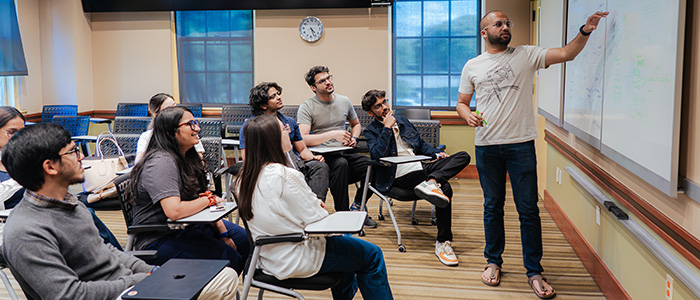
Areeb presents the class his PM insights

Cracking the Product Management Interview


Areeb Sanadi returned to CMU-SV to lead a workshop on product interviews, highlighting structuredthinking, mock practice, and storytelling.