Education at Carnegie Mellon
An Introduction by Vice Provost for Education, Indira Nair
"How do we educate our students to become aware, socially responsible global citizens of tomorrow's world?"
This is the challenge that Carnegie Mellon is embarked on today. Carnegie Mellon has a long tradition of being innovative and pragmatic in education, a commitment that started with the founding of the Carnegie Technical Schools in 1900, and reinforced over half a century ago by the introduction of the Carnegie Plan. This tradition has fostered a nimble, flexible and entrepreneurial interdisciplinary ethos in undergraduate and graduate education and in research.
Today, our educational mission is "to serve our students by teaching them leadership and problem-solving skills, and our values of quality, ethical behavior, responsibility to society and commitment to work." We strive to educate our students for responsible global citizenship and leadership by integrating concerns of sustainability, social responsibility and of inclusion and respect for diverse perspectives throughout the curriculum and metacurriculum even as they gain deep professional skills.
Students are provided opportunities to develop along many dimensions: intellectually, cognitively, socially, emotionally, culturally and psychologically. To help them learn and grow in all these dimensions, we strive to immerse our students in an environment that is conducive to learning both inside and outside the classroom. Our responsibilities as educators include providing content and context, promoting professional and personal growth, supporting career planning and fostering development of foundations, perspectives and skills. We want our graduates to have the desire, confidence and skills to learn and grow throughout their lifetime.
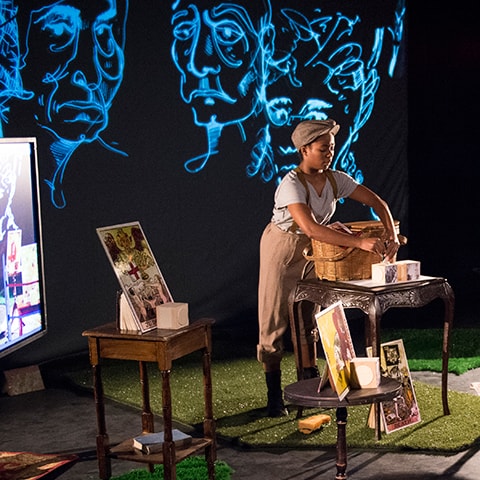
Carnegie Mellon students learn by actually doing and making. Perhaps the best way to appreciate our philosophy is to look at a few examples of student work and of educational initiatives on our campus. Our students' drama productions and music performances are of the highest professional quality. To challenge all our students to undertake creative and interdisciplinary projects, we have extensive undergraduate participation in research with an annual year-end celebration of their work at the Meeting of the Minds Symposium every May. Service learning is part of the Carnegie Mellon life and part of several courses. Our first-year students are immersed in learning through guided practice in the introductory engineering courses and College of Fine Arts studios and productions. The Eberly Center for Teaching Excellence supports faculty seeking to improve their teaching, based on the latest understanding of student learning. The Carnegie Mellon Advising Resource Center (CMARC) provides advice and guidance to students exploring transitions or looking for information.
The Division of Student Affairs works closely with students and faculty to improve the quality of student life and metacurricular learning, and to enhance our students' personal development, leadership and the quality of community. Above all, we continuously evaluate and revise our work to ensure the best educational outcomes for our students.
Supported by the latest technology and a deep appreciation of how young people learn and develop, our faculty, staff and students are working together to build a diverse, vibrant and stimulating learning community. As you continue to learn more about our education, I think you will agree that this is an exciting time for education at Carnegie Mellon.
As we continue to strive to provide the best education, I invite you to share with me any comments or thoughts that you may have regarding our education.
Indira Nair
in0a@andrew.cmu.edu