
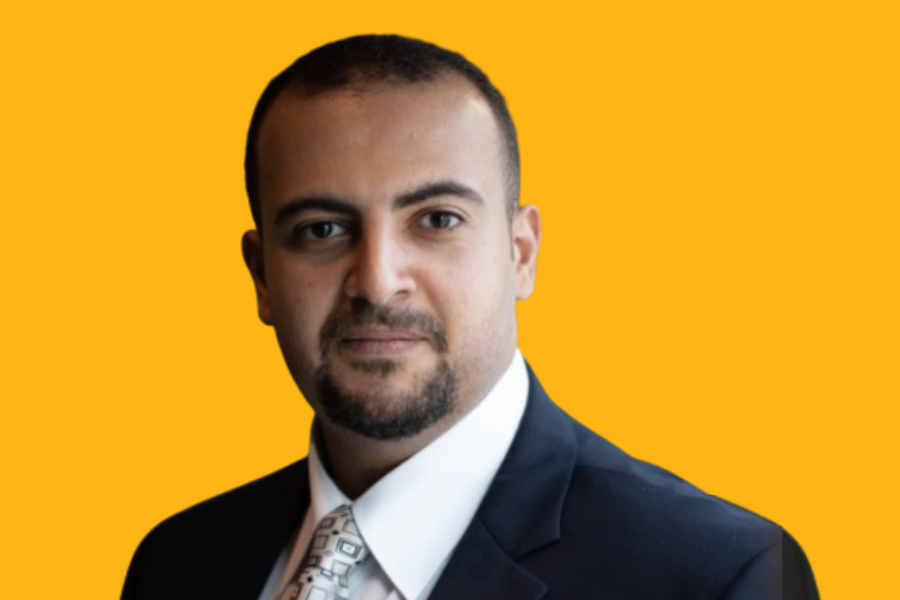
INI Assistant Teaching Professor Mohamed Farag selected as a Google Higher Ed Faculty AI Fellow
By Michael Cunningham
Media InquiriesMohamed Farag, assistant teaching professor at Carnegie Mellon University’s Information Networking Institute (INI) and lead of the Applied Generative AI (AGAI) group, has been selected as an inaugural Google Higher Ed Faculty AI Fellow, joining a global cohort of academic leaders focused on advancing the responsible use of artificial intelligence in higher education.
Assembling its first cohort, the Google Higher Ed Faculty AI Fellowship brings together university faculty members who are integrating AI into teaching, research and institutional innovation. Fellows will collaborate on strategies to improve student outcomes while helping shape the future of AI-enabled education.
Farag built his curriculum around how students can apply what they see in the classroom to the real world. Farag sees his role as an educator as a balance of knowledge of current research, current business practices and the latest teaching methodology to prepare students for what lies after graduation.
At the INI, Farag teaches several courses that span AI, cloud engineering and business, including: 14-763/18-763: Systems and Tool Chains for AI Engineers, 14-848: Cloud Infrastructure, 14-825: Special Topics - Generative AI and Large Language Model and 14-789: AI in Business Modeling.
Farag learned about the fellowship through Google communities connected to his work with Google Cloud technologies in the classroom. As part of the application process, candidates were asked to document their teaching, research, leadership and outreach experience, as well as propose a project addressing a major challenge facing higher education in the age of AI.
For Farag, that challenge centers on preserving and strengthening students’ critical thinking abilities while AI tools become increasingly common in academic settings.
“What we’re trying to do here is make sure that higher education is serving the students well,” said Farag. “We’re giving them the tools, the necessary processes and the empowerment that they need to make sure that they are on a clear path to develop, not to be diminished.”
Farag’s fellowship project will focus on identifying processes, guidelines and potential tools that can help students use AI to support their intellectual growth and learning development. The work will examine technical, procedural and educational approaches that institutions can adopt to encourage meaningful engagement with AI technologies in research and coursework.
“The project that I’m going to be working on during my fellowship is developing tools to ensure that students are using AI to empower them, not to replace their growth abilities and critical thinking,” said Farag.
The fellowship cohort includes approximately 50 faculty members from across North America and beyond, including senior academic leaders and department chairs. Farag views the program as both a research opportunity and a chance to collaborate with other educators working at the forefront of AI in higher education.
The fellowship officially begins in June and will continue throughout the summer, culminating in an in-person gathering at Google headquarters in September. During that time, fellows will collaborate on projects and meet virtually to share insights on AI’s evolving role in teaching, learning and institutional transformation.
“I’m excited for this opportunity," said Farag. “There are a lot of bright-minded people in the cohort, and I’m ready to start working on this as soon as possible.”