

Armed with Technical Entrepreneurship Experience, INI TECH Fellows Look to Their Futures
By Evan Lybrand
Media InquiriesThe first cohort of our Technical Entrepreneur Coaching Hub (TECH) Fellowship is finishing the final component of their experience: completing an Information Networking Institute (INI) Practicum project. As they prepare for graduation and their next steps, the inaugural cohort is reflecting on the lessons they’ve learned about technical entrepreneurship through the program.
“The best source of data on startups is usually PitchBook,” said Quinn Jacobson, co-lead of the TECH Fellowship and an INI professor of the practice. “You can look at their annual data, and they’ll tell you how many founders came from what schools. CMU tends to be very low on that in terms of percentages.
“But if you look at the other metric — how successful founders are — our founders, historically, are more successful than almost any other school. They just don’t make the choice [to found a startup] often.”
The TECH Fellowship launched in 2024 as an opportunity for students in the INI’s M.S. in Information Technology - Information Security (MSIT-IS) and M.S. in Mobile and IoT Engineering (MSMITE) programs to engage directly with entrepreneurship. Through these unique bicoastal programs, students experience the best of both worlds at Carnegie Mellon University in Pittsburgh and Silicon Valley (CMU-SV).
Co-led by Jacobson and Associate Professor of the Practice Cynthia Kuo, two INI faculty located at CMU-SV, the TECH Fellowship sets up the cohort for future success as technical leaders, startup founders or investors in new ventures. Students take part in a seminar class for half of the seemster and then must secure an intern at an actual startup during the summer. “I think two of the fellows will actually have job offers from their internships,” said Kuo, “which is unexpected, but great.”
Kuo and Jacobson designed the fellowship to build on the vibrant resources and learning experiences already available at CMU-SV. Half of the INI faculty is located there and teach courses designed to give students the interdisciplinary knowledge and skills they need to be successful technical leaders across industry, research and government. The Bay Area also hosts the largest concentration of INI alumni, with whom students can connect as a network of mentors and build connections to bolster their careers.
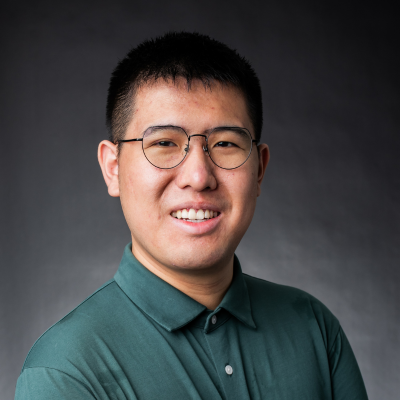 M.S. in Mobile and IoT Engineering (MSMITE) student Bear Xiong interned with the Artificial Intelligence startup Groq. “Interning at Groq has been a wild ride: open-ended problems every day, pushing silicon and software to their limits,” said Xiong. “The INI gave me the tools — compiler tricks, deep learning framework internals, profiler instincts and the confidence to speak up in a room full of brilliant people. I know I’ll miss this place.”
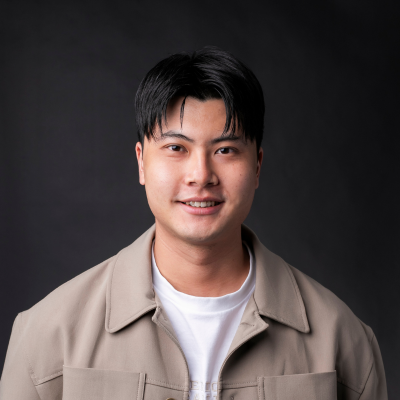 MSMITE student Anthony Shen interned at Lucid Motors. “Interning at Lucid Motors gave me the chance to apply my operating systems, embedded systems and security knowledge from CMU in a real-world setting,” said Shen. “Lucid, as a fast-growing company in a traditional industry, offered me a fresh perspective on how to approach and solve problems differently. I also found the TECH Fellow training especially valuable: the communication skills and fast-moving mindset I developed helped me collaborate more effectively across teams.”
It takes a unique type of student to take on the challenges of the startup ecosystem. As Kuo and Jacobson consider applications for the 2025–26 cohort of TECH Fellows, they are thinking broadly about which students could be a good fit.
“We're looking for somebody who thinks that it’s within the realm of possibility for their future career,” said Kuo. “Somebody who is willing to bet on themselves, and who’s willing to take a risk. That’s a key attribute for being an entrepreneur, because you have to be willing to bet that you have the ability, the will and the drive to succeed.”
While the fellowship is intentionally designed to support a range of students, from those who plan to launch their own venture to those who are hoping to follow a more traditional corporate technology career path, Kuo and Jacobson hope the experience inspires future founders.
“Doing a startup is not something to be done lightly,” said Jacobson. “When people ask me, ‘When do you know you should do a startup?’ I tell them it’s when you can’t imagine not taking that technology and doing it. The only reason you’re a startup is that you just can’t imagine a world where that doesn't happen. And that’s got to be the level.”
Explore Our Programs
Meet the 2024–25 TECH Fellows
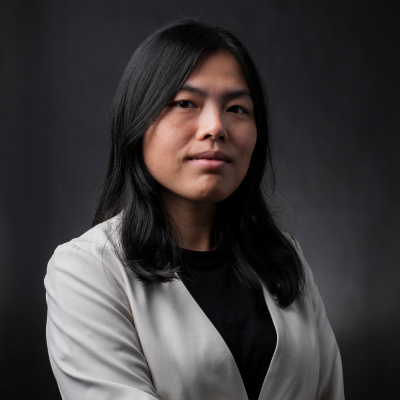 Tin-Yun Chan
MSMITE
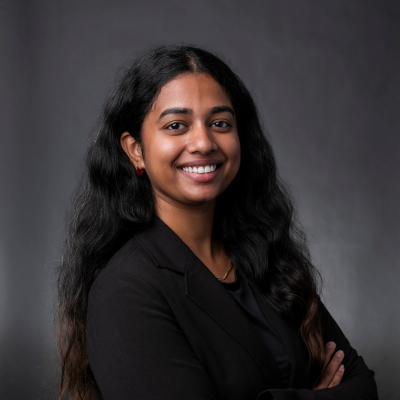 Shrawani Pagar
MSIT-IS
Anthony Shen
MSMITE
Bear Xiong
MSMITE
 Jingfei Xu
MSMITE