12-Month Format
Master of Science in Software Management (MSSM)
This program is designed for professionals ready to accelerate quickly and return to the workforce with expanded leadership skills.
Explore the 12-month format

Technology continues to evolve at a rapid pace, with AI, cloud infrastructure, and other emerging platforms reshaping how products are built and delivered. One need remains constant: Organizations require software and AI product leaders who can shape vision, strategy, and the systems that turn technical capability into meaningful products.
A master’s in software management is designed to develop that capability. Rather than focusing narrowly on technical specialization, the degree builds strategic, product, and leadership skills that position graduates for long-term growth across the technology sector.
What is a Master's in Software Management?
What Makes Software Management a High-ROI Degree?
High-Impact Roles in the Software Management Career Path
A Degree Designed for Long-Term Leadership
Earn a Flexible Master's in Software Management From Carnegie Mellon University
A master’s in software management develops software and AI product leaders who shape vision, strategy, and high-performing systems to create digital products and platforms that deliver meaningful value to people, businesses, and society.
Unlike a traditional computer science program, which emphasizes technical depth, or an MBA, which focuses broadly on management theory, a software management graduate degree integrates technical fluency with product strategy, innovation frameworks, and organizational leadership.
As a result, the software management career path often attracts:

The strongest career growth in technology doesn’t always come from deeper specialization. It often comes from an expanded scope.
A master’s in software management is designed to facilitate that shift. The degree develops strategic, product, and leadership capabilities that enable professionals to influence decisions across engineering, business, and organizational functions.
Graduates are equipped to:
While specific technologies will continue to evolve, the ability to lead products, align stakeholders, and guide execution remains essential. That durability, combined with expanded scope and access to leadership-track roles, is what drives long-term return on investment.

Graduates pursuing jobs with a master’s in software management often move into leadership-oriented roles that bridge engineering, product, and business strategy.
U.S. average salary: $147,780
These roles shape product vision and AI-enabled strategy from discovery through delivery. Product Managers lead the discovery process, define roadmaps, and align cross-functional teams around outcomes that matter to users, businesses, and society. At the AI layer, they determine when and how AI capabilities are applied to create real, measurable value.
U.S. average salary: $143,869
These roles connect technical execution to product direction. Engineering Managers build high-performing teams and shape delivery culture. Technical Leads own architectural decisions that affect product quality and scale. Product Engineers bring technical fluency into the discovery process, working across product and design to frame problems, prototype solutions, and validate assumptions early. Technology Program Managers translate strategy into coordinated execution across engineering and product organizations.
U.S. average salary: $147,524
These roles are for technically grounded professionals who want to lead at the systems level. MSSM rounds out their capabilities with product thinking, innovation frameworks, process management, and leadership judgment, enabling them to architect AI-enabled platforms, drive technical strategy, and influence product and business decisions without leaving the technical track.
Compensation varies: Equity upside can be significant for founders and early-stage principals.
These roles are for technically grounded professionals who want to lead at the systems level. MSSM rounds out their capabilities with product thinking, innovation frameworks, process management, and leadership judgment, enabling them to architect AI-enabled platforms, drive technical strategy, and influence product and business decisions without leaving the technical track.
The leaders who thrive in today’s evolving technology environment are those who can evaluate new systems, assess market implications, and guide teams through uncertainty. As platforms shift and tools advance, the ability to think strategically becomes more valuable than any single technical specialization.
A master’s in software management develops that foundation. By strengthening product judgment, cross-functional communication, and strategic decision-making, the degree equips professionals with capabilities that remain relevant even as technology continues to change.
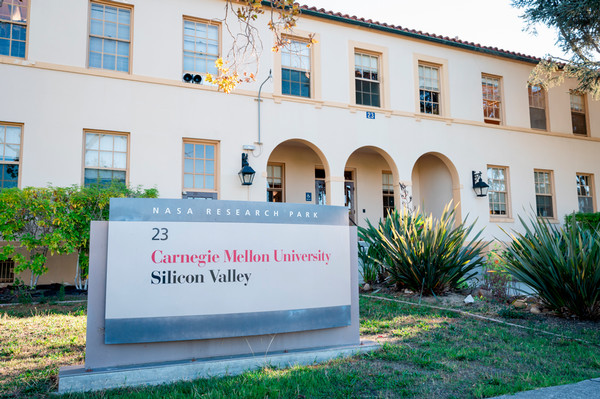
CMU’s Integrated Innovation Institute offers multiple Master of Science in Software Management formats to align with your professional stage and lifestyle:
This program is designed for professionals ready to accelerate quickly and return to the workforce with expanded leadership skills.
Explore the 12-month formatThis program includes a required summer internship, often with organizations in Silicon Valley, giving you hands-on industry experience before graduation.
Explore the 16-month formatThis program is ideal for professionals who want to continue working full-time while earning their degree. Complete the program in as little as two years as you attend evening classes on CMU’s Silicon Valley campus, or participate remotely from anywhere.
Explore the part-time formatEach pathway builds the same rigorous foundation in product strategy, engineering management, and innovation leadership, while providing flexibility that fits your needs.
If you're ready to move beyond execution and into software and AI product leadership, the Master of Science in Software Management program at Carnegie Mellon’s Integrated Innovation Institute offers a pathway designed for where technology — and your career — are headed next.