
AI: Who Wins and Who Loses?
Past Event
About the Conference
AI: Who Wins and Who Loses?, was a joint conference hosted by Carnegie Mellon University’s Block Center for Technology and Society and MIT’s Computer Science and Artificial Intelligence Laboratory (CSAIL).
The frantic media and social network focus on artificial intelligence (AI) is largely centered on the supply side—highlighting advancements such as data center investments, generative AI models, and the cutting-edge capabilities introduced by tech giants like Apple, Amazon, and Google.
In contrast, much less attention is given to the demand side. High-profile applications in areas such as software development, call center operations, pharmaceutical research, and materials innovation are among the most well-documented. However, recent surveys reveal that the adoption of AI in business processes remains limited. Integration beyond incidental usage is estimated at mid-single-digit percentages, with slightly higher adoption rates observed among larger organizations.
As a general-purpose technology, AI has the potential to eventually permeate a wide range of enterprises—spanning large, medium, and small businesses. The pace and scope of this adoption will depend on the direction of technological advancements and the trajectory of innovation across industries.
The anticipated labor market impact of AI deployment and adoption has drawn considerable attention, yet significant gaps remain in understanding which tasks can be automated, which can be augmented, and where entirely new tasks might emerge.
We hypothesize that business processes focused on achieving efficiency differ fundamentally from those aimed at value creation, with variations across occupations, industries, and regions. Current data is insufficient in both timeliness and scope to address these questions comprehensively.
This workshop will explore: (1) specific empirical methods to gain insights into AI adoption; (2) frameworks for connecting AI's technological characteristics to its economic diffusion and labor market implications; and (3) strategies for policymakers, business leaders, and researchers to collaborate in mitigating challenges, capturing necessary data, and maximizing opportunities.
Funded by the NSF Directorate of Technology, Innovation, and Partnerships (TIPs), the workshop will address the economy-wide R&D efforts required to foster innovation and economic growth. By facilitating interdisciplinary collaboration, the event aims to contribute a fresh and valuable perspective to discussions on AI diffusion and its economic impacts.
View the recording
Agenda
Welcome Remarks and Framing
Ramayya Krishnan
William W. and Ruth F. Cooper Professor of Management Science and Information Systems,Carnegie Mellon University
Martin Fleming
Research Scientist, MIT CSAIL FutureTech

Christophe Combemale
Assistant Research Professor, Block Center for Technology and Society,Carnegie Mellon University

Session 1: Macroeconomics of AI
Martin Fleming
Research Scientist, MIT CSAIL FutureTech
Joseph Briggs
Managing Director, Goldman Sachs Economic Research

Ramayya Krishnan
William W. and Ruth F. Cooper Professor of Management Science and Information Systems,Carnegie Mellon University
Session 2: Innovation, Adoption and Benefits of AI
Neil Thompson
Director, MIT CSAIL FutureTech

Raul Katz
Director, Business Strategy Research, Columbia Institute for Tele-Information, Columbia University

Bryan Seegmiller
Assistant Professor of Finance, Kellogg School of Management, Northwestern University

Todd Lensman
Department of Economics, Massachusetts Institute of Technology

Session 3: Drivers of AI Deployment, Business Processes and Task Structure
Christophe Combemale
Assistant Research Professor, Block Center for Technology and Society,Carnegie Mellon University
Daniel Rock
Assistant Professor, Operations, Information and Decisions, Wharton School University of Pennsylvania

Marcio Cruz
Principal Economist, International Finance Corporation

Session 4: Labor Demand Implications of AI
Christophe Combemale
Assistant Research Professor, Block Center for Technology and Society,Carnegie Mellon University
Robert Seamans
Professor,Leonard N. Stern School of Business, New York University
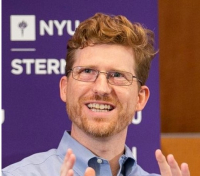
Jason Owen-Smith
Professor, University of Michigan

Susan Helper
Professor, Weatherhead School of Management,Case Western Reserve University

Session 5: Labor Supply and the AI Workforce
Erica Groshen
Senior Economic Advisor, School of Industrial and Labor Relations, Cornell University

Stuart Andreason
Burning Glass Institute

Adam Leonard
Former Chief Analytics Officer & Director of Information Innovation & Insight, Texas Workforce Commission

Session 6: Industrial Organization and Structural Change
Morgan Frank
Assistant Professor, Department of Economics, University of Pittsburgh

Avinash Collis
Assistant Professor, Heinz College of Information Systems and Public Policy, Carnegie Mellon University

Youngjin Yoo
Associate Dean of Research, Weatherhead School of Management and Professor, Department of Design & Innovation, Weatherhead School of Management, Case Western Reserve University
Session 7: Data to Support Research on Economics of AI
Christophe Combemale
Assistant Research Professor, Block Center for Technology and Society,Carnegie Mellon University
Morgan Frank
Assistant Professor, Department of Economics, University of Pittsburgh
Erica Groshen
Senior Economic Advisor, School of Industrial and Labor Relations, Cornell University
Jason Owen-Smith
Professor, University of Michigan
Keynote: What We’ve Learned and What We Still Would Like to Know
Susan Helper
Professor, Weatherhead School of Management,Case Western Reserve University