
Griffin’s Landmark Gift Will Shape the Future of Higher Education
Citadel founder and CEO Ken Griffin’s historic gift to Carnegie Mellon University will advance a bold new model for educating the next generation
Media Inquiries
Ken Griffin has a vision for the future of American higher education, and it’s one that starts with a question.
“I believe that every institution of higher education has to take a step back and say, ‘What do we need to do to reignite both the belief and the realization of the possibility of the American dream?’” said Griffin, founder and CEO of Citadel and founder of Griffin Catalyst, his civic engagement initiative.
Griffin found the answer to that question at Carnegie Mellon University. Through his transformative gift of more than $3 billion to CMU, Griffin is looking to play a central role in reshaping how higher education works, both in its capacity to better prepare the leaders of tomorrow and to drive transformative innovation and discovery at scale.
A dedicated philanthropist, Griffin has given more than $5.7 billion to advance education, opportunity, and health sciences initiatives with the power to transform people’s lives. His latest gift to Carnegie Mellon will help establish Carnegie Mellon University Miami. It will also channel $1 billion to the institution’s Pittsburgh campus, with $500 million to advance CMU’s world-class School of Computer Science, which will be renamed the Kenneth C. Griffin School of Computer Science, and the remaining $500 million providing flexible support for the university’s highest priorities.
This investment in CMU is the largest-ever gift by an individual in the history of higher education.
“Ken Griffin’s historic commitment reflects a profound belief in the power of higher education to prepare leaders, advance discovery and expand opportunity,” said Carnegie Mellon President Farnam Jahanian. "We are deeply grateful for his extraordinary vision and generosity, and for his confidence in Carnegie Mellon’s ability to help shape the future at a moment of tremendous technological and societal change. This investment will strengthen our foundation in Pittsburgh, launch an ambitious new campus in Miami and extend the impact of our faculty, students and researchers for generations to come.”
Guided by the same data-driven, entrepreneurial mindset that has driven his business success, Griffin’s philanthropy has focused on supporting the organizations, partnerships, and leaders poised to tackle complex global challenges — a philosophy that finds a natural extension in the strategic objectives of CMU Miami. Griffin and his firms have supported Carnegie Mellon since 2015, when the “Citadel Teaching Commons” opened, providing a high-performance computing and study space at CMU working to train the next generation of computer scientists.
The Miami resident’s philanthropic footprint is extensive. He has given:
- $400 million to Memorial Sloan Kettering Hospital, with David Geffen, to advance cancer research and care.
- Over $500 million to Harvard University, which includes the largest individual gift solely for financial aid, along with a transformational gift to the Faculty of Arts and Sciences to expand opportunity and advance research excellence.
- Over $220 million to the University of Chicago to support the extraordinary work of the Economics Department and pioneering applied research across education, economic mobility, and violence reduction.
- $20 million to Miami Dade College, the largest single gift in the institution’s history, to establish a scholarship fund to provide financial assistance for more than 8,000 students from low-income households, half of whom are the first in their families to attend college, at the largest and most diverse public college in America,
- Over $85 million to Success Academy, one of the nation’s highest performing public charter school networks, to fund its expansion into Miami with new schools, building on significant prior support for the network’s proven model in New York City.
- Over $25 million to expand and evaluate personalized learning initiatives in public schools in Miami and around the country, to support and accelerate student math learning.
Since the relocation of Citadel to South Florida, Griffin has directed significant philanthropic resources toward that region, including:
- $50 million to Baptist Health South Florida, the largest gift in the institution’s history, for research and treatments for neurodegenerative disorders;
- $50 million to the University of Miami Sylvester Comprehensive Cancer Center, to support groundbreaking cancer research and compassionate care;
- $25 Million to Nicklaus Children’s Hospital to support a new, state-of-the-art surgical tower and advance pediatric patient treatments and care.
In total, he has committed roughly $2.4 billion to South Florida.
Griffin’s focus, especially in education, is driven by his and his family’s experience in their own journeys.
“I grew up in a family in the Midwest and those values really centered around the importance of education,” Griffin said. “My father was the first in his family to go to college. It was a huge point of pride to my grandmother that she paid for all of her grandchildren to go to college. She grew up with no running water, and she and her husband did quite well in business; her legacy to her grandchildren was to pay for our education. And unquestionably, the belief in the family was always that education was the road to prosperity. It's the on-ramp to the American dream.”
CMU Miami will build on Carnegie Mellon’s decades of leadership in inventing transformative technologies and putting them to work in the world — including its No. 1 ranked programs in computer science, AI, cybersecurity, software engineering and more.
The campus will also leverage the innovative and collaborative spirit that is a hallmark of a CMU education.
It will support interdisciplinary teams across academia, industry and government in leveraging the latest emerging technologies while championing creativity, responsibility and a deep understanding of the human experience.
The new campus, to be built in Miami’s dynamic Wynwood neighborhood, is ultimately planned to support more than 3,500 undergraduate, master’s and Ph.D. students, nearly 300 faculty, and over 600 staff members, pending appropriate regulatory approvals. The first students are set to enroll in 2028, marking a bold step forward for the university and its ambitions.
"At Carnegie Mellon, we believe higher education has a duty to prepare students for the world of tomorrow," Jahanian said. "We stand at an unprecedented moment — one marked by great upheavals in scientific discovery, emerging technologies and the U.S. economy. AI is rapidly changing how knowledge is generated, how research is conducted and how students engage with information, and it is accelerating expectations of what universities must deliver. We see this new campus and this remarkable investment in Pittsburgh as our moment to lead and to build on what we do best."
“Carnegie Mellon University is one of the world's greatest institutions of higher education,” Griffin said. “It is a privilege to support the leaders of CMU as they continue to push the frontiers of human knowledge, attracting the greatest faculty and strongest students in the world. CMU will solve the challenges and seize the opportunities that will make our lives better and our country more prosperous and secure.”
Strategically, CMU’s new presence in Miami will connect the university to one of the world’s largest hubs for innovation, finance, technology, global business and the arts, opening new avenues of opportunity for students, faculty and researchers. The city is also home to a fast-growing tech workforce — making it the ideal location for CMU to expand its reach and impact. Griffin is confident it will do precisely that.
“I believe it's important to support institutions of excellence in our country, and that when we support an institution that achieves excellence, we both set the bar higher for other institutions across the nation and around the world,” Griffin said. “I believe in Carnegie Mellon because they have done such an extraordinary job in so many fields. What we're about to embark on in Miami will create one of the great stories in higher education of our lifetime.”

Transformative Philanthropy at CMU
Ken Griffin’s historic gift follows a tradition of impactful giving at Carnegie Mellon
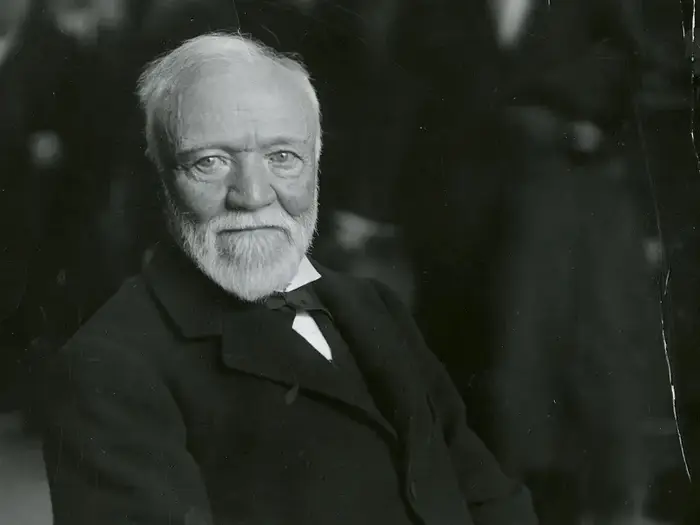
More than a century ago, Andrew Carnegie made a bold bet on education in Pittsburgh. His $1 million gift to found the Carnegie Technical Schools in 1900 sparked a tradition of philanthropy that has since inspired more than 150,000 supporters to invest in Carnegie Mellon University — all with the belief that CMU education and innovation pay lasting dividends.
That tradition has only grown. From Carnegie Tech and the Mellon Institute to today’s Carnegie Mellon, donors have fueled breakthroughs in technology, engineering, the arts, business, science and the humanities. Most recently, Ken Griffin’s historic gift of more than $3 billion will create Carnegie Mellon University Miami while strengthening CMU’s continued trajectory in Pittsburgh.
“It took an extraordinary act of philanthropy to create Carnegie Mellon, and that spirit of giving has continued to this day,” said President Farnam Jahanian. “We are fortunate to have a community — which now includes a dynamic partner in Ken — that is ready to support the innovation that Tartan students and researchers bring to the world’s biggest challenges.”
Across generations, the Tartan community has invested in CMU and its people. Giving CMU Day has raised well over $10 million over the last five years, with an average of 6,600 donors annually. The Make Possible campaign, launched in 2016, drew support from more than 72,000 donors and exceeded its $2 billion goal, closing in 2025 with more than $2.5 billion through over 252,000 individual philanthropic investments.
That generosity has expanded access to a CMU education through initiatives such as Tartan Scholars, the CMU Rales Fellows Program and the CMU Pathway Program, all designed to support talented students regardless of financial background.
It has also powered landmark investments across the university: the Richard King Mellon Foundation’s $150 million grant for the Hall of Sciences, advanced manufacturing and robotics; the $275.7 million Mastercard Foundation partnership to expand CMU Africa; William S. Dietrich II’s transformational gift supporting humanities, social sciences, scholarships and interdisciplinary work; David Tepper’s gifts to elevate business education and build the Tepper Quad; Keith and Suzanne Block’s support for the Block Center for Technology and Society; Joseph and Sue Ballay’s gift for design fusion; and Hillman family support for ICA Pittsburgh.
Together, these gifts tell a larger story: Carnegie Mellon was built by people willing to invest in what comes next. That spirit continues to shape CMU’s future — in Pittsburgh, in Miami and around the world.


