UPLift Challenge Returns: Empowering the CMU Community to Reimagine Our Campus
Media Inquiries
The UPLift Challenge(opens in new window) is returning for the 2026-27 academic year, nearly a decade after Carnegie Mellon University first invited community members to reimagine the Pittsburgh campus.
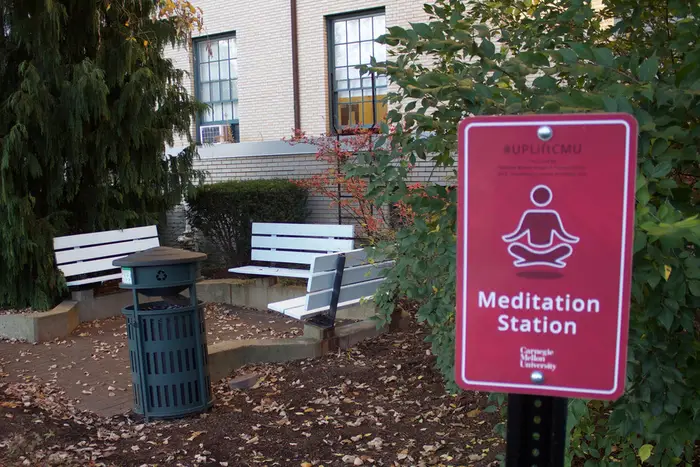
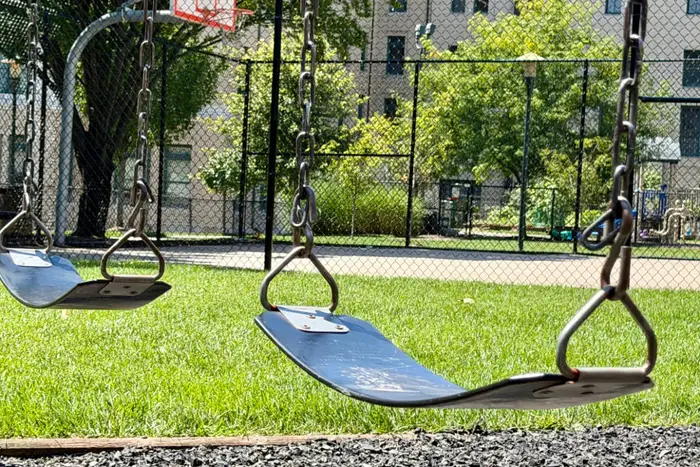
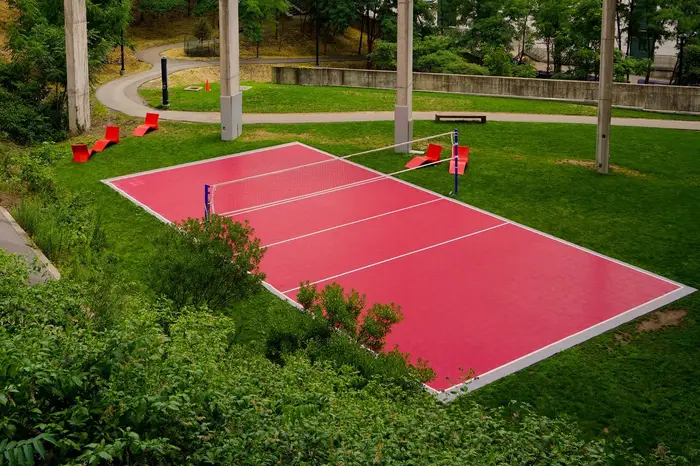
UPLift empowers students, faculty and staff to work together to enhance the spaces where people gather, study and connect. The 2017 program(opens in new window) led to improvements such as decorative lighting in the Wean Hall stairwell, a swing set behind Donner House and renovations to the volleyball court near the Gates Center.

Led by the President's Office and the Office of Student Involvement and Traditions, this year’s program will provide up to $25,000 per project to bring selected ideas to life.
Proposals should align with the program’s guiding principles of connection, accessibility, sustainability, belonging and wellness. Applicants may suggest new structures or spaces as well as the beautification or restoration of existing spaces.
“I think we're going to get a lot of submissions," said Elizabeth Koch, director of Student Involvement and Traditions and co-chair of the UPLift organizing committee. “There are a lot of dreamers and doers on this campus.”
Project applications will be accepted from Sept. 14 through Oct. 4. Applicants are encouraged to use the standard application form, which will be available on the UPLift webpage(opens in new window) when the application process opens. Alternative formats, including videos and visual presentations, will be accepted if they meet the application requirements.
Winning proposals will be revealed in early December, with projects scheduled for completion by summer 2027.
“From a student perspective, this version of UPLift gives us a chance to see how our ideas can make a real impact on the CMU community,” said Anna Mathews, a graduate student and member of the planning committee. “When someone shares an idea and sees it become reality, it creates a stronger sense of connection and reminds them that their voice matters.”
A significant addition to this year's challenge is a collaborative ideation phase built around an interactive digital campus map(opens in new window). Developed in partnership with the Enterprise Space Information Management team, the map will enable community members to identify opportunities, explore ideas submitted by others and connect with potential collaborators.
“We wanted more opportunities for people to work together,” Koch said. “You might have a first-year student and a faculty member who have never met, but both care about improving the same underutilized space. This map helps connect those people so they can build a stronger proposal together.”
Angela Lusk, director of wellness and meaning-making programs for Student Affairs, said the digital map makes participation more accessible.
“It doesn't take someone who already knows every facilities manager or department head to submit a proposal,” Lusk said. “The new system helps people with brilliant ideas find like-minded individuals and pull those ideas together.”
To support applicants, the UPLift committee will host eight virtual office-hour sessions during the ideation phase. Dates and times for the office hours are available on the UPLift webpage(opens in new window). Representatives from Campus Design and Facility Development, Facilities Management Services, the School of Architecture, the College of Engineering, project leadership and student committee members will answer questions about project feasibility, costs and infrastructure requirements.
“We want people focusing on creativity, not getting stuck on logistics,” Koch said. “Office hours give teams a chance to learn what's possible and refine their ideas.”
Questions about the application process, digital campus map and office hours can be sent to @email.
The spark for relaunching UPLift emerged last spring during one of President Farnam Jahanian’s dinners with student leaders. During the conversation, students pointed to their advocacy for recent campus improvements, such as new picnic tables, outdoor seating and power outlets near the Fence.
“President Jahanian was inspired by students who think about these issues every day,” Koch said. “These improvements bring joy to campus, and we all need more joy.”
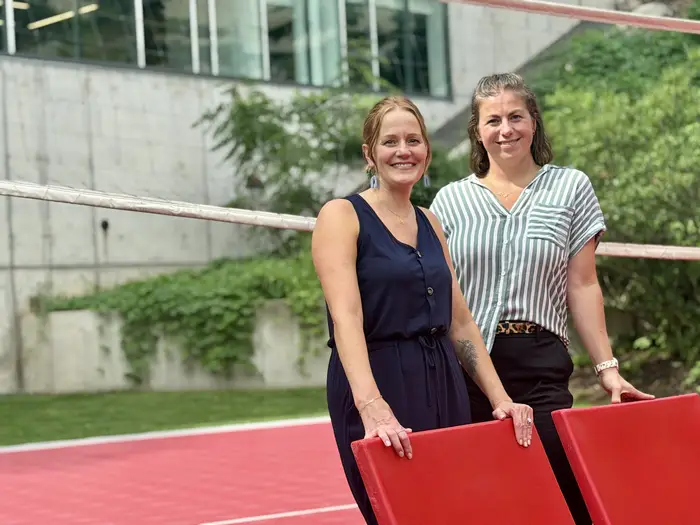
The 2017 challenge pointed to several ongoing needs: more informal gathering and study spaces, stronger support for student well-being, better use of underutilized areas and more cross-disciplinary interaction. During that inaugural challenge, Lusk and Koch joined with James Skees, then facilities director for the School of Computer Science, to revive the courtyard east of the Gates Center by resurfacing the volleyball court and adding outdoor seating.
“Our motivation was to activate the outdoor space near Newell-Simon, Gates and Hamburg halls,” Lusk said. “We wanted to give people a connection point outside of their offices, labs and classrooms."
Another 2017 project was Games for Health, proposed by School of Design doctoral students Francis Carter and Michael Arnold Mages. The project installed playful signs and activities — such as giant stacking games, hopscotch grids and designated healthy lifestyle zones — to encourage movement, connection and stress relief.
“The academic environment can be intense, and this was a low-budget, playful way to encourage connection and silliness,” said Mages, now an associate professor at Northeastern University.
“People really embraced it,” Mages said. “Giving students the opportunity to write something onto the fabric of the campus is exactly what higher education institutions should be doing.”
While student feedback from spring 2026 echoed the priorities from a decade ago, it also identified new ones, including accessibility, sustainability and graduate student support.
“Everyone has the ability to submit an idea that renews a space or transforms how community members engage,” Lusk said. “All it takes is a desire to leave this campus better than you found it.”
Images of the winning projects from the inaugural UPLift Challenge in 2017.