Chemistry at Carnegie Mellon University: Shaping Science, Solving Global Challenges
The Chemistry Department at Carnegie Mellon University combines excellence in molecular science, innovative chemical engineering approaches and a collaborative research culture to address some of today’s most urgent global challenges — from clean energy and sustainability to human health and advanced materials.
What We Do
We are passionate about research and education and invite you to join us as students, postdocs or collaborators. Our department offers a forward‑thinking environment where chemistry drives real‑world solutions.
Sustainability & Environmental Chemistry
We lead international efforts in atmospheric chemistry, green chemistry and environmentally responsible technologies.
- For students: Work alongside global collaborators on climate‑focused research in a mission‑driven program that prepares graduates for meaningful environmental careers.
- For partners: Access expertise and tools for sustainable materials, emissions research, and greener processes.
Advanced Materials, Polymers & Energy
Our researchers design new polymers, nanomaterials and energy‑related materials to meet growing demands in healthcare, electronics, manufacturing and clean energy.
- For students: Hands‑on experience with cutting‑edge materials research and training that leads to careers in top technology, biotech and energy companies.
- For partners: Collaborative opportunities to develop next‑generation materials and scalable solutions.
Bioorganic Chemistry & Chemical Biology
We develop innovative molecular tools to study, diagnose, and treat disease.
- For students: Work at the intersection of chemistry, biology and medicine via a pathway into thriving sectors like biotech, diagnostics, pharmaceuticals, and healthcare innovation.
- For partners: Research collaborations to accelerate discovery, drug design and biomedical breakthroughs.
Catalysis & Energy Innovation
Our expertise in catalysis, energy conversion, and reaction mechanisms fuels advances across chemistry and engineering.
- For students: Training in one of the highest‑impact areas of modern chemistry. There are strong career prospects in clean energy, advanced manufacturing, and sustainable industrial processes.
- For partners: Solutions that increase efficiency, reduce environmental impact, and accelerate innovation.
Fundamental, Analytical & Theoretical Chemistry
We couple experimental and computational methods to explore molecular structures, interactions, and mechanisms.
- For students: Learn to think critically and solve complex scientific problems using modern analytical and computational tools. We offer a rigorous STEM education grounded in scientific fundamentals and real research experience.
- For partners: Access to advanced modeling, instrumentation, and fundamental insights that drive breakthroughs.
A Culture That Supports Discovery and Success
Our department is defined by collaboration, creativity and mentorship.
- Students build relationships with multiple faculty mentors.
- They gain hands‑on experience in state‑of‑the‑art research facilities.
- They share their enthusiasm for science through outreach and community engagement.
Past, Present and Future
The roots of CMU’s Chemistry Department trace back to the early 20th century through the university’s two predecessor institutions: the Carnegie Institute of Technology (Carnegie Tech), founded in 1900 by Andrew Carnegie as the Carnegie Technical Schools, where chemistry was part of the practical scientific training offered to working-class students; and the Mellon Institute of Industrial Research, founded in 1913 by Andrew Mellon and Richard B. Mellon, which became one of the nation’s premier centers for applied industrial chemistry and scientific research.
The Mellon Institute trained hundreds of scientists in industrial research and development, and they made many scientific breakthroughs. Research ranged from smog abatement for Pittsburgh to the first gas mask used in World War I. Some of the product discoveries that took place included "flakes coffee," a precursor to instant coffee, and ethylene glycol, which is widely used in antifreeze.
In 1967, Carnegie Tech and the Mellon Institute merged to form Carnegie Mellon University, bringing together Carnegie Tech’s academic chemistry programs and the Mellon Institute’s advanced chemical research. With this merger, the Mellon Institute building — completed in 1937 and later designated a National Historic Chemical Landmark — became home to many of the university’s chemistry laboratories, faculty and scientific facilities.
Today, the Mellon Institute and Doherty Hall serve as the central hubs for chemistry education and research at Carnegie Mellon. Chemistry students conduct hands‑on investigations, collaborate with faculty, and attend classes in these historic, modernized spaces.
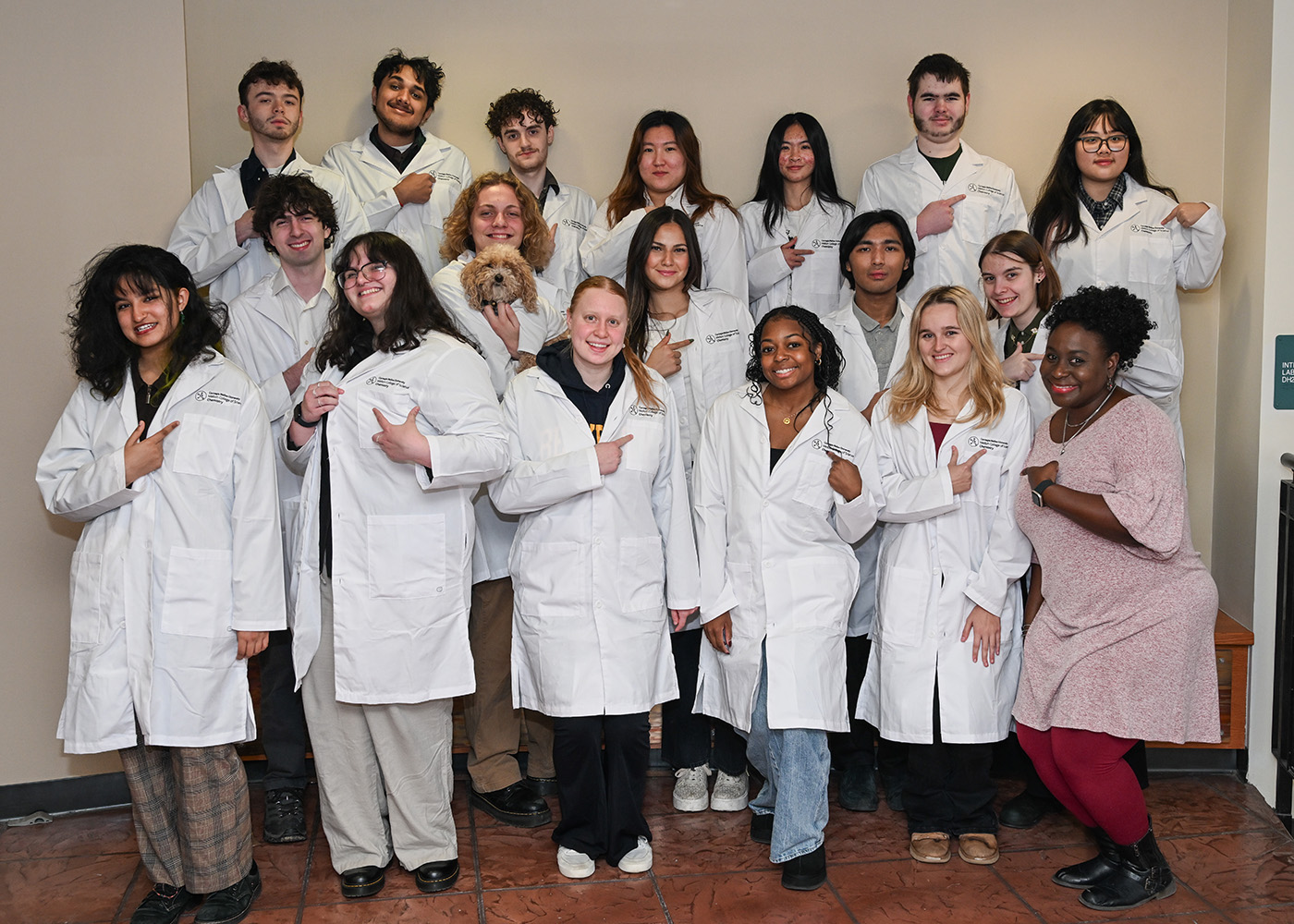
In Doherty Hall’s undergraduate teaching laboratories, students explore the chemistry of everyday life through courses and initiatives designed to make scientific concepts tangible and relevant. These labs help both science and non-science majors connect what they learn in the classroom to the chemical phenomena they encounter daily — strengthening understanding, curiosity and real-world application.
In 2027, the Department of Chemistry will begin a new chapter as parts of the department move into the Richard King Mellon Hall of Sciences, a major new science facility designed to support the university’s rapidly expanding research enterprise. The addition of the Richard King Mellon Hall of Sciences represents the next evolution of CMU’s scientific infrastructure and will provide state‑of‑the‑art laboratories, flexible research environments and collaborative spaces that reflect the multidisciplinary nature of modern chemistry. The move symbolizes the department’s continued growth and its commitment to building on the Mellon Institute’s legacy while equipping future scientists with the facilities needed to tackle today’s challenges in materials science, sustainability, catalysis, chemical biology, and energy.
Whether you're considering joining us as a student or exploring how your organization can partner with a world‑class research institution, the Department of Chemistry Department offers the expertise, environment and innovative spirit to make a real impact.