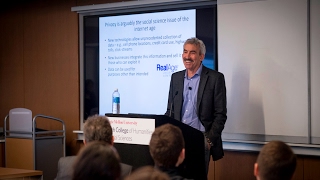
George Loewenstein
University Professor
George Loewenstein helped to found the fields of behavioral economics and neuroeconomics.
Expertise
Topics: Neuroeconomics, Behavioral Economics
Industries: Public Policy, Research, Education/Learning
George Loewenstein helped to found the field of behavioral economics, the field of neuroeconomics and was one of the early proponents of a new approach to public policy called, variously, ‘asymmetric’ or ‘libertarian’ paternalism. He has published over 300 journal articles in journals in economics, psychology, law, medicine and other fields, numerous book chapters, has written or edited six books on topics ranging from intertemporal choice to behavioral economics and emotions, and has served on the editorial boards of numerous journals in different fields. He has served on multiple National Academy of Sciences and Institute of Medicine panels and has advised numerous corporations and governmental organizations, including the NIH, USDA, U.K. Behavioural Insights Team, CVS Caremark, Ascension Health, McKinsey, NPD, Aramark and many others.
Media Experience
Can You Choose Your Beliefs to Find Happiness?
— Psychology Today
This article explores how beliefs can bring happiness or pain, with people sometimes adjusting their beliefs to feel better about themselves. George Loewenstein helped revive the idea of "belief utility," which is the value people derive from their beliefs, even if they aren't entirely accurate.
Opinion How ‘nudge economics’ lets companies pass the buck
— The Washington Post
But there is a darker interpretation, too. As behavioral finance economists Nick Chater and George Loewenstein write in a recently released working paper, the mass acceptance of behavioral nudges “unwittingly helped promote the interests of corporations who oppose systemic change.”
Inflation Anger
— The New York Times
“People are so raw at this point, having lived through two years of Covid, that any new thing is going to make them upset and angry,” said George Loewenstein, a behavioral economist at Carnegie Mellon University. “It just feels like it’s one thing after another.”
Economists explain how high inflation wreaks havoc on our brains and makes us feel ‘really angry’
— Fortune
Take the case of whether you would be willing to risk losing $100 at a casino for the possibility of winning $100, for example. Most people, Carnegie Mellon University professor George Loewenstein says, would decline the offer.
How does inflation affect your spending decisions?
— NBC News
“When inflation is bad and people expect it to continue or get worse, they generally tend to not save money and try to buy durable goods before the price rises,” said George Loewenstein, professor of economics and psychology at Carnegie Mellon University.
Why Paying People to Be Vaccinated Could Backfire } Opinion
— The New York Times
Some economists and politicians have proposed offering financial incentives, but that risks sending an unintended message.
Education
B.A., Economics, Brandeis University
Ph.D., Economics, Yale University