Eberly Center Annual Report 2025 - 2026
Innovate & Enhance Teaching and Learning
"The Eberly Center is constantly evolving to enhance our support for CMU instructors and their students.”
The Eberly Center cultivates inclusive excellence and evidence-based practice, supports educational innovation, and enhances teaching and learning at CMU and beyond through 1-on-1 consultation services, group programs, DIY web resources, and scholarship.
Our expertise creatively combines data science, technology-enhanced learning, and research-based learning principles to meet emerging educational development needs.
Our student-centered approach is evidence-based, inclusive, collaborative, and formative, rather than evaluative, allowing us to meet each instructor wherever they are in their development as educators and then help them iteratively refine their teaching and student learning.
Approximately half of our work supports CMU’s faculty and staff with the other half supporting student and postdoctoral educators.
This annual report highlights the depth and breadth of our reach and contributions in the academic year 2025-2026.

Chad Hershock, PhD
Executive Director
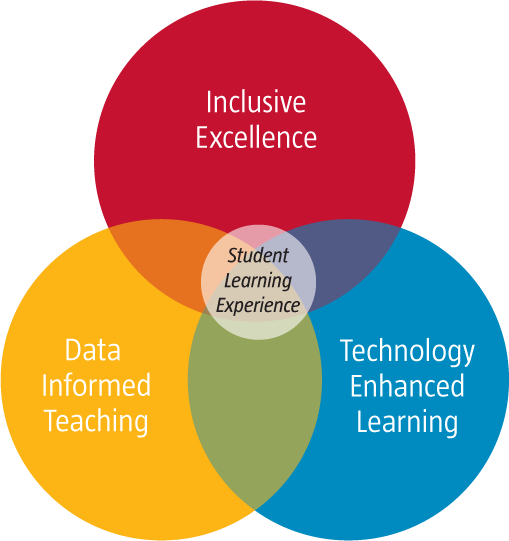 Eberly Center Core Values
Eberly Center programs and services embody our values
Selected highlights include...
Improving teaching through data-informed practices
We help instructors collect, analyze, and interpret rigorous quantitative and/or qualitative data on learning outcomes to iteratively refine teaching and learning, including:
147 educators using learning data to improve outcomes in their courses and/or academic programs.
142 Early Course Feedback Services gathering anonymous, formative feedback from students for 80 instructors in 119 CMU courses.
Centering inclusive excellence in our programs & services
We help instructors recognize and identify effective, inclusive strategies to incorporate in their teaching practices. At the university, college, and department levels, we designed and facilitated:
10 group events attended by 125 faculty/staff instructors (who filled 143 seats).
9 group events focused on inclusive excellence attended by 632 postdoc, graduate, and undergraduate instructors (who filled 688 seats).
We also supported 15 Provost’s Inclusive Teaching Fellowships implementing projects to enhance course design and/or delivery.
Enhancing teaching innovation & learning with technology
We provide Technology-Enhanced Learning (TEL) tools and services to support educators in creating new or enhanced teaching and learning opportunities. This year we:
Responded to 3,940 instructor requests for technical support with various tools (e.g., Canvas, Gradescope, plagiarism detection, generative AI).
Supported 126 instructors incorporating TEL in remote and in-person modalities.
Sustained and evolved CMU’s TEL ecosystem to meet teaching and learning needs via: 44 third-party TEL tools (including generative AI tools and 5 new tool development efforts).
Shaping the evolution of education research and evidence-based practice
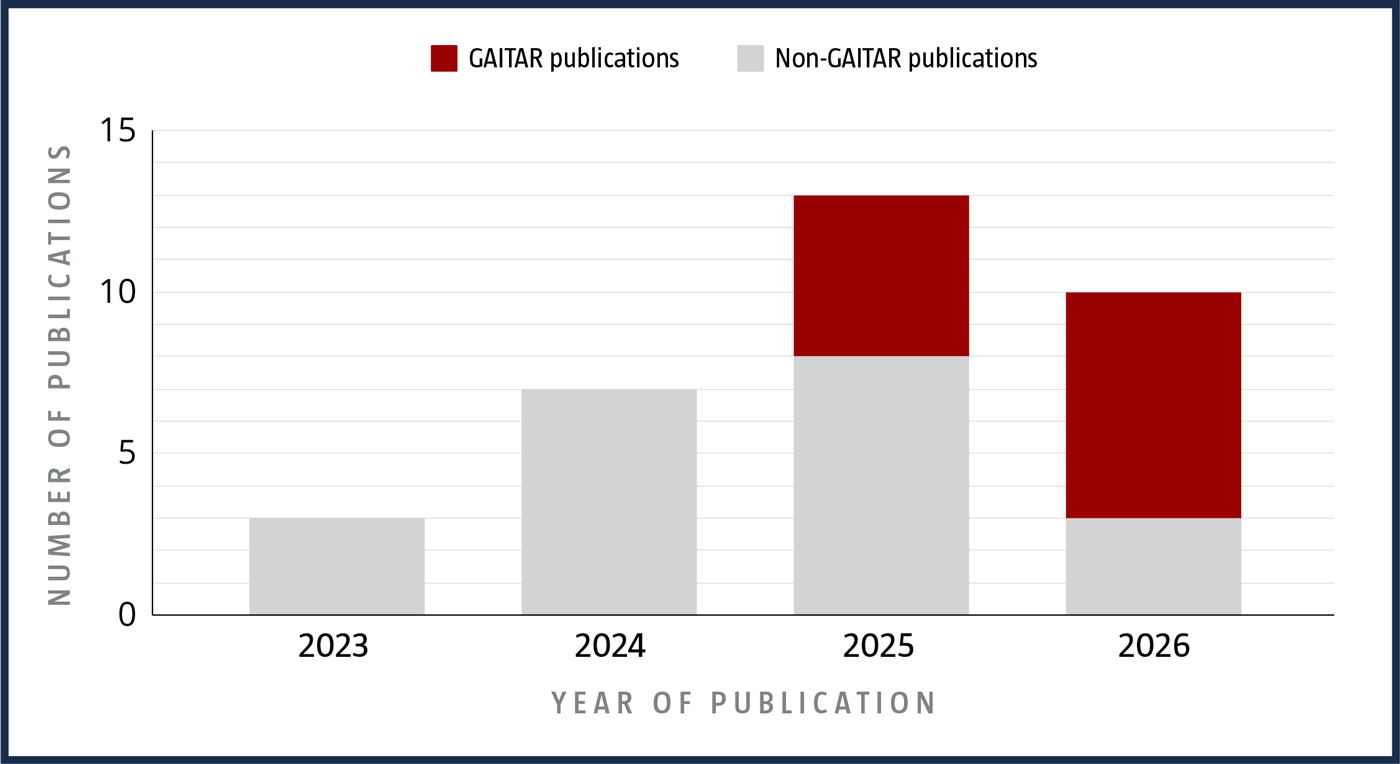
From 2023 through June 2026, our staff contributed to 29 peer-reviewed publications, including 10 resulting from the Generative AI Teaching as Research (GAITAR) Initiative! Publications appeared in Computers & Education, International Journal of Artificial Intelligence in Education, Teaching & Learning Inquiry, Journal on Excellence in College Teaching, Advances in Engineering Education, International Journal for Academic Development, and more.
Eberly Center and GAITAR publications 2023-Present
Demand for services remains high
621 faculty/staff served through consultations and group programs
Consultations served approximately 1 in 5 CMU faculty
In AY 2025-26, we provided consultation services for:
320 faculty/staff educators teaching 327 CMU courses (>10% of CMU courses) on evidence-based teaching strategies, technology-enhanced learning, and/or assessment of student outcomes.
47 educators at CMU satellite campuses:
- 34 CMU-Qatar, 6 CMU-Silicon Valley, 6 CMU-Africa, and 1 at CMU-DC.
39 Eberly Center Fellowship Projects for CMU Instructors of Record:
- 11 Generative AI Teaching as Research (GAITAR) Fellowships for faculty
- 15 Provost’s Inclusive Teaching Fellowships (PITF) for faculty
- 6 Wimmer Faculty Fellowships for the Development of Teaching
- 7 Active Learning Incubator Faculty Fellowships
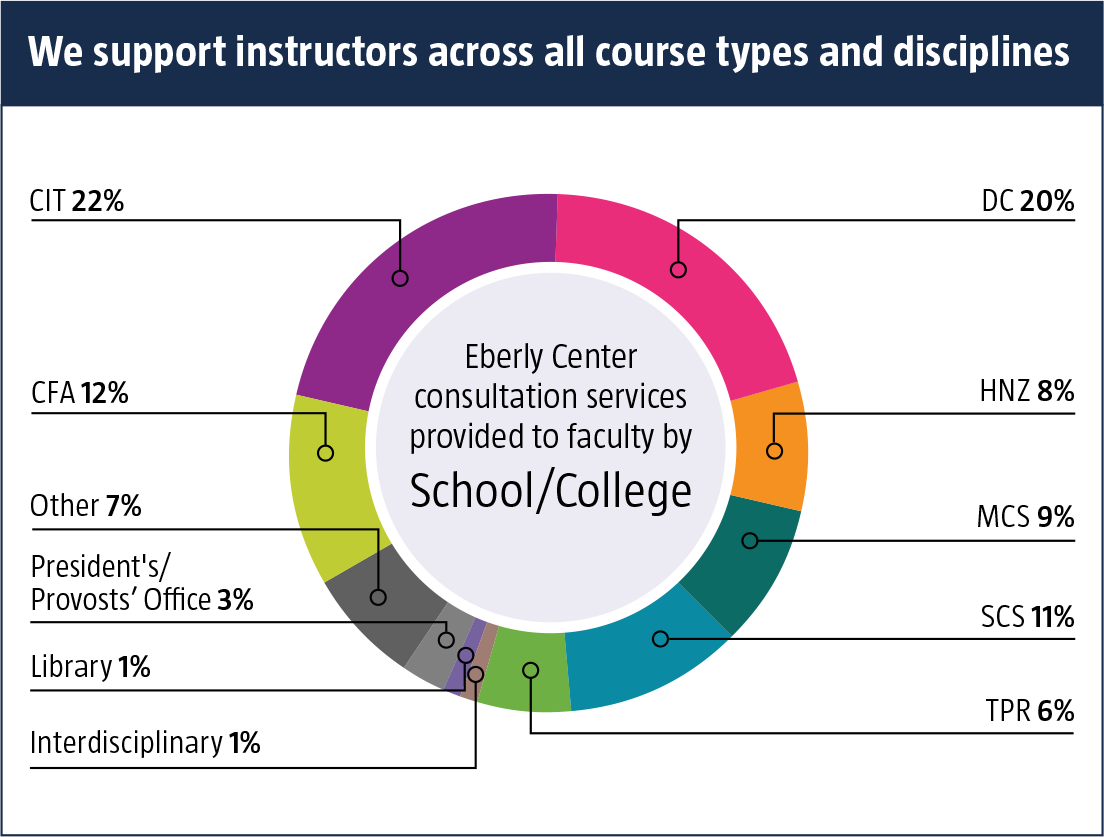
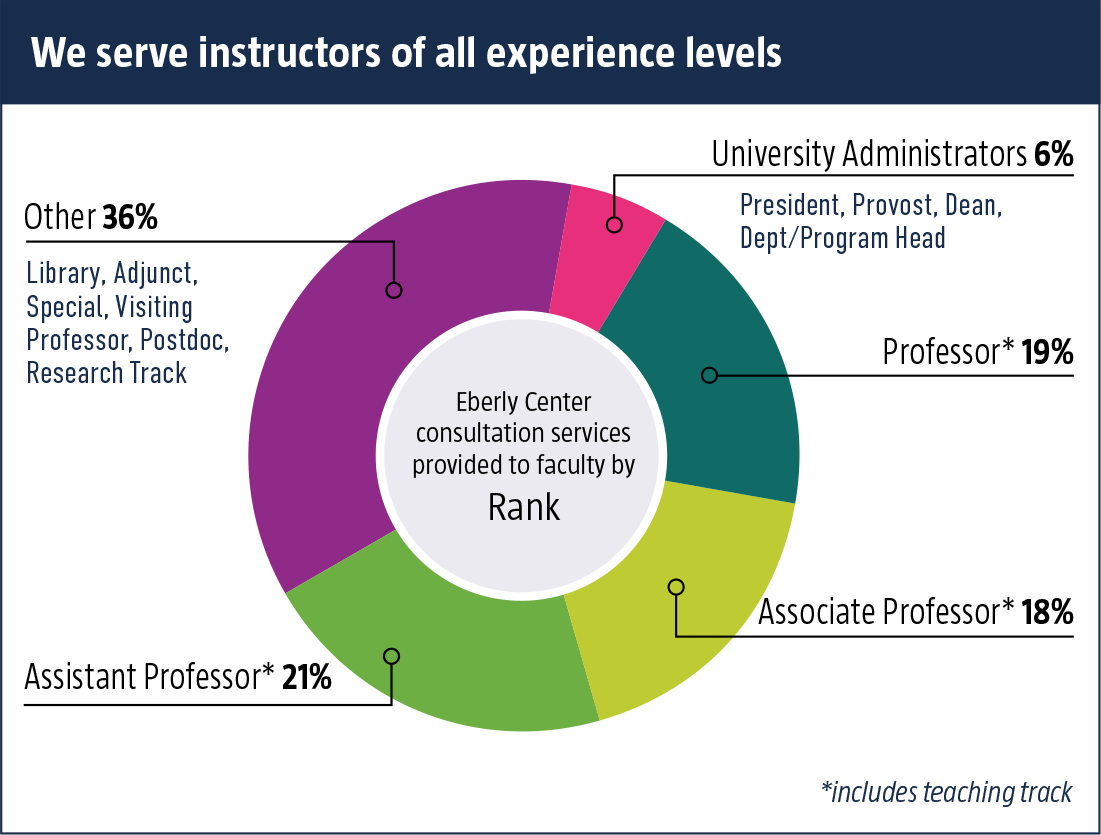
New and recurring signature programs served emergent needs of instructors
We designed and facilitated 50 unique professional development programs attended by 433 faculty and staff educators filling 649 seats.
- Incoming Faculty Orientation
- Spotlight on Innovative CMU Teaching
- Neurodiversity in Higher Education Seminar Series (NHESS)
- Eberly Center Powered Instructor Community (EPIC): Adapting to GenAI
- CMU-Q Micro-Course Incubator
- Writing Accountability Groups for Teaching as Research
- Thank-a-Teacher Program
- Numerous university-wide and unit-level workshops on adapting to or innovating with generative AI
- University-wide debriefs on Teaching as Research@Scale projects
- Wimmer Eberly Active Learning Incubator (WEALI) Fellowship Program
- Seminar Series: What You Need to Know (about evidence-based teaching)
- NHESS Symposium: Well-being Through Neurodivergent Experiences
- Special Interest Group: Universal Design for Learning
- Provost’s Institute for Inclusive Teaching
- Peer Observation of Teaching Groups
1,123 postdoctoral, graduate, and undergraduate students served through consultation services and programs
- 985 Teaching Assistants and Instructors of Record attended campus-wide Graduate and Undergraduate Student Instructor Orientations, preparing them for their CMU teaching responsibilities across 47 academic units.
- 201 graduate students and postdocs filled 340 seats at our other university-wide seminars and workshops.
- 120 graduate students and postdocs received 203 individual teaching consultations.
- 38 graduate students and postdocs attended the Mentoring Undergraduate Researchers Institute (co-hosted by the Office of Undergraduate Research and Scholar Development).
We supported 321 graduate students and postdocs in our Future Faculty Program, preparing them to teach effectively and inclusively.
- 63 new participants enrolled in the program.
- 18 participants completed program requirements.
Teaching Consultation Fellows (TCFs)
- We trained 6 graduate student and postdoctoral TCFs in advanced, evidence-based teaching methods and consultation techniques.
- TCFs provided 135 teaching consultation services for 88 graduate students and postdocs.
Teaching Consultant Fellows (TCFs)
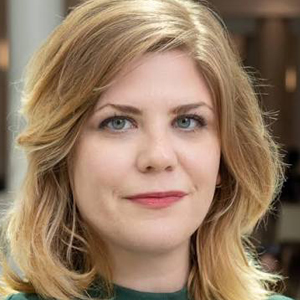
Elizabeth Dieterich
English

Luis Garcia
School of Design
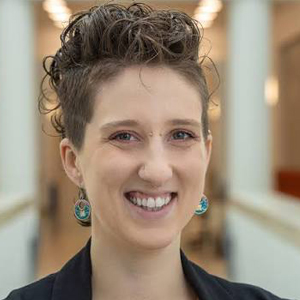
Rachael Mulvihill
English
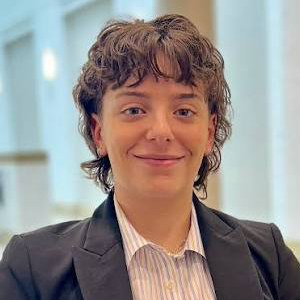
Laura DeLuca
English
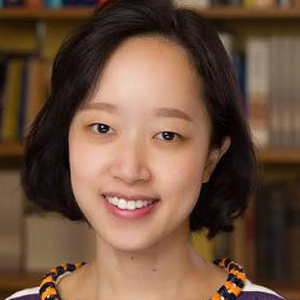
Eunji Jo
English

Peter Roberts
Robotics
Our award-winning website provides a treasure trove of DIY resources on evidence-based teaching and learning
257,000 active users to our website
https://www.cmu.edu/teaching/
*New & noteworthy* content includes:
- Retrieval Practice for Improved Learning
- Teaching as Research @Scale
- Thank A Teacher Program – exceeds 1600 thank yous for more than 950 instructors
“I've had a handful of moments where I've felt lost, but… explaining how it's okay to not completely grasp ideas yet has really helped me keep pushing to get the concepts and put in the effort necessary to understand them!”
Spotlight on Innovative CMU Teaching
CMU instructors are innovators. Faculty and student instructors share their creative, transferable solutions to common teaching and learning challenges via our spotlight website and events.Our TEL team significantly contributed to broader CMU initiatives
CMU Online
Delivered and refined 16 CMU Online courses. Designed 6 new courses. Delivered an embedded Jupyter Notebooks environment for inline skill-level practice – serving 210 CMU Online students.
Core Competencies Initiative (CCI):
- Core@CMU course: Iteratively refined the course to incorporate refinements based on both direct measures of learning data and student experience data.
- CCI Dashboard: Continued development of a student dashboard to help students track their skill development.
- Webinar on Feedback Fruits collaboration tool for instructors looking to increase students skill development.
Generative AI
Generative AI Modules for Learners; Canvas-integrated Chatbot pilot; AI Considerations for Teaching & Learning; Vetting and support for CMU-developed Generative AI tools GAITAR | Generative AI Teaching as Research
The Eberly Center implemented the third phase of a multi-year initiative to measure the impacts of generative artificial intelligence (genAI) tools on students’ learning and educational experiences at Carnegie Mellon University.
Year 3 Highlights:
In AY 25-26, our events supported both adaptation and innovation. 154 faculty, staff, postdocs, and graduate students filled 175 seats at university-wide and unit-level programs, including:
- Eberly-Powered Instructor Community: Generative AI
- GAITAR Fellowship Special Interest Group
- Writing Accountability Groups for Teaching as Research Projects
- Seminars
- Impacts of Online Modules on Students' GenAI Competencies
- Impacts of Students’ Generative AI Use on Writing Skills
- Assessing Impacts of GenAI on Student Learning
- Learning-Centered Teaching in the Age of GenAI
- Mitigating the Inappropriate Use of GenAI in Classroom
- Promoting the Productive Use of GenAI in the Classroom
- Faculty Discussion on CMU Guidelines for AI & Teaching
- Research on AI & Teaching
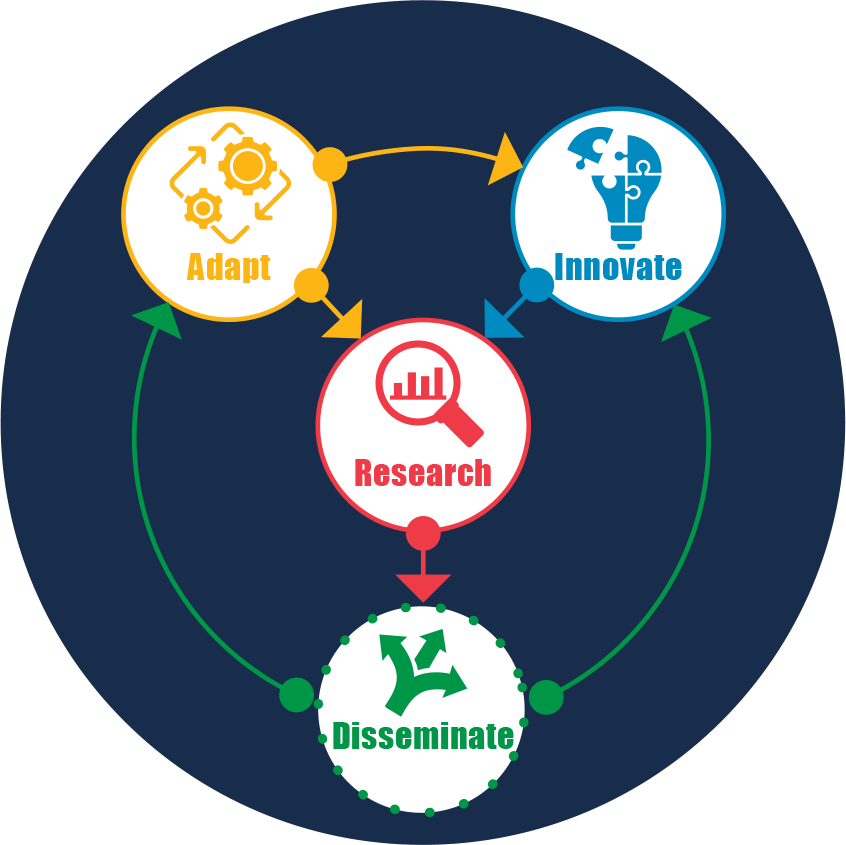
Do GenAI tools increase, decrease, or not change student learning and equity at CMU?
GAITAR@Scale projects test a common research question at scale across diverse CMU courses.
We disseminated results from two projects at CMU and beyond.
- GAITAR@Scale 1 designed interactive, online learning modules about generative AI and measured their impact on students’ generative AI competency (knowledge, skills, and self-efficacy).
SCOPE: 46 instructors, 53 unique courses, and 2,324 students
RESULTS: Modules significantly increased students’ generative AI knowledge, prompt engineering skills, and self-efficacy above and beyond a control group.
PUBLICATION: Connell Pensky, A. E., Eckstein, L. E., Melville, M. C., Pottmeyer, L. O., Mineroff, Z., Chawla, A., Brooks, J., Hershock, C., & Lovett, M. C. (2026). Can asynchronous learning modules about generative AI increase students’ knowledge, skills, and self-efficacy for genAI? Computers & Education, 250. https://doi.org/10.1016/j.compedu.2026.105640 - GAITAR@Scale 2 tested the impact of generative AI feedback versus peer feedback on students’ ability to support a claim with evidence, their self-efficacy, and their perceptions of the revision process in first-year writing courses.
SCOPE: 16 instructors, 28 courses, and 424 students.
RESULTS: Students receiving multiple rounds of genAI feedback appeared to perform better than students receiving a single round of human peer feedback. Students in the human peer group reported a different and more positive experience than their peers in the genAI group.
PUBLICATION: Pottmeyer, L. O., Hershock, C., Wetzel, D. Z., & Mineroff, Z. (2026). Impact of using generative AI as a “feedback partner” on students’ writing quality. Journal on Excellence in College Teaching, 37, 74-94. https://celt.miamioh.edu/index.php/JECT/article/view/1305
- GAITAR@Scale 3 investigated data on the impact of student’s practicing with and receiving feedback from generative AI on writing for a specific audience.
- GAITAR@Scale 4 pilot tested preliminary data on the impact of generative AI on students' engineering estimation skills. A second iteration of data collection is currently under development in collaboration with subject matter experts from the College of Engineering.
GAITAR Fellowships included support from Eberly Center consultants to design, implement, and measure the impacts of a teaching innovation using a generative AI tool in a CMU course.
Cumulative activity to date:
- 89 proposals submitted across four funding cycles
- 37 projects funded for 35 faculty and 4 graduate students teaching courses in all 7 CMU Schools/Colleges, including the CMU-Qatar and CMU-Silicon Valley campuses
- 32 projects implemented
Activity in AY 2025-26:
- 4 previously funded projects implemented
- 12 new proposals submitted, 5 projects funded
Writing Accountability Groups (WAGs)
- Provided writing support, accountability, and feedback to 20 faculty and graduate student recipients of GAITAR and PITF fellowships.
- 13 participants completed manuscripts during the 10-week program and submitted them to peer-reviewed outlets by June 30.
Eberly Center Team
Leadership Team
Chad Hershock, Phd
Executive Director
Judy Brooks, MDes
Director of Design,
Technology-Enhanced Learning (TEL) & CMU Online Programs
Emily Weiss, PhD
Associate Director,
Faculty Teaching Initiatives
Jacqueline Pincus, PhD
Associate Director,
Graduate Student & Postdoc Teaching Initiatives
Michelle Pierson Business Administrator
Teaching Consultants
Sophie Le Blanc, PhD
Senior Teaching Consultant
Elisabeth Ellington, PhD
Senior Teaching Consultant
Phoebe Cook, PhD
Teaching Consultant
Yoko Nakamura, PhD
Teaching Consultant
Patrick Walsh, PhD
Teaching Consultant
TEL Team
Zachary Mineroff, M.S.
Assistant Director of Learning Engineering
Avi Chawla, M.A.
Senior Learning Engineer
Harley Chang, Ed.M., M.S.
Learning Engineer
Qinglin Feng, M.S.
Learning Engineer
Lynn Kojtek, MSIT
Learning Engineer
Xiaolin Ni, M.S.
Learning Engineer
Alex McGough, MsEd
Manager of Teaching & Learning Technologies
Roberta Serbin, MPM
Educational Technology Consultant
Meg Richards
Senior Systems Software Engineer
Martin van Velsen
Senior Systems Software Engineer
Nathan Mazur
Senior Multimedia Designer
Teaching as Research Team
Allison Connell Pensky, PhD
Senior Data Science Research Associate
Michael Melville, PhD
Senior Data Science Research Associate
Laura Pottmeyer, PhD
Senior Data Science Research Associate
Lydia Eckstein, PhD
Data Science Research Associate
The Eberly Center Reports to
Marsha Lovett, PhD
Vice Provost for Teaching & Learning Innovation
Eberly Center
4765 Forbes Avenue
Tepper Quad, Suite 1310
Pittsburgh, PA 15213
(412) 268-2896
Contact Us


 This work is licensed under a Creative Commons Attribution-NonCommercial-ShareAlike 4.0 International License.