Carnegie Mellon’s Department of Chemistry partners with K–12 educators to spark curiosity, deepen understanding, and make science hands‑on and fun. Through ChemZone, we offer classroom visits, free classroom kits by mail, interactive demonstrations, virtual lab tours, and professional development for teachers. Through the Gelfand Center, K-12 students may take courses on weekends and in the summer on chemistry topics.
K–12 Teachers & Student Groups Opportunities ChemZone Outreach Featured Classroom Activities Gelfand Center Outreach (K-12)
K–12 Teachers & Student Groups Opportunities
Our undergraduate teaching labs and outreach programs offer opportunities for middle and high‑school students to:
- Conduct guided experiments in modern laboratories
- Learn scientific techniques from CMU instructors and undergraduate teaching assistants
- Explore topics aligned with chemistry, environmental science, materials science, and more
Interested teachers can contact the director of undergraduate laboratories to arrange specialized visits or integrate lab‑based experiences into curriculum
ChemZone Outreach
ChemZone connects K–12 students and teachers to chemistry through:
- Hands‑on demonstrations at schools and community events
- Professional development for Pittsburgh‑area middle and high school teachers (Act 48 eligible)
ChemKits
Free lending library of classroom kits for grades 4–12 (lesson plans included) details & downloads are below.
Each kit includes teacher materials, 12 student sets (suitable for classes up to ~40), and aligned PA & NGSS standards. Kits are free to borrow; PDFs for lessons and student sheets are available online.
At least one week’s notice is required for all kit requests. Due to the limited number of kits available, they will be lent out on a first-come, first-served basis. To reserve classroom kits, please submit a request form. Any blank dates on this Google calendar means kits are available.
The materials and information made available on this site “The materials” may be used by teachers on an “as-is” “as available” basis. Teachers may copy and/or use these materials only in connection with their non-commercial classroom teaching activities and are responsible for taking all necessary safety precautions for the experiments to the maximum extent under law, Carnegie Mellon University is not responsible for any claims, damages or other liability arising out of the use of the materials. By viewing, copying and/or using these materials, you agree that you have read and agree to these turms of use. If you do not agree with the terms, you should not use the materials.
Current offerings are below; however, additional kits are in development — please inquire.
Chemistry of Color: Pigments in Art
Students create pigments that have been used for centuries, opening up an enlightening connection to society and science. Balancing chemical equations and learning about coordinated compounds can be done with the transition metal reactions of these simple syntheses. The naming schemes for compounds based on charged states can be introduced as well. The relationship between subtractive and additive color mixing is also presented to introduce concepts of spectrophotometry.
For upper high school, AP Chemistry Time: 120 minutes
Kit adapted from Douma, Michael, curator. Pigments through the Ages. http://www.webexhibits.org/pigments (accessed June 6, 2012). Institute for Dynamic Educational Development.
Download kit guide [pdf] • Powerpoint Presentation [ppt] • Request Teacher Answer Key
Kitchen Chemistry: Edible Emulsions
This series of small experiments is designed to reinforce the concept of solubility and introduce the idea of dispersions. Students test solubility with chewing gum, sugar, chocolate, oil and water. Emulsifying agents are introduced to create an emulsion with oil and water. Then foam is created with air and juice. The last part of the kit is to make an emulsion formed with chocolate and juice to form a Chantilly.
For high school, advanced middle school. Time: Three 20-minute modules
Kit adapted from: Chamber, Iv, and C. S. Setser. Illustrating Chemical Concepts through Food Systems: Introductory Chemistry Experiments. Journal of Chemical Education. [Online] 1980, 57.4: 312. http://pubs.acs.org/doi/pdf/10.1021/ed057p312 (accessed June 21, 2012). Grove, Nathaniel. JCE Classroom Activities. Journal of Chemical Education. [Online] 2003, 80.10: 1139. http://pubs.acs.org/doi/pdf/10.1021/ed800135j (accessed June 21, 2012). Myers, Grace. EHow ("Science Projects on Gelatin Enzymes”). http://www.ehow.com/info_7958252_science-projects-gelatin-enzymes.html (accessed June 21, 2012). And class materials from Dr. Subha Das at Carnegie Mellon University
Download kit guide [pdf] • Powerpoint Presentation [ppt]
What is the pH? Chemistry of Acids & Bases
The concept of acids and bases is an important topic in any introductory chemistry course. It is not only a crucial part of standardized exams but also is so prevalent in real life applications that learning the concept by hands-on experiments will enhance the student’s understanding while also inducing curiosity and interest. The teaching plan follows the PPP model which stands for presentation, practice and production. The following set of activities emphasize on characterizing acids and bases of common household items by pH indicators and understanding the importance in the role of acids and bases in controlling homeostasis in biological systems.
For upper high school, AP Chemistry. Time: Two 40-minute class periods
Kit adapted from: A Demonstration of Acid Rain. http://www.ied.edu.hk/apfslt/v5_issue1/fongmw/index.htm#contents (accessed June 29, 2012). Exploring Acids and Bases. http://scifun.chem.wisc.edu/homeexpts/ACIDBASE.html (accessed June 29, 2012). Haroff, Tracy; Lenon, Melyssa. A Colorful New Start: Acids and Bases. http://www.wmich.edu/chemed/documents/acidsbaseshandout.pdf. Western Michigan University, 2011.
Download kit guide [pdf]
Where Does the Heat Go? Calorimetry & Thermodynamics
The concept of calorimetry is part of thermodynamics, focusing on problems relating to energy and heat. These topics are not only crucial parts of standardized exams, but are also largely present in everyday life. Learning these concepts through hands-on experiments enhances a student’s understanding while also sparking their curiosity and interest.
The teaching plan suggested in this classroom kit follows the PPP model, which stands for presentation, practice and production. The following set of activities emphasizes how hand warmers and instant cold packs utilize endothermic and exothermic reactions to produce heat or absorb heat. By doing so, the students will be able to determine the amount of heat involved in illustrative chemical reactions and then evaluate mathematical formulas to calculate the efficiency of specific chemical and mechanical systems.
For upper high school, AP Chemistry Time: About one hour: two 25-minute activities, one 10-minute demonstration
Kit adapted from: Elephant Toothpaste. https://www.youtube.com/watch?v=tnB-uU3w6g8 (accessed June 29, 2012). Science Buddies Staff. "Cold Pack Chemistry: Where Does the Heat Go?" Science Buddies. Science Buddies, 23 Oct. 2014. Web. 7 Nov. 2014
Download kit guide [pdf] • Download PowerPoint presentation [ppt] • Download Elephant Toothpast Student Pre-Quiz [pdf]
Featured Classroom Activities (Adjustable by Grade)
Fuel Cell Cars (Grades 7–12)
Students split water using batteries or solar panels, generate hydrogen/oxygen, and power a small car — investigating energy conversion and testing hypotheses in teams.
Instructor: Kevin Noonan
Polymer Adhesive Chemistry & The Chemistry of Cycling (Grades 7–12)
Hands‑on experiments with common adhesives introduce core organic/mechanical concepts; a discussion unit explores materials science topics such as collagen crosslinking and carbon fiber bicycles. Ideal after AP Chemistry or adaptable to earlier coursework.
Instructor: Stefanie Sydlik
Everything You Want to Know About CSI Laboratory (Grades 8–12)
Classroom‑ready investigations inspired by forensic science: fingerprints and footprints, soil pH, DNA isolation, and atomic analysis using readily available supplies.
Instructor: Anna M. Kietrys
Chemistry in Your Kitchen & Molecular Cooking (Grades 4–12) / Chemistry & Science of Taste and Flavor (Grades 8–12)
Food‑based experiments make chemistry approachable—from spectroscopy and microwaves to emulsions and foams (e.g., mayonnaise, chocolate mousse). Activities align with PA and NGSS; teacher workshops available.
Instructor: Subha R. Das
How Enzymes Work (Grades 7–12)
Lecture + lab activity exploring what enzymes are, how they function, factors affecting activity, and their roles in health and energy. Students practice techniques used to study enzyme behavior.
Instructor: Yisong (Alex) Guo
The Chemistry of Metals (Grades 7–12)
Short lecture and multiple hands‑on experiments introduce spectroscopy, oxidation states, redox, and catalysis — available in English, Spanish or both.
Instructor: Isaac Garcia‑Bosch
Homemade Cosmetics (Grades 5–7)
Students learn about skin as an organ and formulate simple products — lotions, lip gloss, and bath scrubs—while discussing safety and ingredient function.
Instructor: Gizelle Sherwood
The Molecules & Chemistry of Life (Grades 6–12)
Explore how sugars, amino acids, and nucleotides form carbohydrates, proteins, DNA, and RNA — and how these molecules underpin life.
Instructor: Subha R. Das
Teacher Professional Development
We offer Act 48 professional development workshops by request, focused on classroom‑ready labs, safety, NGSS/PA standards alignment, and integrating ChemKits. Contact us to schedule for your school or district.
Gelfand Center Outreach (K-12)
Homemade Cosmetics Workshop
(Grades 3-5)
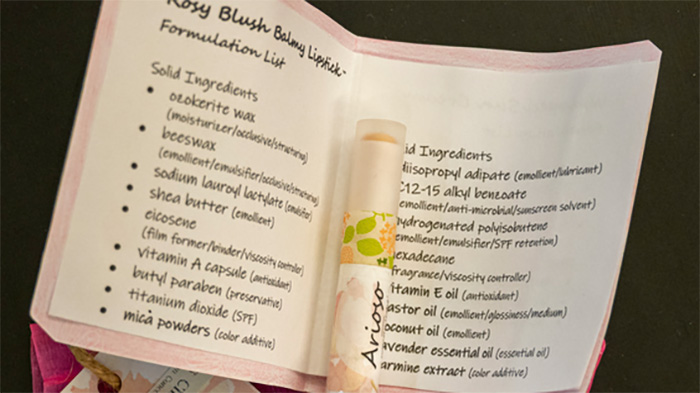
Skin is the largest organ in the human body. It serves to protect us from environmental stresses and hazards. As such it is important that we understand this organ and how to protect and care for it. In this workshop, students will create homemade skincare products from lotions and lip gloss to bath scrubs. This hands-on workshop will have students working in the lab and participating in lecture demonstrations to create their own formulation of a variety of over the-counter homemade cosmetic products.
Instructors: Gizelle Sherwood, Bella Ballin
Marvelous Macromolecules
(Grades 4-6)
The existence of life is dependent upon nature’s ability to manufacture very large, complicated molecules such as DNA and proteins. The ability of chemists to prepare really big molecules called polymers in the laboratory has revolutionized the manner in which we live. In this workshop, students will explore a variety of polymers, their usefulness, and how to make them in a manner which demonstrates care for the environment. This hands-on workshop will have students working in the lab and participating in lecture demonstrations to explore the amazing world of polymer chemistry.
Instructors: Gizelle Sherwood, Bella Ballin
Taught on Saturdays during the fall and spring semesters.
Chemistry in the Summer
(Grades _)
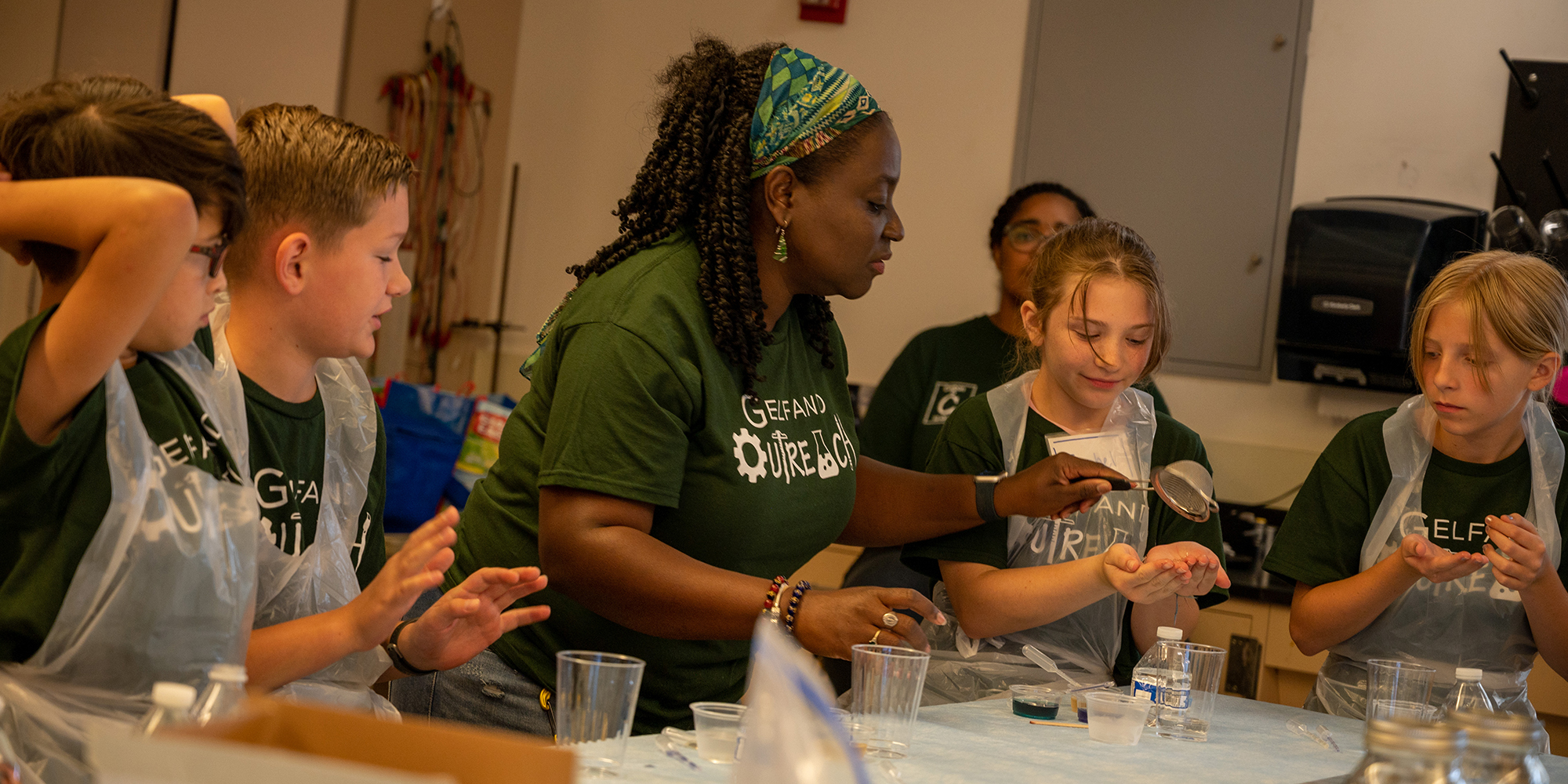
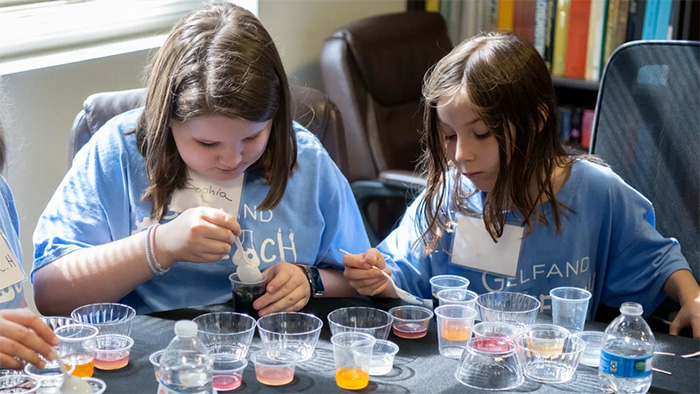
Students will experience how chemistry applies to everyday life through participation in hands-on activities and demonstrations. They will learn fundamental chemistry concepts such as the three states of matter, chemical bonding, and much more! They will explore various fields of chemistry including Environmental, Forensic, nonNewtonian liquids and Kitchen Chemistry. In this hands-on class students will be working in a lab and participating in lecture demonstrations to explore the amazing world of chemistry. Safety is essential! We will teach them how to work in a safe environment while having fun. To ensure all safety measures are met we ask that all students must wear close-toed shoes and long pants to the class. We will be working in a CMU chemistry lab and will provide lab aprons and safety goggles/face shields for additional safety precautions.
Instructors: Gizelle Sherwood, Bella Ballin, Derin Sevenler
Contact the Chemistry Outreach Team
Department of Chemistry, Carnegie Mellon University | ChemistryOutreach@andrew.cmu.edu