
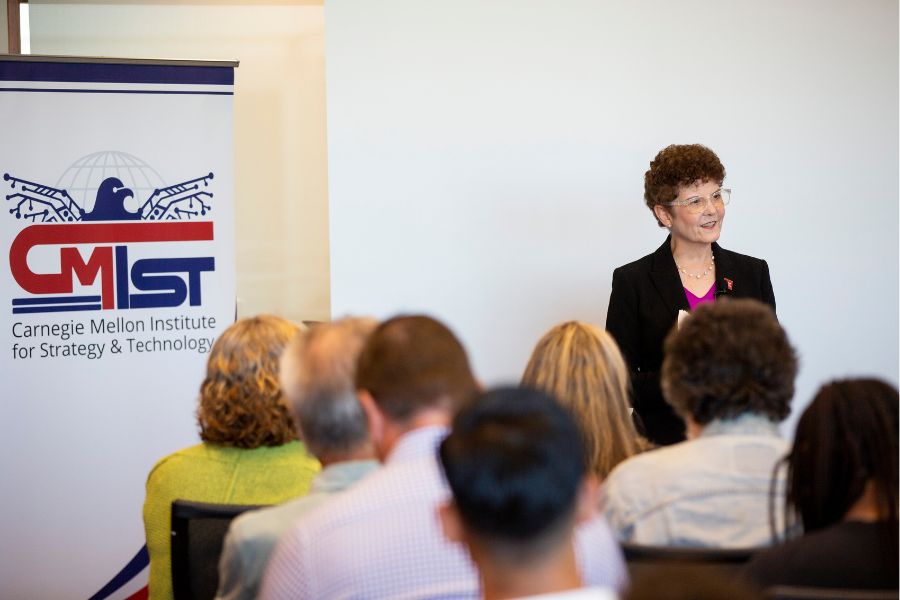
Critical Crossroads: Discussing the Realities of a Developing Digital Landscape
By Jess Regan
As emerging technology increasingly reshapes global stability, the Carnegie Mellon Institute for Strategy and Technology (CMIST) at Carnegie Mellon University (CMU) has become a hub for contemporary geopolitical discourse. Throughout the 2025–2026 academic year, CMIST brought together leading technologists, military strategists, policymakers, and legal experts to unpack modern-day digital dilemmas. These exchanges were made possible through the generosity of the Daniel Wallace Research Fund for Technology and Humanity and the Glen T. and Diane B. Meakem Endowed Fund, enabling three distinct speakers series moderated by CMIST Director Audrey Kurth Cronin. Together, the Scientists & Strategists series, the newly launched Geopolitics in the Age of AI series, and Lawfully Speaking: A Forum on Law and Ethics provided the space for important interdisciplinary discussions, exploring how factors such as physical supply chains, artificial intelligence, and legal frameworks directly impact global power.
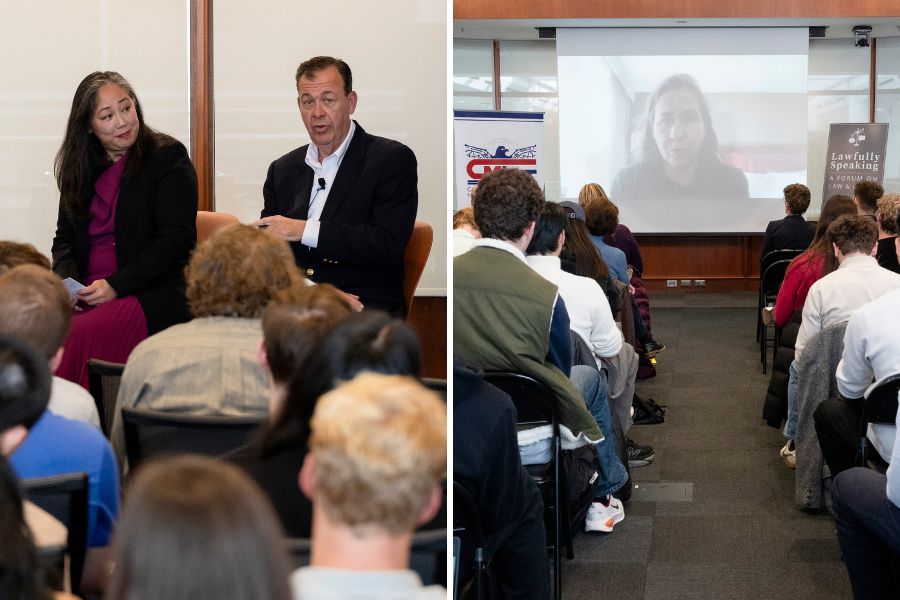
A central idea in the programming lineup was the dichotomy between the speed of innovation and the agility of governing institutions. This tension was evident from this year’s first Scientists & Strategists event, which explored the United States Department of Defense’s challenging dilemma—the need to increase strategic advantage through artificial intelligence while also defending against its weaponization by adversaries. Featuring Mieke Eoyang, former deputy assistant secretary of defense for cyber policy, and Brigadier General (retired) Greg Touhill, director of the CERT Division at CMU’s Software Engineering Institute, the speakers addressed how AI presents unprecedented challenges to military institutional agility. The speakers stressed the idea that unlike past technologies, such as nuclear weapons or cyber attacks—which had some built-in boundaries—AI’s unparalleled capabilities fundamentally challenge how quickly the military can adjust. This struggle for institutional adaptability also took center stage when the Lawfully Speaking series tackled the national-security implications of AI deployment. Professor Ashley Deeks of the University of Virginia Law School delivered a lecture warning of a concerning "Double Black Box," where the historical opacity of executive branch state secrets is compounded by the “black-box” nature of machine learning itself. Based on her book, The Double Black Box: National Security, Artificial Intelligence, and the Struggle for Democratic Accountability, Deeks argued that this dual obscurity makes evaluating the legality of automated cyber operations incredibly difficult, raising the risk of accidental escalation and complicating democratic accountability.
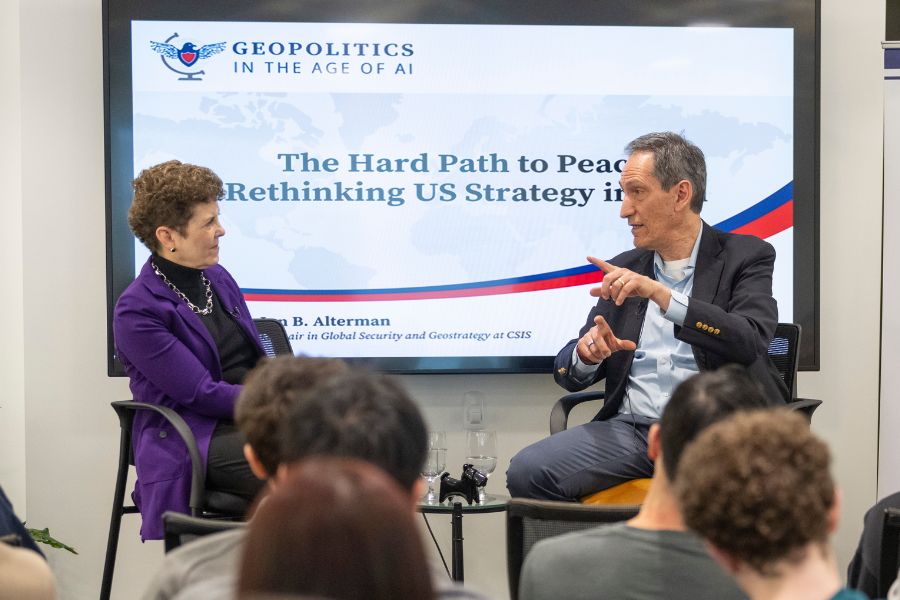
The theme of how technology is outpacing human systems continued during an internal premiere for the Geopolitics in the Age of AI series, where Dr. Jon B. Alterman discussed the real-time crisis management of the Iran conflict. Organized as a rapid-response briefing, the session explored how the use of automated, high-speed kinetic weapons and advanced warfare systems enables nations to strike with incredible speed and precision. Alterman, the Zbigniew Brzezinski Chair in Global Security and Geostrategy at the Center for Strategic and International Studies (CSIS), shared the profound observation that modern warfare allows nations to destroy things faster than they can build them, and far faster than they can change human institutional behavior. Ultimately, the discussion urged the CMIST community to look past battlefield victories and focus on a deeper, strategic patience.
Beyond the challenges technological innovation poses to policy and governance within the US, the speakers series highlighted various ways that digital power affects geopolitics. Focusing on regional security in Latin America, General (retired) Laura Richardson, former commander of US Southern Command, joined Costa Rica's Minister of Science, Innovation, Technology, and Telecommunications, Paula Bogantes Zamora, for a discussion on technology’s transformative impact on geopolitical influence across Central and South America. Their dialogue illustrated that choices regarding cyber alliances carry profound weight, highlighting that democratic nations must use foreign aid and partnerships as vital soft-power tools to help preserve their digital sovereignty. In a later Scientists & Strategists event, Dr. Chris Miller, author of the bestselling book Chip War, discussed physical chokepoints during his lecture on the AI supply chain. Joined by CMU Provost Emeritus Mark Kamlet as a discussant, Miller exposed the hardware vulnerabilities of the current digital infrastructure, from high-bandwidth memory chips to rare earth minerals, showing how major global powers increasingly weaponize these critical links as tools of strategic leverage. The macroeconomic reality of natural resources was further explored during the public launch of the Geopolitics in the Age of AI series, featuring CMU alumnus and former trustee Luis H. Ball, who provided a comprehensive analysis of Venezuela’s twentieth-century development. Ball explained how the nation historically defied the "paradox of plenty" to secure South America's most stable democracy before institutional erosion ushered in contemporary autocratic regimes.
Along with these rapid technological shifts, CMIST also lifted up the human dimensions of this digital age. Sharing her personal career story, Microsoft's Senior Director of Technology Security and AI Policy Lala Qadir joined Lawfully Speaking for a fireside chat with Director Cronin. In her discussion, Qadir demystified the idea of a strictly linear career path, tracing her journey from a hard sciences background at Duke University, with the intention to study medicine, to public policy at Harvard—ultimately finding herself enrolled at the Georgetown University Law Center. Drawing on her time as chief of staff at the White House Office of Science and Technology Policy, she emphasized the delicate balance of protecting the public good without stifling private-sector innovation. In a nod to the tight-knit nature of this policy community, Qadir mentioned that her own passion for national security was first sparked in the classroom of the Honorable Judge James E. Baker—one of CMIST's previous Lawfully Speaking guests. For her Scientists & Strategists lecture, Dr. Jacquelyn Schneider of the Hoover Institution assessed how organizational cultures shape tech policy, focusing on the powerful bureaucratic and psychological forces that drive automated warfare. Presenting findings from her recent book, The Hand Behind Unmanned, Schneider argued that military technology choices aren't just driven by straightforward, rational calculations, but rooted in cultural beliefs, norms, and specific military branch identities which ultimately dictate modern weapon investments. CMIST’s Dr. Joshua Schwartz joined as a discussant, framing these historical patterns within today's high-stakes debates over cyber warfare, space assets, and hypersonic missiles.
Behind this year’s dialogues lies the reality that nations bring competing philosophical values to the technology they build—a topic explicitly explored in a Scientists & Strategists session featuring Dr. Thomas Șerban von Davier, a CMU research scientist focusing on AI, and John Costello, a US Navy veteran who served as an intelligence analyst and operations officer at the National Security Agency. Moderated by Ralph López, CMIST deputy director of security studies, the panel contrasted the market-driven framework of the United States against China’s state-directed model of military-civil integration, offering a clear baseline for how democratic allies can coordinate data governance and industrial strategies to maintain technological leadership.
Driven by CMIST’s mission to analyze the risks and benefits of emerging technologies in war and peace, the various event series provide the space to think through modern security threats. By bridging the gaps between policy, ethics, and technological advancement, CMIST’s public forums have significantly elevated the conversation on global risk. The institute remains committed to expanding these dialogues, empowering tomorrow's leaders to balance rapid innovation with ethical governance.
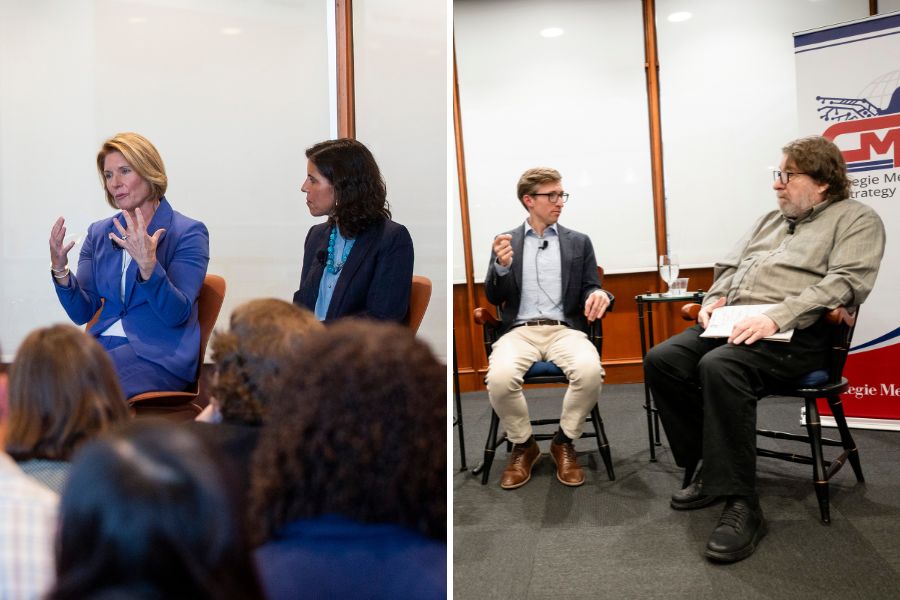
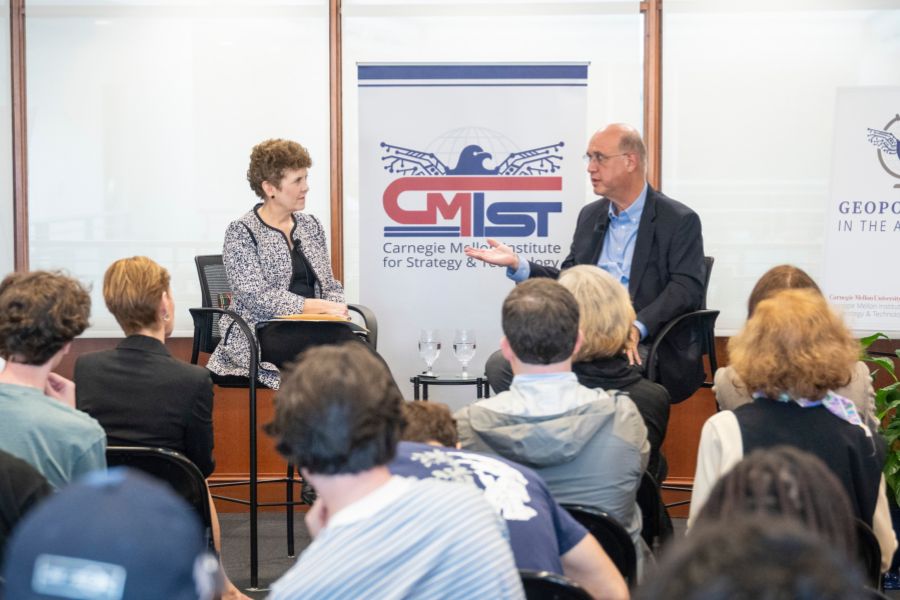

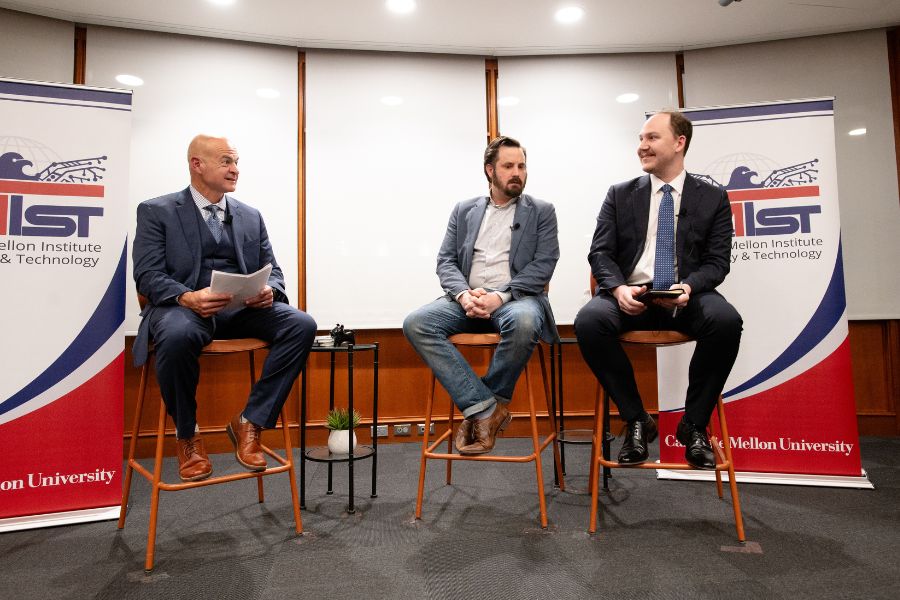
Image 1, Audrey Kurth Cronin; Image 2, l to r: Mieke Eoyang and Brigadier General Greg Touhill; Ashley Deeks on screen; Image 3, l to r: Cronin with Jon B. Alterman; Image 4, l to r: General (Ret.) Laura Richardson and Minister Paula Bogantes Zamora; Chris Miller and Professor Mark Kamlet; Image 5, l to r: Cronin with Luis H. Ball; Image 6, l to r: Lala Qadir; Jacqueline Schneider and assistant professor Josh Schwartz; Image 7, l to r: Ralph López with John Costello and Dr. Thomas Șerban von Davier