Human-AI Complementarity Workshop: Dynamic Alignment
Academic Workshop - September 24-25, 2026

Established in 2024, the NSF AI-SDM Workshop on Human-AI Complementarity is the institute's flagship initiative and defines the research agenda for pioneering work in the field. Serving as a dedicated, high-impact forum, the annual gathering defines the cutting edge of human-AI synergy for high-stakes decision-making. Through active research exchanges and hands-on expert tutorials, we convene an elite cohort of researchers while training the next generation of leaders to advance the core theory, behavioral science, and computational frameworks of hybrid intelligence.
In 2026, we will focus on the emerging challenge of dynamic alignment to achieve human-AI complementarity: designing AI systems that not only emulate human preferences, but also coordinate effectively with humans over trajectories of interaction. We are particularly motivated by the observation that current alignment paradigms largely optimize for static preferences and single-turn evaluations, while many deployment challenges emerge only through longitudinal interaction. This workshop therefore aims to bridge perspectives from ML and the social sciences to better understand how to design, optimize, and evaluate human-AI systems operating in dynamic environments.
The goals of the workshop are:
- To deliver state of the art instruction on desirable ideas to achieve dynamic and complementary human-AI alignment
- To generate common knowledge about pressing research challenges
- To generate new shared ideas to address these challenges in future research
Work from Participants:
Participants of the workshop will represent multiple disciplines: decision science, cognitive science, computer science, machine learning, and others. NSF AI-SDM sponsors the participation of selected speakers and students, bringing together academics across all career stages to advance human-AI complementarity and decision-making at the individual, group, and societal levels.
Every participant of the workshop will need to be actively engaged in specific activities:
- As tutorial Instructor that will deliver state-of-the-art educational material
- As students that actively participate in tutorials and present their own work on interactive poster sessions
- As presenters who briefly provide key contributions to a research topic
- As discussant and AIdea generator to actively engage in the specification of proposals
Defining the Science of Human-AI Complementarity
📌Key Highlight from Previous Workshops
Toward a science of human-AI teaming for decision making: A complementarity framework
Published in PNAS Nexus (2026) | Cleotilde Gonzalez, Kate Donahue, Daniel G. Goldstein, Hoda Heidari, Mohammad S. Jalali, Beau Schelble, Aarti Singh, & Anita Williams Woolley
Emerging directly from our inaugural meetings, this collaborative publication outlines a foundational framework for human-AI complementarity. Integrating cognitive science, AI, human factors, and organizational behavior, it establishes a roadmap for engineering high-stakes human-AI teams around core cognitive processes: reasoning, memory, attention, and meta-coordination.
📌 Special Announcement for 2026 Participants
We are pleased to announce that AI Magazine has accepted our proposal for an upcoming Special Issue centered on our workshop's core theme: "Dynamic Human-AI Complementarity."
NSF AI-SDM will be guest-editing this special issue and will author an opening perspective piece. Potential authors for the special issue articles will be exclusively invited from this year's workshop participants.
Details will be provided during the workshop to those interested in contributing an article. Please note that the deadline for submitting the full article will be November 15, 2026. Additional details about the submission timeline and other guidelines will be shared with interested contributors.
Keynote Speakers
Smitha Milli
Research Scientist, Meta Superintelligence Labs
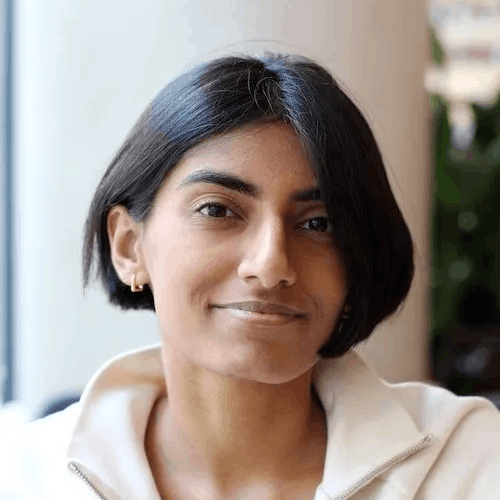
Smitha Milli is a Research Scientist at Meta Superintelligence Labs where they lead the AI & Society team. They received their BS and PhD in Electrical Engineering & Computer Science from UC Berkeley. Their research focuses on pluralistic alignment and collective governance of AI systems, i.e., ensuring that systems are effective for and inclusive of people who hold diverse and conflicting viewpoints. Their work has been discussed in live television such as on 60 Minutes, in policy outlets such as Tech Policy Press and the Knight First Amendment Institute, and in testimony to the House Financial Services Committee.

Ganna Pogrebna
David Trimble Chair, Queen's Business School | Lead for Behavioural Data Science, The Alan Turing Institute
Professor Ganna Pogrebna is a pioneer in Behavioural Data Science and an internationally recognized scholar working at the intersection of Artificial Intelligence, behavioral science, and decision theory. She serves as the inaugural David Trimble Chair in Leadership and Organisational Transformation at Queen's Business School (Queen's University Belfast) and leads the Behavioural Data Science strand at The Alan Turing Institute (UK). Her research focuses on the social, ethical, and behavioral dimensions of emerging technologies, analyzing how individuals and groups coordinate, negotiate risk, and make decisions in dynamic, uncertainty-driven environments.

Jennifer Neville
Partner Research Manager, Microsoft Research | Professor of Computer Science and Statistics, Purdue University
Robin Murphy
Professor Emerita of Computer Science and Engineering, Texas A&M University
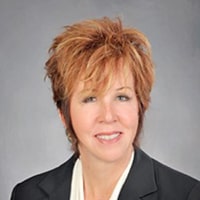
Robin Murphy is a Professor Emerita of Computer Science & Engineering Texas A&M and the co-founder of Center for Robot-Assisted Search and Rescue (CRASAR). She has over 200 publications on artificial intelligence, human-robot interaction, and robotics including the seminal textbook “Introduction to AI Robotics and Disaster Robotics, second edition, as well as Disaster Robotics, and Robotics Through Science Fiction: AI Explained Through Six Classic Robot Short Stories. Dr. Murphy is an AAAS, ACM, and IEEE fellow for her work in disaster robotics and human-robot interaction. Her participant-observer ethnographic research at over 30 disasters has identified gaps and opportunities for the use of AI and robotics in high pressure, cognitively demanding domains.
Venue
The workshop will take place September 24-25, 2026 at the Rivers Club Pittsburgh located in the downtown area. The venue address is 301 Grant St Suite 411, Pittsburgh, PA 15219. Numerous cultural sites, entertainment options, and historical landmarks are located nearby. Several examples are marked on the map below.

Click here for a complete list of accepted abstracts
| Thursday, September 24th | |
|---|---|
| Breakfast 7:45-8:15 |
Breakfast |
| Introduction 8:15-8:30 |
Introductions and Goals Coty Gonzalez, NSF AI-SDM Co-Director Norman Gottron, NSF AI-SDM Managing Director |
| Tutorials 8:30-10:30 |
Session 1: Parallel Tutorials |
| Coffee Break 10:30-10:45 |
Coffee |
|
Keynote |
Session 2: Keynote Talk Smitha Milli Research Scientist, Meta Superintelligence Labs |
|
Poster Spotlights |
Session 3: Spotlight Lightning Talks 18x speakers, no Q&A |
|
Lunch |
Lunch |
|
Plenary Session I |
Session 4: Adaptive Alignment and Oversight |
| Coffee Break 2:45-3:00 |
Coffee |
| Keynote 3:00-3:45 |
Session 5: Keynote Talk Ganna Pogrebna David Trimble Chair, Queen's Business School Lead for Behavioural Data Science, The Alan Turing Institute |
| Plenary Session II 3:45-5:00 |
Session 6: Design and Organization of Humans and AI Ori Plonsky, Technion Israel Institute of Technology Emily Hu, Massachusetts Institute of Technology Tobias Rebholz, Duke University Rishub Jain, Sampura Research |
| Dinner 5:00-7:00 |
Dinner & Networking |
| Friday, September 25th | |
|---|---|
| Breakfast 8:00-8:30 |
Breakfast |
| Introduction 8:30-8:35 |
Day 2 Welcome Coty Gonzalez, NSF AI-SDM Co-Director |
| Keynote 8:35-9:20 |
Session 7: Keynote Talk Jennifer Neville Professor of Computer Science and Statistics, Purdue University Partner Research Manager, Microsoft Research |
|
Industry Highlights |
Session 8: Industry Highlight Talks |
| Coffee Break 10:20-10:35 |
Coffee |
| Plenary Session III 10:35-11:50 |
Session 9: Social Effects in Human-AI Interaction |
| Lunch 11:50-12:50 |
Lunch |
| Keynote 12:50-1:35 |
Session 10: Keynote Talk Robin Murphy Professor Emerita of Computer Science and Engineering, Texas A&M University |
|
Scenario Exercises |
Session 11: Scenario Exercises |
|
Coffee Break |
Coffee |
|
Panel Discussion |
Session 12: Dynamic Alignment in Human-AI Interactions |
|
Closing Remarks |
Closing Remarks Coty Gonzalez, NSF AI-SDM Co-Director |
| Departure |
|
Travel Information
How to travel to and around Pittsburgh:
- By plane via Pittsburgh International Airport. - Pittsburgh Regional Transit offers public transit service to and from Pittsburgh International Airport via the 28X Airport Flyer. The 28X route serves Pittsburgh International Airport, Downtown Pittsburgh, and Oakland seven days a week. Riders using cash to pay their transit fares must have exact change; credit cards are not accepted on vehicles. Credit cards are accepted at the ticket vending machine in Baggage Claim inside Door #2. The ticket vending machine allows riders to buy daily, 7-day or 30-day tickets, or add stored value onto a ConnectCard or ConnecTix.
- By train via Amtrak. - Amtrak's Union Station is located at 1100 Liberty Avenue, Pittsburgh, PA 15222.
- By long distance bus via Greyhound. - The Greyhound Bus Terminal is located five miles from campus in downtown Pittsburgh. The station terminal is located at the intersection of 11th Street and Liberty Avenue
- Local bus via Pittsburgh Regional Transport. - The PRT network offers bus, light rail, and incline services in Allegheny County. Please see their website for schedules and rider information.
The following hotels are located <0.5 mile from the workshop venue:
- EVEN Hotel Downtown Pittsburgh by IHG
425 Forbes Ave, Pittsburgh, PA 15219
+1 412-301-2277
Ask for CMU workshop rate when booking
www.ihg.com - Fairfield by Marriott Pittsburgh Downtown
435 Fort Pitt Blvd, Pittsburgh, PA 15219
+1 412-515-2100
www.marriott.com - this link will give you access to the CMU booking rate - Joinery Hotel Pittsburgh, Curio Collection by Hilton
453 Boulevard of the Allies, Pittsburgh, PA 15219
+1 412-339-1880
www.joineryhotel.com
 This project is supported by the U.S. National Science Foundation under award number 2229881. Any opinions, findings, conclusions, or recommendations expressed in this material are those of the authors and do not necessarily reflect the views of the U.S. National Science Foundation. More information on the National AI Research Institutes can be found at aiinstitutes.org.