Carnegie Mellon University Website Home Page
Directories    |    News    |    Calendar    |    Libraries    |    Careers    |    Giving

Traditions

Beyond the Tartan

Spring Carnival

Many Carnegie Mellon traditions have a Scottish flavor, reflecting the heritage of our founder, philanthropist and steel magnate Andrew Carnegie.

Others have formed in the way traditions often do, from a unique experience in a special place — one that seems to capture the moment as well as the hearts of those who pass through Carnegie Mellon.

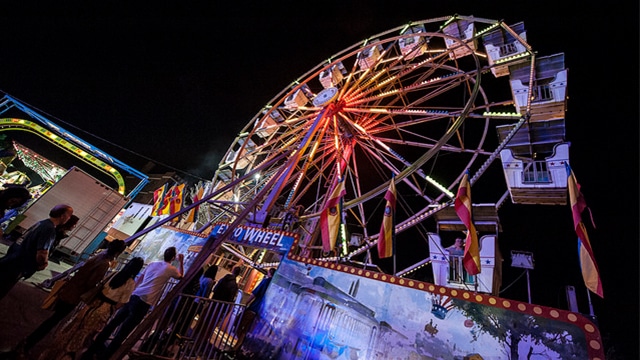
Spring Carnival. Carnegie Mellon's oldest tradition, it's also a favorite of students, alumni, faculty and staff. Held annually, the weekend's events include entertainment and competition, carnival rides and food, and an event not to be missed: Buggy Sweepstakes.

Buggy Sweepstakes

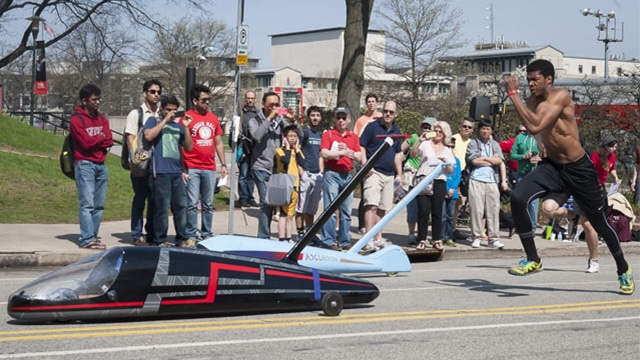
Buggy Sweepstakes. Buggy, the highlight of Spring Carnival, began in 1920 as the"pushmobile races" of Campus Week. Buggies — aerodynamic cylinders designed and built by student groups during the year — are pushed and driven through campus over a course measuring more than 4,400 feet and often reach speeds of up to 35 miles per hour.

The Fence. The Fence is the university’s billboard for student groups. Located on the Cut (the grassy area of campus between Forbes Avenue and Hunt Library), the Fence must be painted in its entirety, between midnight and sunrise. Students complete their painted work and guard the fence through the night to make sure no one paints over it.

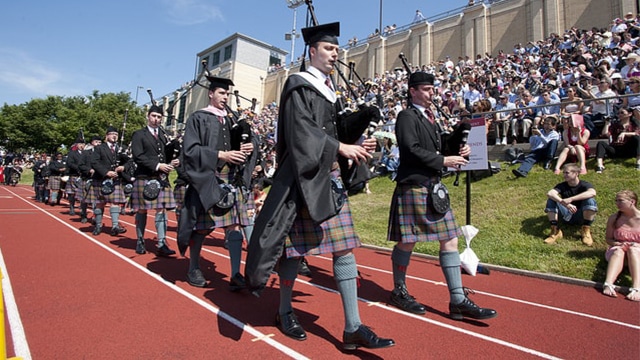
Bagpipers. The only university offering a degree in bagpipe music, Carnegie Mellon'sThe Fence Pipe Band features the sounds of Scottish bagpipes and performs at formal university events. Head of the Pipe Band is world champion piper Alasdair Gillies, formerly a highly decorated pipe major in the British Army.

Traying. Carnegie Mellon students often use cafeteria trays as sleds during snowy winter nights. Common spots for "traying" include the tiered hillside next to the tennis courts and Flagstaff Hill in Schenley Park.

The Kiltie Band. Carnegie Mellon's Kiltie Band, dressed in full Scottish regalia including kilts and knee socks, performs during every home football game. Making its first public appearance on Nov. 25, 1922, the birthday of Andrew Carnegie, the band performed at a game on old Forbes Field between Carnegie Tech and the University of Notre Dame.

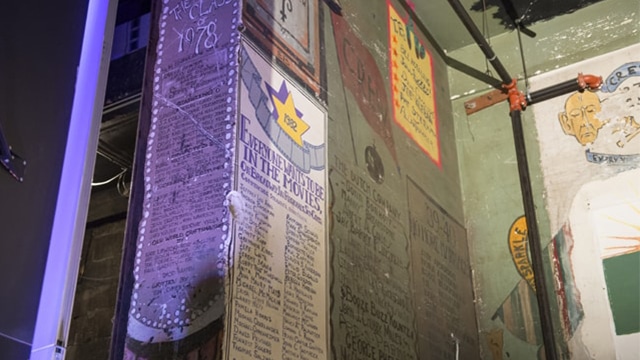
Autographing the Green Room. It has been a tradition at the College of Fine Arts for senior "dramats" (drama students) to sign the Green Room's walls and ceilings before leaving the university. The Green Room is behind the stage of Kresge Theatre, the quaint site of many past drama productions. Oscar-winning actress Holly Hunter broke university tradition by signing the Green Room during her freshman year.

Carnegie Mellon’s original campus design is said to have been modeled after a ship by the campus’s initial architect Henry Hornbostel. An actual ship's prow taken from the historic cruiser, the USS Pennsylvania, rests atop Roberts Hall, which overlooks Panther Hollow and the Carnegie Museum complex.

fast facts

Go to the previous Fast FactSee all Carnegie Mellon Fast FactsGo to the next Fast Fact
Go to the previous articleSee all articlesGo to the next article
 
Carnegie Mellon's founder, Andrew Carnegie, was born in Dunfermline, Scotland, in 1835 and founded the Pittsburgh-based university in 1900.