| |
|
|
Teaching
Fall 2019
Introduction to Biological Physics (33-441/03-439)
lecturer: Mathias Lösche
10 units, course meeting times: TR 3:00—4:20 PM, PH A21
This intermediate level course is primarily offered to Physics and Biology undergrads (junior/senior) and provides a modern view of molecular and cellular biology as seen from the perspective of physics, and quantified through the analytical tools of physics. This course will not review experimental biophysical techniques (which are covered, e.g., in 03-871). Rather, physicists will learn what sets “bio” apart from the remainder of the Physics world and how the apparent dilemma that the existence of life represents to classical thermodynamics is reconciled. They also will learn the nomenclature used in molecular biology. In turn, biologists will obtain (a glimpse of) what quantitative tools can achieve beyond the mere collecting and archiving of facts in a universe of observations: By devising models, non-obvious quantitative predictions are derived which can be experimentally tested and may lead to threads that connect vastly different, apparently unrelated phenomena. One major goal is then to merge the two areas, physics and biology, in a unified perspective.
|
 |
Spring 2019
Biological Physics:
From Basic Concepts to Current Research (33-767)
lecturer: Mathias Lösche
12 units, course meeting times: WF 1:30—2:50 PM, DH A200, website
In this course, students will gain a deep appreciation of the fact that very basic physical and chemical principles underly many central life processes. Life is not only compatible with the laws of physics and chemistry, rather, it exploits them in ingenious ways. After taking the course, students should be able to name examples of such situations for which they can provide a coherent line of reasoning that outlines these connections. They will be able to explain key experiments by which these connections either have been found or are nowadays routinely established, and outline simple back-of-the-envelope estimates by which one can convince oneself of either the validity or inapplicability of certain popular models and ideas. They should also have become sufficiently familiar with the key terminology frequently encountered in biology, such that they can start to further educate themselves by consulting biological and biophysical literature.
|
 |
Spring 2011
Electronics I (33-228)
lecturers: Curtis A. Meyer, Mathias Lösche
10 units
course meeting times:
lectures: TR 9:30—10:20AM, WeH 5403,
labs: MW 1:30—4:20PM (A); TR 1:30—4:20PM (B)
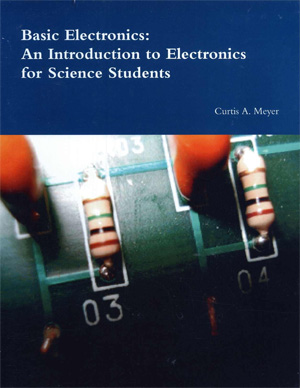
This course introduces you to electric circuit components, design, applications, and construction. We also cover the analysis techniques relevant to the linear systems (i.e., linear circuits) you will build in the lab. While you have seen material on electrical conduction, capacitors, and inductors, and associated circuit analysis, we will take a practical view of applying this knowledge and expanding it to include a broader variety of circuit components including transistors, and analog and digital integrated circuits.
In the laboratory, the emphasis will be on developing your ability to construct and understand various types of electronic circuitry. You are expected to develop skills of observation and measurement while learning the more prosaic skill of making an electronic circuit work. We will combine circuit-theoretical analysis with a more intuitive approached based on knowledge of device properties; both of these approaches are necessary for a working knowledge of electronics.
|
 |
Fall 2010
Intermediate Optics (33-353)
lecturers: Mathias Lösche, Barry B. Luokkala
12 units,
course meeting times:
lectures: W 11:30AM—12:20PM; DH A200, R 9:30—10:20AM, WeH 5304; F 11:30AM—12:20PM
labs: T 9:00—11:50AM, DH A324
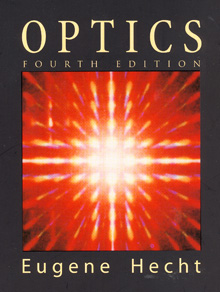
Optical instrumentation and optical devices are all around us and determine many aspects of our daily life. This course provides an introduction to the basic principles of optics, both in theoretical terms, covered in three weekly lectures, and in practical terms in a once-a-week laboratory exercise.
– What is light and how does it interact with matter?
– What are the basic properties that define electromagnetic waves and affect their propagation?
Most of these questions can be answered by confining our considerations to the wave aspects of light – and therefore quantum aspects will be considerably short-changed. Nevertheless, the primary goal of this course is that you become comfortable with the basic principles of geometrical and wave optics that lay the foundations for an enormous body of technology from optical instrumentation to modern-day cable communications. This should also prepare you to move on into advanced topics on your own and to apply your hands-on knowledge to real-world situations in academic or corporate R&D.
|
 |
Spring 2009
Physics I for Science Students (33-112)
lecturers: Kunal Ghosh, Mathias Lösche
12 units,
course meeting times: MWF 9:30—10:20AM, WeH 7500
This course includes classical mechanics and thermal physics and is the first course in a two-semester sequence of introductory calculus-based physics courses offered to science and computer science majors. It deals with the nature of matter and its interactions. The variety of phenomena that we will be able to explain and understand is very wide, from the orbit of a planet to the cooling of a gas. In this course, you will engage in a process central to science: modeling a broad range of physical phenomena using a small set of powerful fundamental principles. We will apply this approach to explore the nature of matter and its interactions.
|
|
|
|
|
|
|
Consultation Hours
Mathias Lösche
WeH 6311,
Thursdays: 9:00 – 10:00 AM,
or by appointment
(Theresa Gabrielli, WeH 7325, 8-8367) |