CMU’s Sixth Voluntary University Review Highlights Sustainability as a Shared Responsibility
by Sarah Bender
Carnegie Mellon University has released its sixth Voluntary University Review (VUR), highlighting how sustainability is becoming more deeply embedded across the university through student leadership, cross-campus partnerships, and a growing culture of collaboration.
Published annually by the Sustainability Initiative, the VUR uses the United Nations Sustainable Development Goals (SDGs), also known as the Global Goals, as a framework for understanding how education, research, and practices contribute to a more sustainable future. Adopted by the international community at the United Nations in 2015, the 17 Global Goals provide a shared framework for addressing challenges ranging from climate action and public health to education, hunger, and economic opportunity.
This year's review demonstrates how the Global Goals have evolved from a reporting framework into a tool for bringing together students, faculty, staff, and partners across disciplines. It also documents a shift in how the Sustainability Initiative approaches its work, emphasizing engagement and relationship-building alongside measurement and reporting.
"We've reached a point where sustainability at Carnegie Mellon is no longer defined by individual projects alone," said Alexandra Hiniker, director of the Sustainability Initiative. "This year's review shows how the Global Goals are helping people across the university recognize connections between their work and the broader challenges our communities face.”
That evolution is evident across campus. Sustainability is now included in Carnegie Mellon's Strategic Framework, reflecting its growing role in the university's long-term vision. At the same time, new programs are helping members of the CMU community see how their own work contributes to broader sustainability efforts.
The Student Sustainability Liaison program, for example, activated students in departments across campus, asking them to identify existing sustainability efforts, uncover opportunities for collaboration, and develop recommendations for faculty leadership. Beyond individual departments, the new Sustainability Commons is helping student organizations build stronger connections around shared goals, while the Pittsburgh Intercollegiate Network for Sustainability (PINS) is expanding those conversations to colleges and universities across the region.
The same collaborative approach is beginning to shape university operations. A new partnership with Facilities, Infrastructure, and Risk Management (FIRM) invited departments to examine their work through the lens of the Global Goals, revealing connections that often go unnoticed and encouraging staff to think about sustainability as part of their everyday responsibilities rather than as a separate initiative.
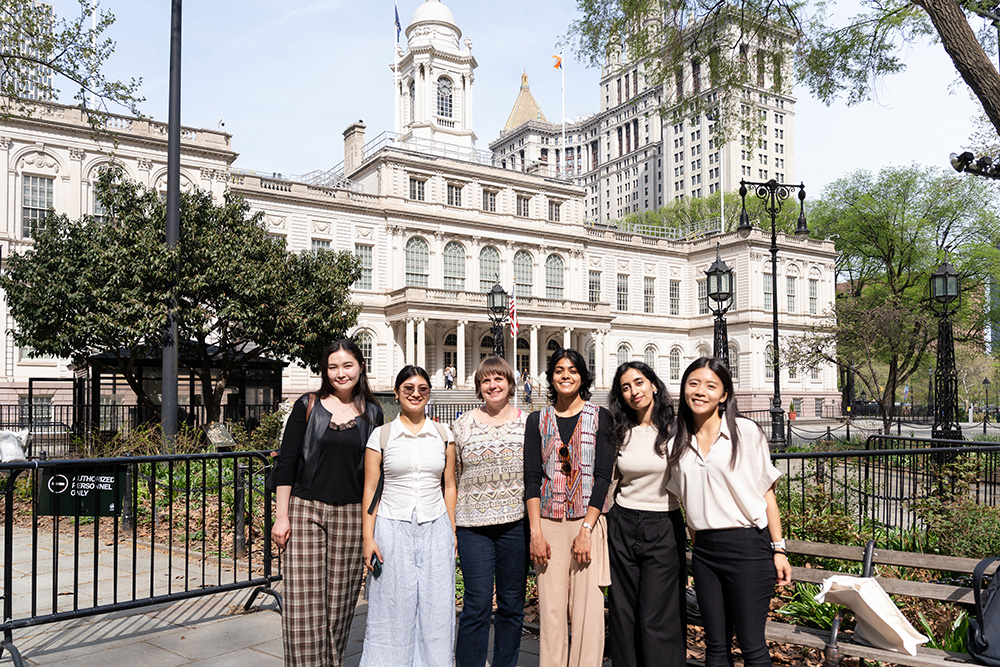
That emphasis on connection extends beyond campus as well. This spring, the Sustainability Initiative returned to the United Nations Academic Impact (UNAI) workshop to convene universities from across the country, sharing Carnegie Mellon's approach while learning from peers working to advance the Global Goals in their own communities.
"Today, sustainability is less about asking people to join a movement and more about helping them recognize that they're already part of one," Hiniker explained. "The Global Goals give us a common language to connect research, education, operations, and community partnerships in ways that weren't always visible before."
The Sustainability Initiative also grows its work by welcoming a cohort of interns to help bring together stakeholders across campus and the community. “Connection has been the north star for our programs this year,” said Iris Hung, Communications and Outreach Intern for the Sustainability Initiative. “With such a diverse intern team, we’re able to reach different groups across the CMU community, and apply the Global Goals framework in ways that best resonate with them.”
Originally launched by Provost James H. Garrett Jr. in 2019, the Sustainability Initiative published the world's first VUR in 2020. Six years later, the report reflects an evolution from documenting sustainability efforts to creating new opportunities for students, faculty, staff, and partners to connect around a shared framework for positive change.
"The most exciting part of this work is watching people discover that sustainability isn't someone else's responsibility. It's already part of what they do," Hiniker said. "Our role is to help make those connections visible, creating opportunities for people to learn from one another and do more."
For more information, visit the Voluntary University Review page.