A Network Taking Root: PINS Builds Momentum Across Pittsburgh
By Sarah Bender
When the Sustainability Initiative’s Pittsburgh Intercollegiate Network for Sustainability (PINS) formally adopted its new name in August 2025, it marked more than a branding decision. It was an opportunity for continued growth, helping college students across the city find like-minded peers.
What began as a conversation among a few students who wanted to collaborate across institutions is steadily becoming a regional network, one that connects students from Carnegie Mellon, the University of Pittsburgh, Chatham University, and beyond around shared sustainability goals.
Over the past year, that growth has taken shape through shared site visits, cross-campus dialogue, and an expanded career event designed to connect students directly with professionals in the field. Together, these efforts reflect something larger: a recognition that sustainability challenges — and opportunities — extend beyond any one campus. PINS is turning that recognition into action, building a collaborative space that continues to evolve as more students seek connection, clarity, and community in their sustainability work.
Convening Across Campuses
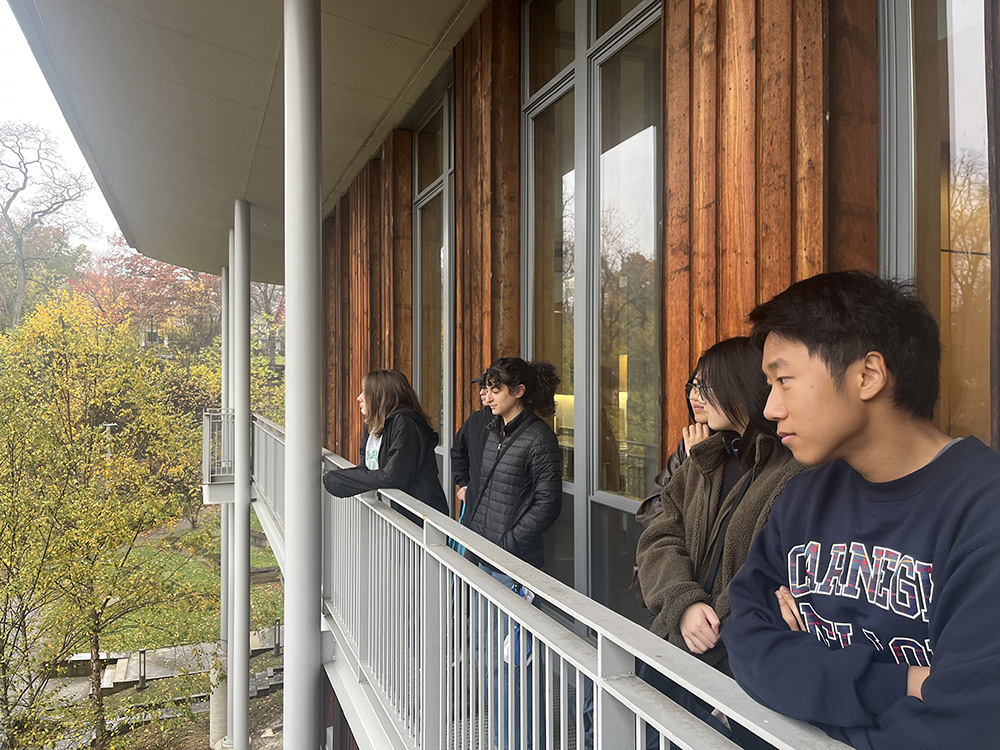
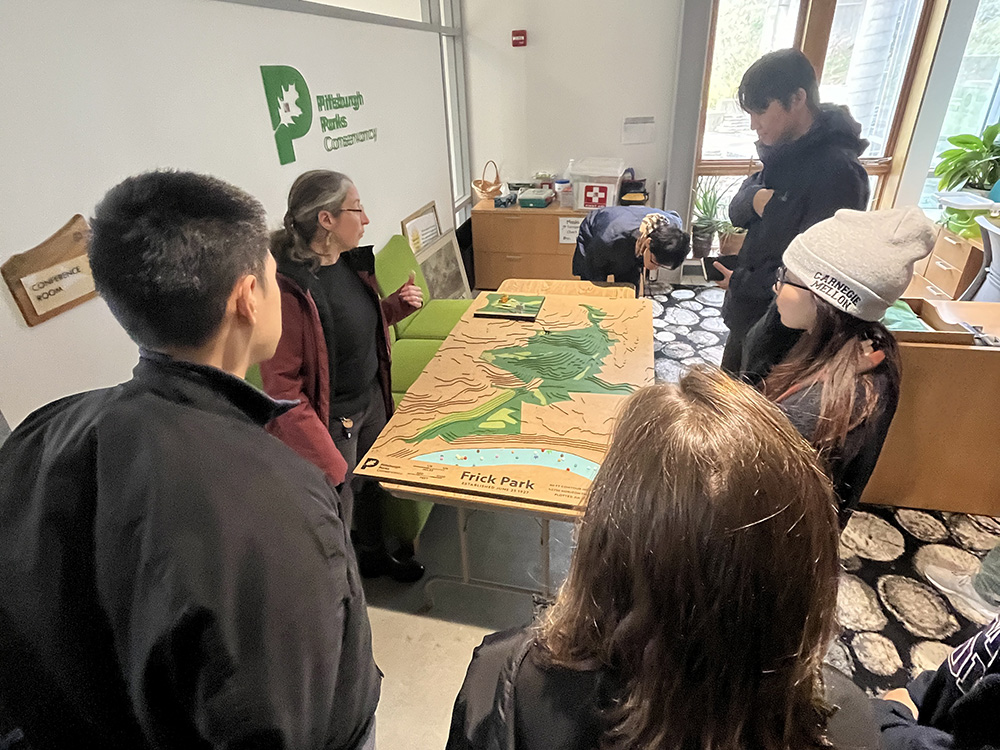
For Programming Intern Aleena Siddiqui, a College of Engineering senior who has helped shape the network’s growth since its inception, events provide an opportunity for students to convene across campuses. The year’s first event, which she organized with Strategy Intern and Tepper School of Business sophomore Ameena George, was a tour of the Frick Environmental Center at the entrance to the park in Squirrell Hill.
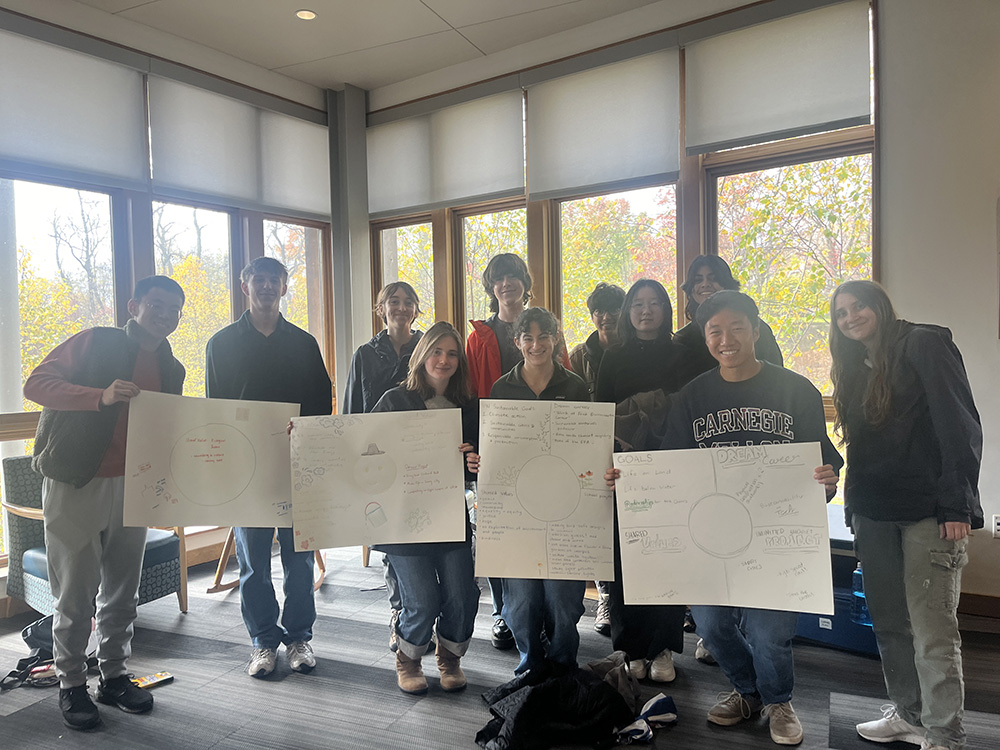
The basis of the trip was a sustainability-focused tour centered on the living building, its certifications, and the role it plays for and in the community. Twenty students from CMU, Pitt, and Chatham partook in the tour, with many sticking around as Siddiqui facilitated a conversation designed to spark cross-campus dialogue.
Students reflected on what sustainability means to them, what involvement looks like on their own campuses, and even what they would create if given an unlimited budget.
“At the end of the day, it’s connecting with like-minded individuals and hearing about others’ interest in sustainability that really makes an impact on students in our network,” Siddiqui said. “As we navigate programs centered around sustainability at other institutions and welcome new members into PINS, that idea of connection has stayed central to our mission.”
Careers for a Changing Climate
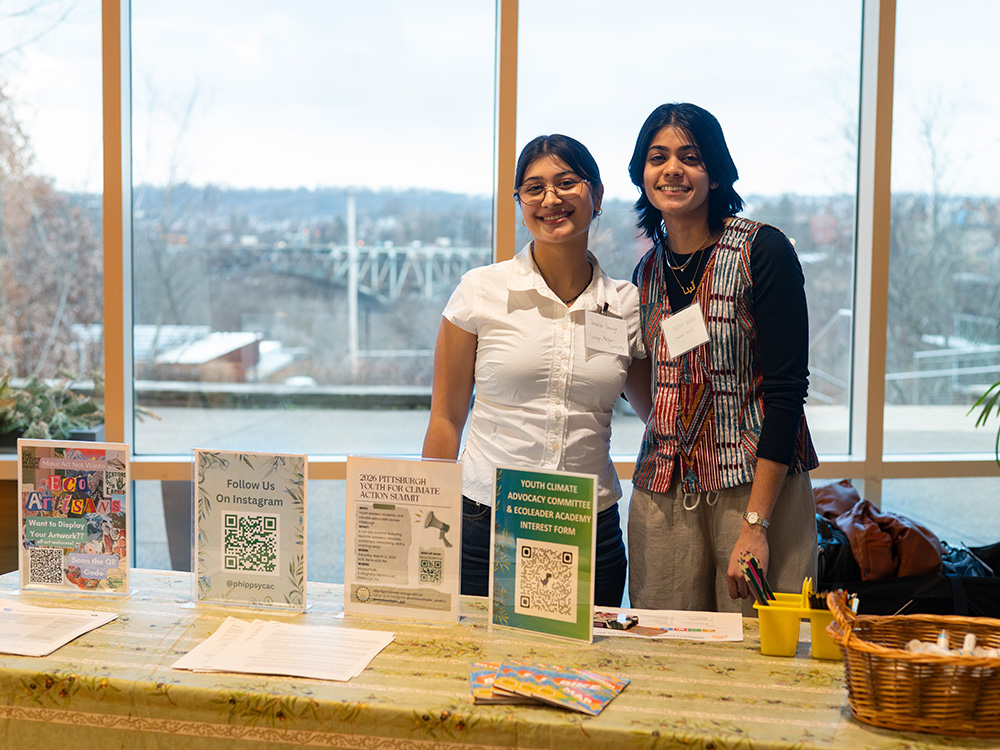
For Siddiqui, convening students is only the first step — next comes helping them see a future in sustainability. That vision shaped Careers for a Changing Climate, an event held at Phipps Conservatory on Feb. 22, 2026.
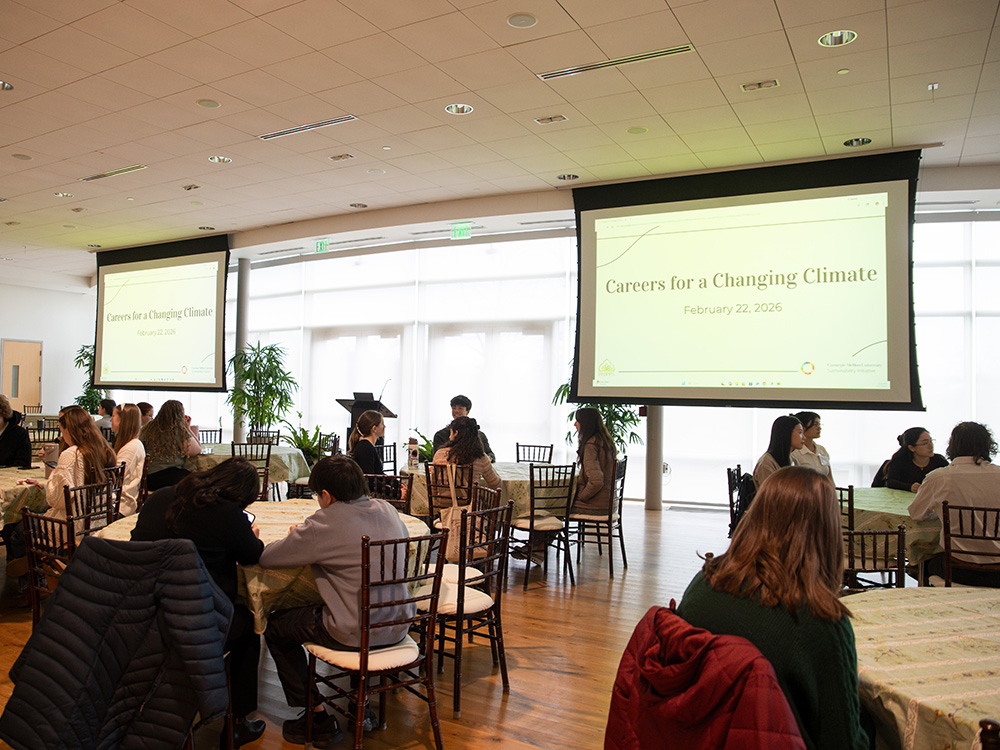
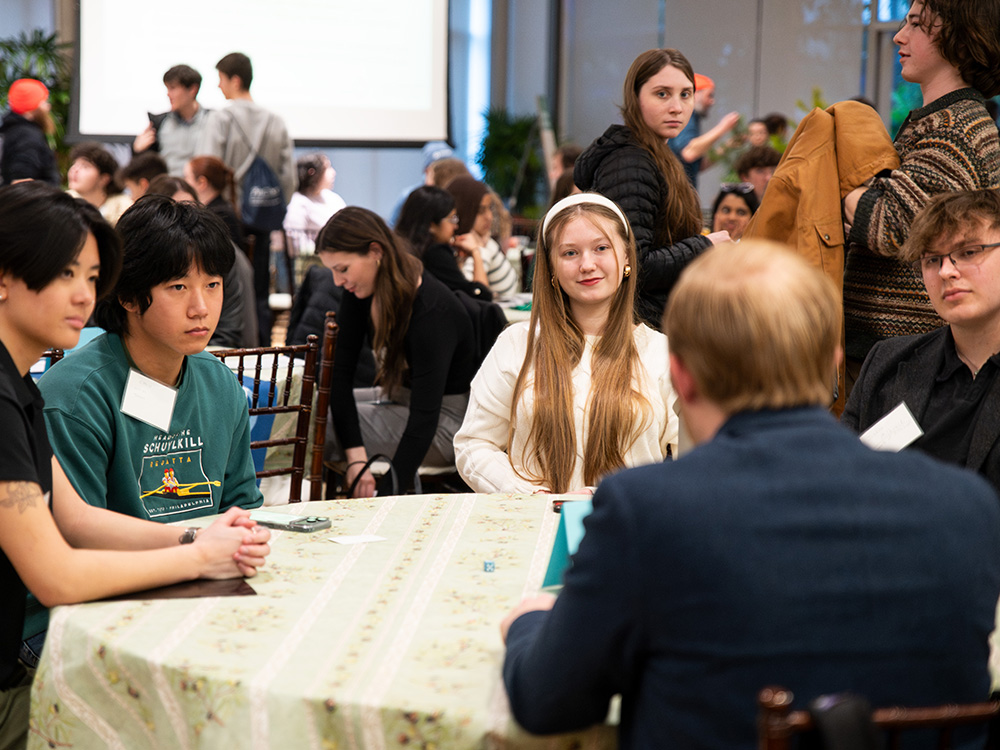
Building on last year’s Pathways to Impact, the event has grown into a mini-conference hosted with Phipps’s Youth Climate Advocacy Committee (YCAC). Open to high school and college-aged students across the region, the program drew more than 160 registrations, underscoring the demand for intentional career exploration in the sustainability space.
Designed as an “informal career fair,” the event prioritized personal connections with 17 employers who work in a variety of industries that intersect with sustainability: government, law, community engagement, and transportation, and more. Tree Pittsburgh, New Sun Rising, Pittsburgh Regional Transit, the Allegheny County Department of Sustainability, and Fair Shake Environmental Legal Services all joined the event. The keynote speech was presented by Leslie Montgomery, Vice President of Education for the Green Building Alliance, who addressed what the field of sustainability needs right now and how early career professionals can find their place in the field. Attendees then participated in three rounds of breakout sessions focused on what sustainability work looks like in various sectors.
“Young people need both encouragement and pragmatic pathways to pursue careers that use diverse professional skills and technology to advance environmental and human health,” said Jonathan Fantazier, who works with Tree Pittsburgh. “These opportunities can be rare and challenging to find, especially as academic and civic institutions seem increasingly focused on technology for technology's sake.”
“Participating in the Careers for a Changing Climate conference was a truly rewarding experience,” added Consortium for Public Education Director of Partnerships Gina Barrett. “Student voice is so valuable because they are the ones who will carry forward the ideas, innovation, and commitment needed to build a more sustainable future.”
Sustainability Initiative Director Alex Hiniker, who has previously led humanitarian disarmament initiatives in Cambodia, Laos, and Lebanon and implemented pandemic preparedness projects in Africa, Asia and Eastern Europe, spoke about how to find opportunities for international work. Communications and Outreach Intern Iris Hung, a Heinz College masters student who recently guided brands to align their core missions with sustainability values as Communications Manager at Procter & Gamble, partnered with Phipps Interpretive Specialist Adam Haas to talk about communications. Other employers delved into topics like environmental legal services, research, and climate action plans for local governments.
As part of the event, Siddiqui presented alongside Pitt sophomore Grace King, highlighting how students can pursue and shape sustainability initiatives within their own institutions and how to maximize those experiences through research, internships, and even study abroad programs. The day concluded with extended networking time in Phipps’ Tropical Room, giving attendees one more opportunity to meet with employers and learn about their personal journeys in sustainability.
Sustaining the Network
Behind the events is steady relationship-building. Pitt’s Student Office of Sustainability provides a strong anchor, while connections at Chatham continue to grow. PINS leaders are navigating different campus systems, identifying interested students and staff, and building continuity so the network can outlast individual graduations.
A shared Slack workspace, now nearly 70 members strong, has become a first step toward that continuity. Students use it to share events across campuses, promote opportunities, and stay connected between gatherings. The goal is a self-sustaining exchange of ideas, not just PINS-hosted programming.
As Siddiqui prepares to graduate in the spring, George and other student leaders are ready to carry the work forward. Before then, though, the network has plans for even more opportunities to connect, including future site visits across the Pittsburgh region.
To get involved with PINS, join the Slack workspace and keep an eye out for upcoming events.