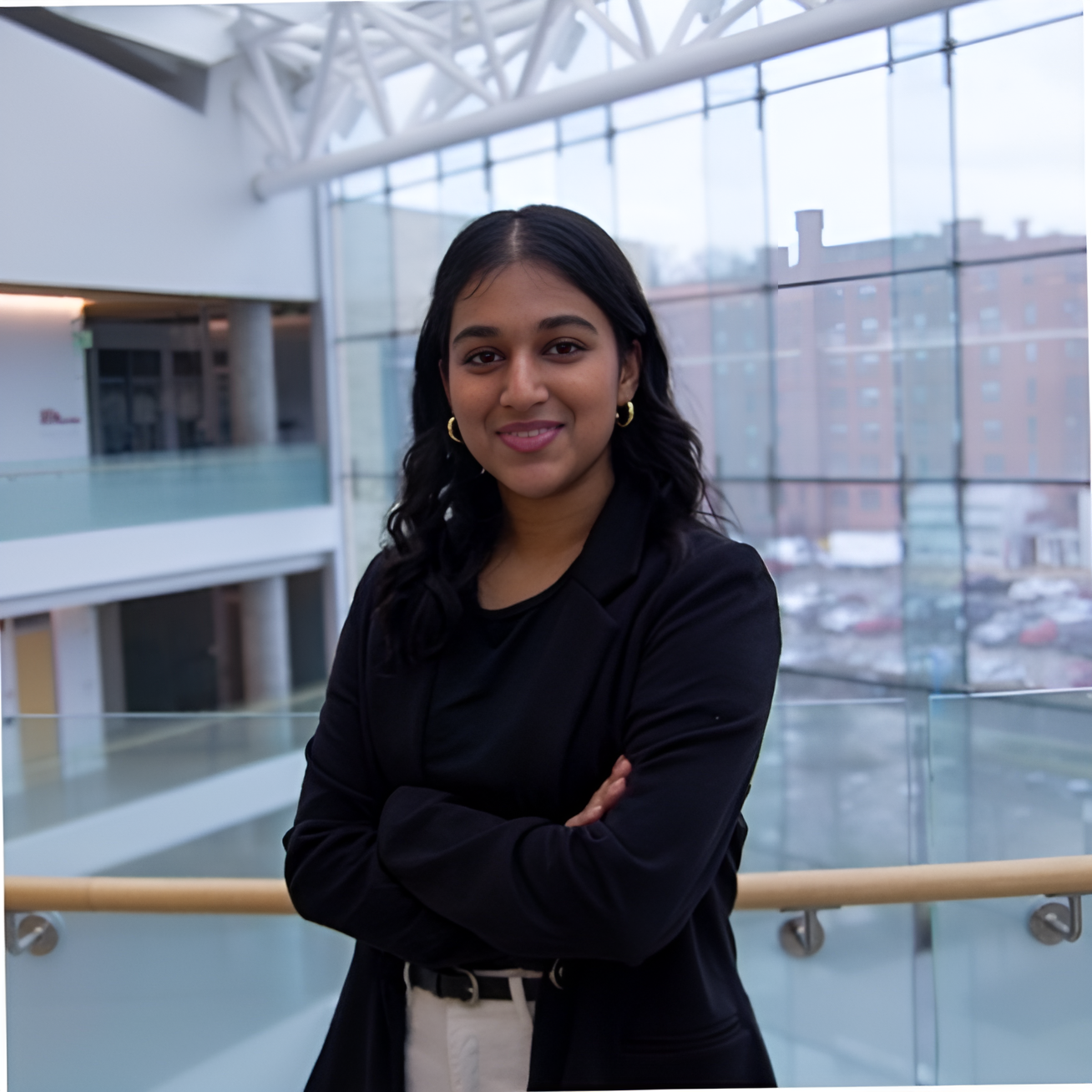
Anya Bansal
BS 2027 Business Administration, Statistics Additional Major, Environmental and Sustainability Studies Minor
Bio
Anya Bansal is a senior at Carnegie Mellon University studying Business Administration, with an additional major in Statistics and a minor in Environmental and Sustainability Studies (ESS). Bansal was drawn to the ESS program because she wanted an interdisciplinary approach that connects finance and the environment, particularly since she is interested in impact finance. In high school, Bansal was involved in sustainability and nonprofit activism, and she wanted to continue engaging with those interests through coursework while also approaching them from a more academic perspective. Studying sustainability alongside business and data science has helped her see how environmental outcomes often depend on how capital, incentives, and institutions are structured. This perspective has shaped her interest in sustainable finance and climate-focused investing, where financial tools can be used to accelerate technologies and infrastructure that support a low-carbon, circular economy.
One of Bansal's favorite classes was Business Ethics, where she learned about corporate social responsibility and how ethical decision-making intersects with business strategy. The class explored interesting case studies, such as fossil fuel companies and carbon credits, and she especially enjoyed engaging with the material through debates and discussions. Bansal is also excited to take a sustainable economics class next semester to further explore how economic systems can support environmental goals.
Bansal started the Tepper Impact Investing Club, which received university approval in January 2026. The club explores how investing can generate both financial returns and positive social and environmental impact while helping students better understand how capital allocation influences sustainability outcomes. Bansal helped lead Scottie Ventures’ (CMU’s venture capital club) Sustainability/Energy Coverage Group, where they analyze the energy and sustainability startup landscape and evaluate emerging climate technologies through an investment lens. In addition, Bansal works on campus sustainability initiatives as a SEED (Sustainability Education + Empowerment = Doing) Leader. In this role, she collaborates with CMU’s Facilities Management and Green Practices teams to increase student engagement with sustainability programs, particularly around waste reduction and recycling.
In the future, Bansal hopes to apply what she has learned by directing capital toward companies and innovations that address climate challenges while also strengthening economic resilience. Her experiences through ESS, combined with work in venture capital and sustainability initiatives on campus, have shown me that environmental progress is most durable when sustainability goals are embedded within financial and institutional systems. Beyond my career goals, the program has also influenced how she thinks about sustainability in everyday life. While studying abroad at Bocconi University in Spring 2026, she has been interested in exploring how sustainability practices vary globally and how individuals can travel and live more sustainably. Ultimately, Bansal hopes to continue connecting my academic work, professional aspirations, and personal choices so that sustainability becomes not just a field of study, but a guiding principle in how she approaches both business and daily life.