Nov. 7th, 2025
 Natalie Klein, Los Alamos National Laboratory (LANL)
Abstract: NASA’s Curiosity and Perseverance rovers have collected rich spectroscopic data from the Martian surface using instruments such as ChemCam and SuperCam. These multimodal datasets (spanning LIBS, infrared, and Raman measurements) pose unique challenges for calibration, interpretation, and data integration across vastly different environments. This talk will highlight statistical and machine learning methods developed to meet these challenges, including Bayesian neural networks for uncertainty-aware prediction, optimal transport for aligning Earth and Mars data, multimodal fusion with interpretability metrics, and density-ratio weighting for combining heterogeneous observations. I’ll also discuss generative models for LIBS spectra and ongoing work using fast simulators for model pretraining. Together, these advances illustrate how planetary science data drive new ideas in uncertainty quantification, domain adaptation, and the fusion of physical and statistical modeling.
Bio: Dr. Natalie Klein is the AI and Advanced Predictive Modeling Team Lead in the Statistics Group at Los Alamos National Laboratory, where she has been a staff member since 2019. Her research focuses on integrating statistical methodology with machine learning to address challenges in scientific domains such as remote sensing and planetary exploration. She holds a joint Ph.D. in Statistics and Machine Learning from Carnegie Mellon University.
Oct. 24, 2025
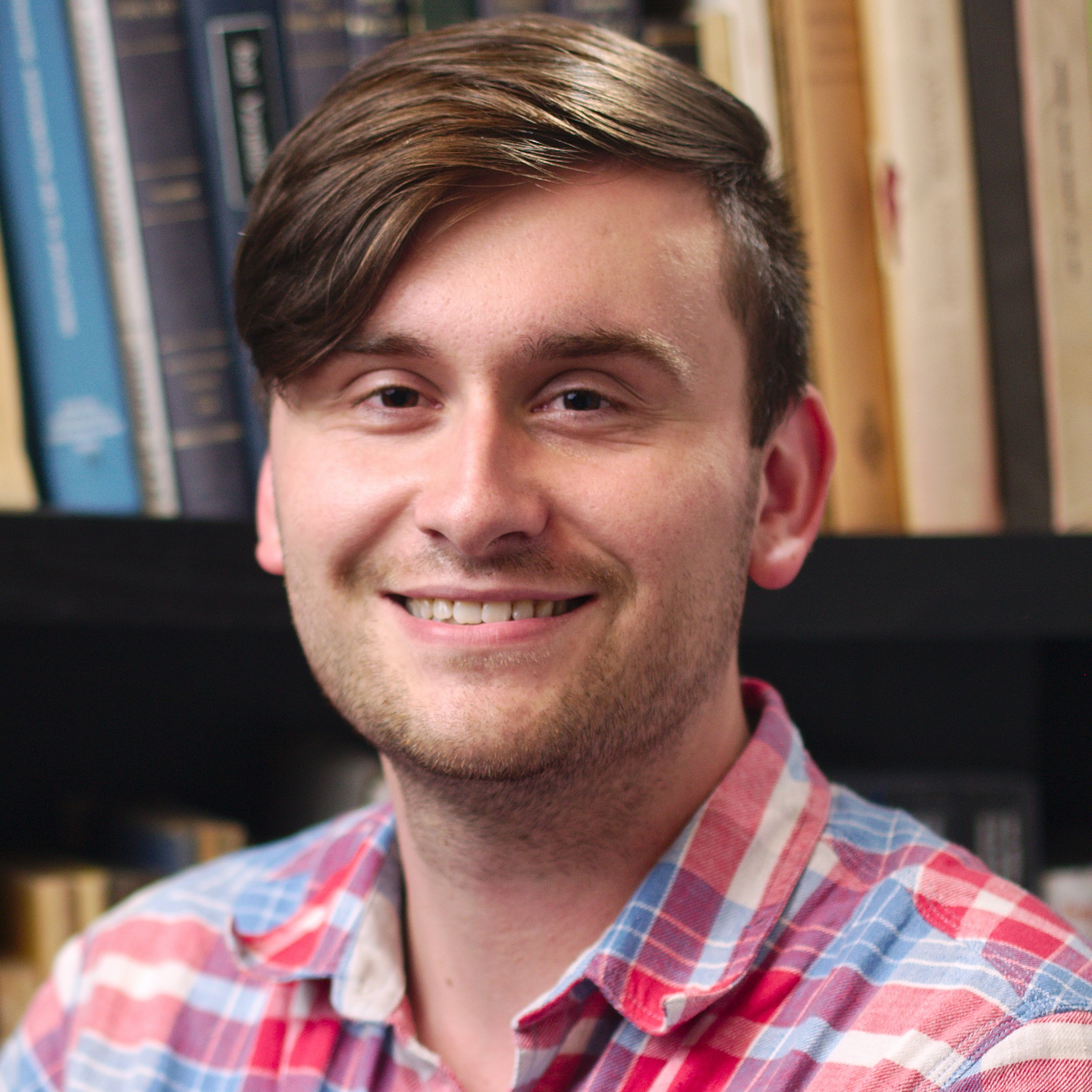 Trevor Harris, University of Connecticut
[Harris Talk Recording] [Harris Talk Slides]
Abstract: Neural operator models are a recent innovation in operator modeling that mimic the structure of deep neural networks. They are increasingly used in spatiotemporal forecasting, inverse problems, data assimilation, and PDE-based surrogate modeling, yet they lack an intrinsic uncertainty mechanism. We introduce Local Sliced Conformal Inference (LSCI), a distribution-free framework for generating function-valued, locally adaptive prediction sets for operator models. We prove finite-sample validity and derive a data-dependent upper bound on the coverage gap under local exchangeability. On a variety of synthetic Gaussian process tasks and real applications (air quality monitoring, energy demand forecasting, and weather prediction), LSCI yields tighter sets with stronger adaptivity than conformal baselines. We also demonstrate empirical robustness against biased predictors and several out-of-distribution noise regimes.
Bio: Trevor Harris received his PhD in Statistics from the University of Illinois Urbana Champaign (2021) and joined Texas A&M University as an assistant professor before moving to the University of Connecticut in 2024. His research is heavily motivated by statistical issues in climate science including climate model validation and assimilation, prediction under distribution shift, robust uncertainty quantification, and out-of-distribution detection. Recent interests include neural operator models and functional data analysis, conformal inference for spatiotemporal data, and sample-efficient generative models.