Chinasa T. Okolo’s CMU Experience Shaped Work in Equitable AI
Time Magazine Named REUSE Alum 'One of the World’s Most Influential People in AI'
Chinasa T. Okolo envisions a world where artificial intelligence extends beyond the major tech hubs currently driving the industry’s growth.
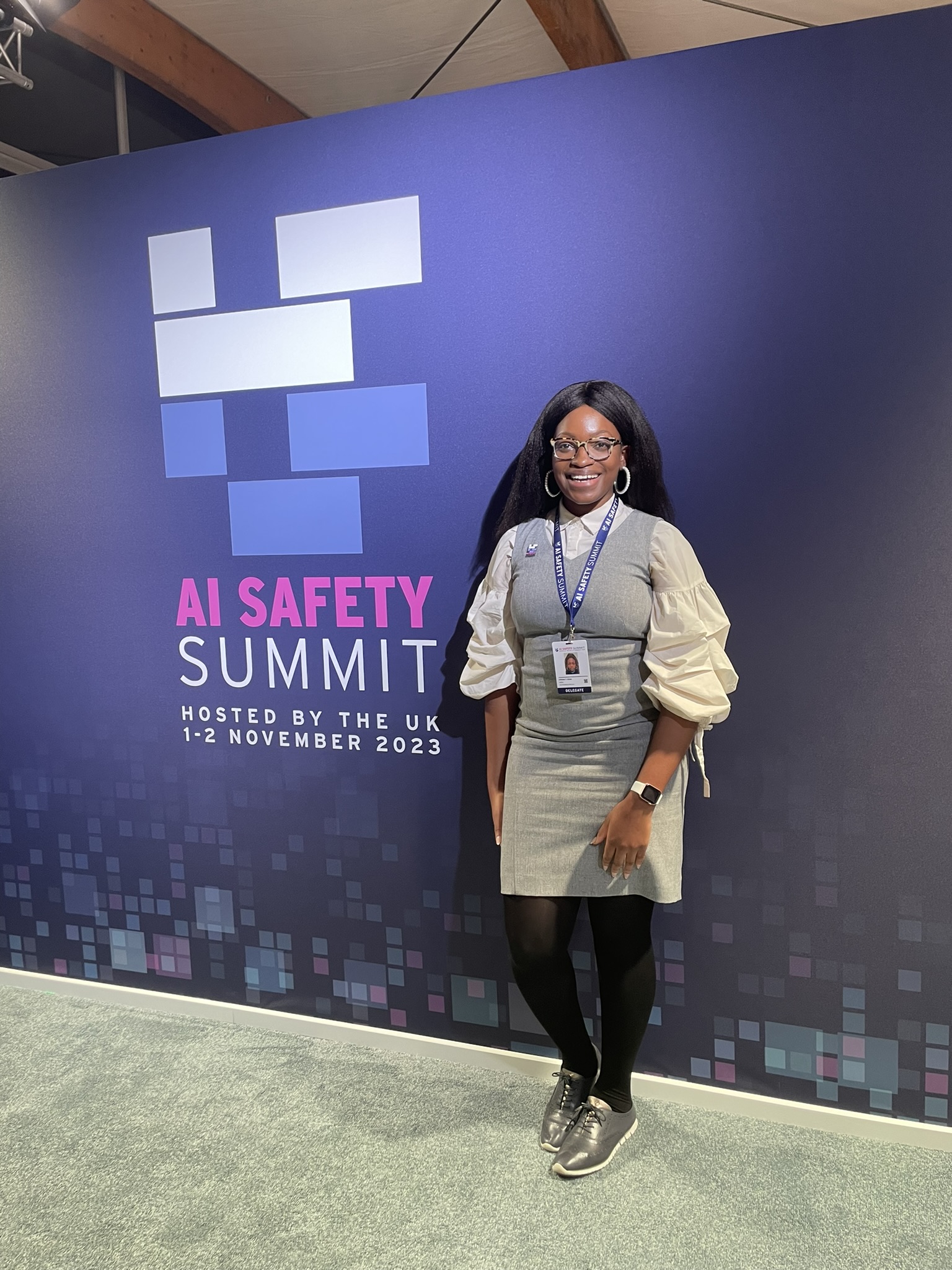
A former participant in Carnegie Mellon University’s Research Experiences for Undergraduates in Software Engineering (REUSE) program, Okolo is now an AI and emerging tech policy specialist for the United Nations and founder of Technēcultură, a nonprofit working to advance global equity in AI. Named one of the world’s most influential people in AI by Time magazine, Okolo advocates for AI governance and data policy in Africa and focuses specifically on how emerging technologies can be developed equitably and responsibly.
“I see a future where AI provides tangible benefits for all people,” Okolo said. “Right now, many of AI’s benefits are concentrated within a small number of companies and regions. I think the future of AI should be more democratized and focused on creating opportunities in healthcare, education and economic mobility in all countries, not just a select few.”
The REUSE program played a vital role in shaping Okolo’s career trajectory. After completing her undergraduate degree at Pomona College, she went on to earn a Ph.D. in computer science from Cornell University, and her research has since been published in top academic venues. Okolo has served as a fellow at the Brookings Institution, held research roles at Apple and Microsoft, and was recognized on the inaugural Forbes 30 Under 30 AI list.
Prior to joining the REUSE program, Okolo conducted undergraduate research in computational biology, computational neuroscience and human perception through programs at Pomona, the University of Georgia and Columbia University.
“I was looking for an opportunity to continue expanding my research portfolio and to learn more about different areas of computer science,” Okolo said. “The REUSE program gave me exposure not only to software engineering, but also to students and researchers working on a broad range of projects.”
During the program, Okolo collaborated with Robert Murphy and Joshua Kangas in CMU’s Ray and Stephanie Lane Computational Biology Department to improve the usability of CellOrganizer, a modeling tool used in computational biology research. Working in MATLAB, a programming tool for algorithm development, Okolo improved the interface and validation tools to help users manage biological imaging files efficiently.
“A lot of my previous work was more research-focused and centered around scientific programming,” Okolo said. “This was one of my first opportunities to engage directly with software engineering concepts and understand human-computer interaction.”
In addition to the research project, Okolo said the professional development opportunities built into the REUSE program helped prepare her for applying to graduate school.
“CMU offered helpful programs that included guidance on how to apply to grad school,” Okolo said. “Professor Murphy was extremely approachable and wrote one of my letters of recommendation.”
Okolo also said the REUSE program helped connect her with CMU researchers.
“I had the opportunity to work closely with senior researchers in the lab, which was incredibly beneficial,” Okolo said. “It was a welcoming environment and I felt supported by the lab. I learned so much.”
Looking back, Okolo said the REUSE program helped reinforce the long-term value of research within computer science.
“I know a lot of students focus on securing internships with major tech companies, but research will always be fundamental to computer science,” Okolo said. “Programs like REUSE give students experiences and skills that stay with them throughout their studies and into their careers.”