Kerem Pekkan-Mechanical Engineering - Carnegie Mellon University

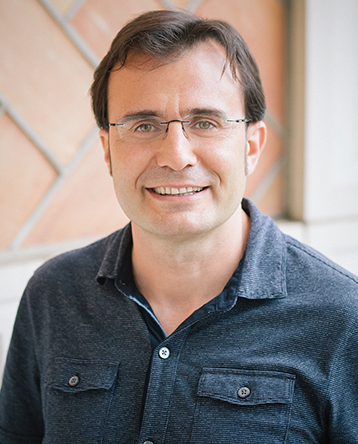
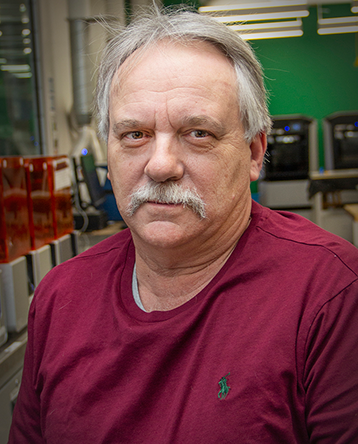
Kerem Pekkan

Assistant Professor, Biomedical Engineering

Courtesy Appointment, Mechanical Engineering

Address:
Carnegie Mellon University
Department of Biomedical Engineering
700 Technology Drive
Pittsburgh, PA 15210
Phone: 412-268-3027
Fax: 412-268-9807

Bio

Dr. Kerem Pekkan is an Assistant Professor with Carnegie Mellon University's Biomedical and Mechanical Engineering Departments studying fluid flow in embryonic cardiovascular development, time-resolved PIV/μPIV, confocal microscopy and computational biomechanics. His current research interests include: fetal/pediatric hemodynamics, neonatal cardiopulmonary bypass, caval flow regulation, cardiovascular biomimetics and biological propulsion. Kerem Pekkan received his PhD at the Middle East Technical University, Turkey in 2000, focusing on Cartesian Grid CFD solvers for moving/reactive interfaces and worked in aerospace industry for 5 years at an active R&D group. Through his post-doctoral studies at Purdue -Innovative Propulsion Systems Laboratory, together with NASA-Glenn, he developed experimental and computational models of unsteady gas-turbine systems. In parallel, he initiated seed projects on cellular level in vitro chondrocyte fluid mechanics. At Georgia Institute of Technology School of Biomedical Engineering, Cardiovascular Fluid Mechanics Laboratory he completed a second post-doctoral study before his promotion to Research Assistant Professor. He performed CFD studies in several biomedical applications, applied PIV technique to complex cardiovascular flows. His work at Georgia Tech significantly improved the physiological understanding of pediatric cardiovascular surgeries, with his articles appearing on the covers of top clinical and engineering journals, including two articles in Circulation. In 2006, he received a young investigator award honoring Prof. Dr. Ing. Helmut Reul of the Helmholtz Institute. Presently his research is sponsored through American Heart Association, National Science Foundation CAREER program, Pennsylvania Infrastructure Technology Alliance and the Berkman Faculty Development Fund.

Education

B.S. M.S. and Ph.D. Middle East Technical University (METU), Ankara, Turkey

Research

Embryonic and pediatric applications of cardiovascular fluid mechanics

Pediatric and embryonic cardiovascular fluid mechanics is an emerging research area that studies hemodynamics for the entire cardiovascular growth time-line. In my laboratory we explore its key mechanical principles through biological, clinical and surgical applications. One intriguing example is the emergence, and extinction of embryonic aortic arches as they form the mature brachiocephalic arteries, aortic arch and pulmonary arteries during fetal development. Flow-driven loading plays a significant role in this dynamic multi-scale process, which is clinically described as the “flow-dependency” principle. Biomechanical studies that benefit from computational and experimental fluid dynamics, in vivo fluorescent dye injection, micro-CT, high-speed confocal microPIV and OCT are focused. In addition to the genetic factors, our recent studies based on vascular growth theorems prompted the idea that the orientation of outflow track, which varies significantly during early embryonic stages, can alter the local hemodynamics and individual arch diameters. Hemodynamics of the pediatric stage has been studied through neonatal cardiopulmonary by-pass, systemic-to-pulmonary shunt, total-cavopulmonary connection and patient-specific venous confluence models that feature complex flow instability and unsteadiness. These studies are extremely important for future developments in pediatric cardiology and cardiovascular surgery as they provide hemodynamic understanding of pediatric pulmonary/venous function, hepatic growth factor mixing and adult “failed” physiology, impacting young and adult patients having congenital heart defects.

Biomedical and biological applications of particle image velocimetry 


Particle image velocimetry (PIV) is a gold standard whole field flow measurement technique. Standard, micro- and time-resolved PIV is routinely used in medical device design, biomedical and biophysical research. Our group is interested to develop high-speed confocal PIV techniques for quantitative studies involving blood cells, time-resolved PIV for studying cardiovascular flow instabilities and microPIV for studying biological and robotic propulsion. In all these research areas experimental PIV measurements provide valuable physical data that is used for the improvement and validation of computational fluid dynamics models.

Nontraditional biomimetic circulation systems

The rich diversity of circulation systems found in nature inspired a novel reduced-order lumped parameter circulation model (LPM). For the first-time, LPM is integrated with multi-scale continuum mechanics vascular GR theories in order to establish a numerical feedback loop between the GR response and instantaneous hemodynamic circuit parameters. A general network-based LPM model is proposed, again for the first time that covers the entire hydrodynamic network space where the numbers of vascular compartments, ventricles and their branching patterns evolve freely, but are subject to the cost functions founded on the biological optimality principles. Formal engineering optimization routines and novel circuit similitude parameters that allow an unbiased energetic comparison will be developed to realize this aim. This framework will provide the global GR response of the entire circulation during development, energy/exergy budgets of complex congenital heart disease pathologies, and impact pediatric surgical treatments.

Patient specific surgical planning

Our group collaborates with cardiovascular surgery teams (from US, Germany, China and Turkey) to develop clinically functional pre-surgical hemodynamic planning tools. These tools have high potential to allow surgeons to design fluid dynamically optimal surgical connections and interventions particularly in complex reconstructive cardiovascular surgeries without in vivo execution. Supported by our experimentally validated patient-specific computational fluid dynamics simulation technology this research involves a collaborative engineering effort involving Profs Kara, Zhang, Finol and Antaki research groups from CMU.

Teaching

42-341 Introduction to Biomechanics

42-441 Cardiovascular Biomechanics

42-642/24-619 Biological Fluid Mechanics

Selected Publications

  • M.J. Patrick, C-Y. Chen, D. Frakes, O. Dur and K. Pekkan, “Cellular level near-wall unsteadiness of high-hematocrit erythrocyte flow using confocal µPIV,” Experiments in Fluids, (2010) in press.
  • Y. Wang, O. Dur, M.J. Patrick, J.P. Tinney, K. Tobita, B.B Keller and K. Pekkan, “Aortic Arch Morphogenesis and Flow Modeling in the Chick Embryo,” Annals of Biomedical Engineering, 37:6 (2010), pp. 1069-81.
  • O. Dur, C.G. DeGroff, B.B. Keller and K. Pekkan, “Optimization of inflow waveform phase-difference for minimized total cavopulmonary power loss,” ASME Journal of Biomechanical Engineering, 132:3 (2010) 031012.
  • K. Pekkan, B. Whited, K. Kanter, S. Sharma, D. de Zelicourt, K. Sundareswaran, D. Frakes, J. Rossignac and A.P. Yoganathan, “Patient-specific surgical planning and hemodynamic computational fluid dynamics optimization through free-form haptic anatomy editing tool (SURGEM),” Medical and Biological Engineering and Computing, 46:11 (2008), pp. 1139-1152.
  • K. Pekkan, L.P. Dasi, P. Nourparvar, S. Yerneni, K. Tobita, M.A. Fogel, B.B. Keller and A.P. Yoganathan, “In vitro hemodynamic investigation of the embryonic aortic arch at late gestation,” Journal of Biomechanics, 41:8 (2008), pp. 1697-1706.
  • K. Pekkan, H. Kitajima, D. de Zelicourt, J.M. Forbess, W.J. Parks, M.A. Fogel, S. Sharma, K. Kanter, D. Frakes and A.P. Yoganathan, “Total cavopulmonary connection flow with functional left pulmonary artery stenosis: angioplasty and fenestration in vitro,” Circulation, 112:21 (2005), pp. 3264-71.
  • R. Nalim, K. Pekkan, H.B. Sun, H. Yokota, “Oscillating Couette flow for in vitro cell loading,” Journal of Biomechanics, 37:6 (2004) pp. 939-42.
  • K. Pekkan, R. Nalim, “Two-dimensional flow and NOx emissions in deflagrative internal combustion wave rotor configurations,” ASME Journal of Engineering for Gas Turbines and Power, 125:3 (2003), pp. 720-33.